Juilliard Announces PLAZAWORK 2026: A Landmark Outdoor Collaborative Performance Celebrating America’s Sestercentennial at Lincoln Center

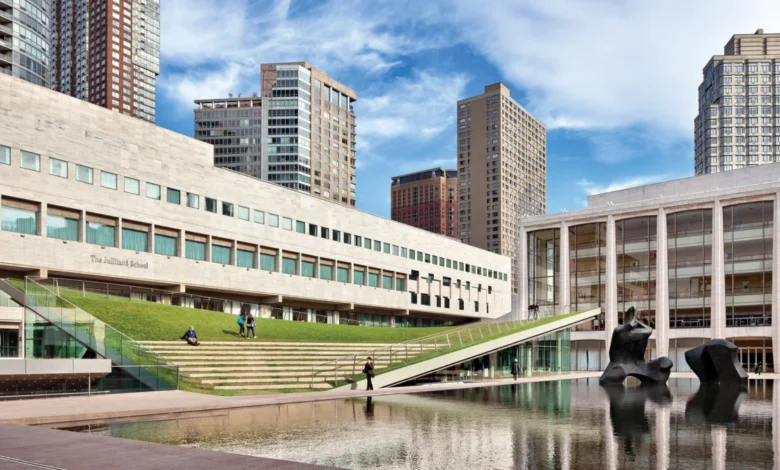
The prominent performing arts institution, The Juilliard School, has officially unveiled plans for one of its most ambitious multidisciplinary public presentations to date. Titled Juilliard Outdoors: PLAZAWORK 2026, the free, large-scale outdoor performance is scheduled to take over Lincoln Center’s Hearst Plaza on September 20, 2026. The production will serve as a cornerstone event for the school’s third annual Fall Festival, marshalling a formidable cohort of more than 100 students drawn from Juilliard’s prestigious music, dance, and drama divisions.
Designed as an immersive, continually evolving public artwork, PLAZAWORK 2026 will fundamentally transform the open-air urban plaza into a dynamic creative commons. The production is a collaborative undertaking under the artistic direction of Creative Enterprise Fellow Derek Wang and Arnhold Creative Associate Caili Quan. According to preliminary festival outlines, the 90-minute presentation—running from 11:00 a.m. to 12:30 p.m., with a designated weather rain date—aims to dissolve the traditional boundaries between performer and spectator. Audiences will be drawn directly into a fluid exploration of motion through time and space, engaging with a rich pastiche of artistic mediums that collectively ponder the upcoming 250th anniversary of the founding of the United States.
Background Context and Historical Significance
The conceptual framework of PLAZAWORK 2026 is deeply intertwined with the impending sestercentennial of the United States, which marks 250 years since the signing of the Declaration of Independence in 1776. Cultural institutions across the nation are currently preparing extensive multi-year programming to reflect on the American experiment, its foundational ideals, its historical contradictions, and its ongoing evolution.
For Juilliard, an institution that has trained generations of the world’s leading classical musicians, actors, and dancers since its founding in 1905, participating in the national sestercentennial demands an artistic response that is both historically resonant and forward-looking. Rather than opting for a traditional commemorative concert or a conventional theatrical staging, the creative team has chosen a site-specific, multidisciplinary approach. By utilizing Hearst Plaza—a vital public gathering space at the heart of the Lincoln Center campus in New York City—the production physically anchors the celebration in a democratic public square, echoing the civic ideals that underpin the nation’s 250-year history.
The choice of site is intentional. Lincoln Center has long stood as a citadel of high culture, but projects like PLAZAWORK 2026 seek to democratize access to the arts, spilling the rigorous technical training and boundless creativity of Juilliard’s studios out into the open air where anyone passing by can participate, observe, and reflect.
Multidisciplinary Artistic Scope and Performance Elements
The sheer scale of PLAZAWORK 2026 is reflected in its mobilization of over 100 student artists across three distinct disciplines. This cross-pollination of music, dance, and drama is a hallmark of contemporary pedagogical trends at Juilliard, which increasingly encourages students to break out of traditional disciplinary silos and engage in collaborative, boundary-pushing art-making.
The performance fabric is woven from a diverse array of artistic traditions and historical touchstones:
- Site-Specific Choreography: The physical movement vocabulary of the piece is tailored specifically to the architectural layout of Hearst Plaza, utilizing its steps, open pavement, and surrounding structures to dictate the flow of bodies through space.
- Merce Cunningham Repertory Excerpts: Paying homage to the giants of American modern dance, the choreography will incorporate excerpts from the repertory of Merce Cunningham. Cunningham’s revolutionary approach to choreography—often characterized by chance procedures, independence between music and dance, and a non-hierarchical use of space—serves as a fitting thematic mirror for notions of democratic freedom and individual autonomy.
- Soapbox Readings: Bridging the gap between dramatic arts and civic discourse, the performance will feature historical and contemporary soapbox readings. These spoken-word components draw on America’s long tradition of public oratory, protest, debate, and philosophical inquiry, giving voice to the diverse perspectives that have shaped the American narrative.
- Sacred and Communal Music: Recognizing the spiritual and cultural pluralism of the United States, the musical score will incorporate songs drawn from multiple faith traditions. This inclusion highlights the role that spiritual expression and communal singing have played in binding diverse communities together throughout American history.
The result is a non-linear, continually evolving collage of sound, movement, and text that refuses to present a single, monolithic narrative of the nation’s history. Instead, it offers a polyphonic dialogue, allowing the audience to wander through the performance space and experience different facets of the work simultaneously.

Creative Leadership and Institutional Vision
The realization of PLAZAWORK 2026 rests in the hands of two innovative artists connected to Juilliard’s growing incubator programs: Derek Wang and Caili Quan.
Derek Wang, serving as a Creative Enterprise Fellow, brings a forward-thinking, entrepreneurial perspective to the project. The Creative Enterprise Fellowship at Juilliard is designed to support artists who are interested in expanding the reach of their work into civic, community, and non-traditional commercial spaces, fostering projects that redefine how audiences consume and interact with the performing arts.
Co-director Caili Quan, an Arnhold Creative Associate at Juilliard, is a celebrated choreographer and former dancer with BalletX. Known for her infectious musicality, collaborative spirit, and ability to craft engaging narrative and abstract movement, Quan’s involvement ensures that the dance elements of the production maintain a rigorous artistic standard while remaining accessible and engaging to a broad public audience.
The leadership duo operates under the broader umbrella of Juilliard’s Fall Festival, now entering its third annual iteration. The festival has quickly established itself as a vital fixture on New York City’s cultural calendar, serving as an early-season showcase for the institution’s pedagogical philosophy, which emphasizes artistic excellence, civic responsibility, and cross-disciplinary collaboration.
Chronology and Event Logistics
The planning, execution, and subsequent evaluation of Juilliard Outdoors: PLAZAWORK 2026 follow a carefully structured institutional timeline:
- Fall 2024 – Spring 2025: Conceptualization and preliminary site mapping by directors Derek Wang and Caili Quan, alongside Juilliard administrative and production teams.
- Fall 2025: Integration of the project into the planning phases for the third annual Juilliard Fall Festival, alongside student casting and curriculum integration across the music, dance, and drama divisions.
- Spring and Summer 2026: Intensive rehearsals, site-specific technical tests at Hearst Plaza, and coordination with Lincoln Center operations and municipal permitting agencies.
- September 20, 2026 (11:00 AM – 12:30 PM): Public performance at Hearst Plaza, Lincoln Center, featuring over 100 students in a continuous 90-minute immersive presentation. (A secondary rain date is reserved for the same day in the event of inclement weather).
- Post-Event Fall 2026: Institutional assessment of the Fall Festival and evaluation of large-scale outdoor public programming models for future academic years.
Broader Impact and Implications for Performing Arts Education
The launch of PLAZAWORK 2026 highlights a broader paradigm shift in elite performing arts conservatories across the United States. For decades, institutions like Juilliard focused primarily on preparing students for traditional careers within enclosed, proscenium-arch theaters—orchestra halls, ballet stages, and regional theater houses.
However, the evolving cultural landscape of the 21st century demands a more versatile artist. Modern performers must be capable of engaging with communities outside the traditional concert hall, adapting to non-traditional venues, and using their artistic training to foster civic dialogue. By placing over 100 students directly into a public plaza to grapple with complex historical themes like the U.S. sestercentennial, Juilliard is actively training its student body to be cultural leaders, public intellectuals, and community builders.
Furthermore, free public programming of this scale reinforces the social contract between cultural institutions and the public. As arts organizations navigate post-pandemic audience recovery and seek to prove their ongoing relevance in an increasingly digital world, site-specific, immersive outdoor works offer a compelling solution. They lower barriers to entry, invite spontaneous engagement from diverse urban populations, and demonstrate the visceral, irreplaceable power of live, shared human performance.
As September 20, 2026, approaches, anticipation is building within the Juilliard community and the broader New York arts sector. PLAZAWORK 2026 promises not only to be a fitting artistic reflection on 250 years of American history, but also a bold blueprint for the future of conservatory education—one where the classroom extends all the way to the edges of the public square.