Premio Abbiati del Disco Announces Distinguished Winners for the 2026 Awards Season


The Associazione Nazionale Critici Musicali has officially unveiled the winners of the 2026 Premio Abbiati del Disco, marking another year of celebrating excellence in the global classical recording industry. As one of Italy’s most prestigious honors in the field of music criticism, the Premio Abbiati serves as a definitive benchmark for artistic quality, technical precision, and historical significance. The 2026 selections reflect a diverse array of musical eras, ranging from the foundational Baroque masterpieces of Henry Purcell to the complex, modern psychological dramas of Mieczysław Weinberg, and the monumental late-Romanticism of Richard Wagner. By highlighting both established legends and contemporary visionaries, the awards underscore the evolving landscape of classical music performance and its enduring relevance in the digital age.
The Opera Category: A Study in Contrast and Mastery
In the highly competitive Opera category, the jury opted for a dual recognition, awarding the prize to two recordings that represent opposite ends of the operatic spectrum: Henry Purcell’s "Dido and Aeneas" and Mieczysław Weinberg’s "The Idiot." This decision highlights the critics’ appreciation for both the revival of early music and the championing of overlooked 20th-century masterpieces.
The Warner Classics release of Purcell’s "Dido and Aeneas" has been hailed as a definitive contemporary account of the English Baroque staple. Featuring the world-renowned mezzo-soprano Joyce DiDonato in the titular role and the versatile "baritenor" Michael Spyres as Aeneas, the recording is bolstered by the period-instrument expertise of Il Pomo d’Oro under the baton of Maxim Emelyanychev. Critics praised the recording for its emotional immediacy and the palpable chemistry between the leads. DiDonato, long recognized for her dramatic depth, brings a nuanced vulnerability to Dido’s Lament, while Spyres provides a robust, stylistically informed counterpart. The leadership of Emelyanychev is noted for its rhythmic vitality and transparency, allowing Purcell’s intricate scoring to resonate with modern clarity while remaining faithful to 17th-century performance practices.
Sharing the Opera category honors is the Unitel release of Mieczysław Weinberg’s "The Idiot." This recording captures a landmark production featuring the Wiener Philharmoniker conducted by Mirga Gražinytė-Tyla and directed by the visionary Krzysztof Warlikowski. Weinberg, a composer whose legacy was long overshadowed by his contemporary Dmitri Shostakovich, has seen a massive posthumous resurgence. "The Idiot," based on the novel by Fyodor Dostoevsky, is a grueling, intense exploration of human morality and suffering. The 2026 Abbiati recognition cements the work’s place in the modern canon. Gražinytė-Tyla’s interpretation has been lauded for navigating the score’s dense textures and sudden shifts in temperament, while Warlikowski’s staging—preserved in this visual media release—provides a haunting psychological framework that complements Weinberg’s cinematic orchestration.
Solo Repertoire: Honoring Regional Heritage and Artistry
The category of Repertorio solistico (Solo Repertoire) was awarded to "Romantic Florence," a curated collection released by the DYNAMIC label. The recording features mezzo-soprano Marina Comparato and pianist Gianni Fabbrini, focusing on the intimate vocal music that defined the salon culture of 19th-century Florence.
This award is particularly significant for its focus on regional musicology. While Florence is often associated with the birth of opera in the late Renaissance, its contributions to the Romantic era are frequently overlooked in favor of the larger centers like Milan or Paris. Comparato and Fabbrini’s work serves as both an artistic achievement and a historical document, reviving melodies that were once the heartbeat of Tuscan cultural life. The jury noted Comparato’s impeccable diction and expressive phrasing, which breathe life into these rare compositions. The DYNAMIC label, known for its dedication to rare and neglected Italian repertoire, continues its mission of expanding the discographic horizon with this win.
The Premio Speciale: A Texan Triumph for Wagnerian Excellence
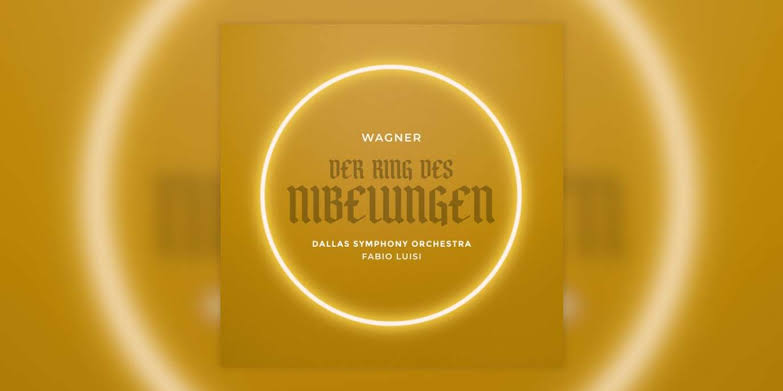
Perhaps the most discussed announcement of the 2026 cycle is the Premio Speciale (Special Prize), awarded to the Dallas Symphony Orchestra for its recording of Richard Wagner’s monumental tetralogy, "Der Ring des Nibelungen." Conducted by the acclaimed Italian maestro Fabio Luisi and released by the DELOS label, this recording represents a significant milestone for American orchestral performance on the international stage.
Recording a complete "Ring" cycle is widely considered the ultimate test for any conductor, orchestra, and record label. The Dallas Symphony’s project, led by Luisi, was a multi-year endeavor that captured the sheer scale and philosophical depth of Wagner’s work. Luisi, who has a distinguished history with the Wagnerian repertoire through his tenures at the Metropolitan Opera and the Zurich Opera, brought a specifically European sensibility to the Dallas ensemble. The result is a cycle characterized by Italianate lyricism and structural transparency, avoiding the heavy-handedness that sometimes plagues Wagnerian interpretations. The DELOS release was praised for its superior engineering, capturing the massive dynamic range required for "The Ring" while maintaining the intimate details of the vocal performances.
Historical Context: The Legacy of the Premio Abbiati
The Premio Franco Abbiati della Critica Musicale Italiana was established in 1980, named in honor of the esteemed music critic of the Corriere della Sera. While the primary Abbiati prizes focus on live performances within Italy, the Premio Abbiati del Disco specifically targets the global recording industry, acknowledging that the dissemination of music through high-quality recordings is vital to the health of the art form.
The awards are decided by the National Association of Italian Music Critics, a body comprising the most influential voices in Italian journalism and musicology. Over the decades, the prize has gained a reputation for its rigorous standards and its willingness to look beyond commercial sales figures to find true artistic merit. Winning an Abbiati is often seen as a seal of approval that can significantly boost a recording’s longevity and influence in the classical market.
Chronology and Selection Process for the 2026 Awards
The road to the 2026 awards began in early 2025, as the jury began reviewing the vast output of international labels. The selection process involves multiple rounds of listening and deliberation, with critics assessing recordings based on several key criteria:
- Interpretative Originality: Does the recording offer a new perspective on a well-known work or a definitive first look at a new or neglected one?
- Technical Excellence: Is the recording quality of the highest standard, utilizing modern technology to serve the music?
- Casting and Performance: Do the soloists, conductors, and ensembles exhibit mastery over the material?
- Cultural Impact: Does the recording contribute significantly to the cultural discourse or the preservation of musical history?
The inclusion of "The Idiot" and the Dallas "Ring" suggests a 2026 focus on large-scale narrative works and the preservation of complex theatrical experiences. Meanwhile, the Purcell and "Romantic Florence" wins demonstrate a continued commitment to the nuances of vocal artistry and historical research.
Industry Implications and Future Outlook
The 2026 Premio Abbiati del Disco results reflect several broader trends within the classical music industry. First, the success of independent and specialized labels like DELOS, Unitel, and DYNAMIC alongside giants like Warner Classics suggests a healthy, competitive ecosystem where artistic vision can thrive regardless of corporate backing.
Second, the geographical diversity of the winners—from the United Kingdom and Austria to the United States and Italy—proves that the classical recording industry remains a truly global enterprise. The recognition of the Dallas Symphony Orchestra, in particular, highlights the rising prominence of American orchestras in the European critical consciousness, a shift that has been accelerating as more European-trained conductors take the helm of major U.S. institutions.
Furthermore, the emphasis on Mieczysław Weinberg points toward a continuing trend of "canonical expansion." As audiences and critics alike seek out voices that were suppressed or ignored during the 20th century, recordings become the primary vehicle for these composers to reach a global audience. The Abbiati’s endorsement of "The Idiot" will likely encourage other opera houses and labels to explore Weinberg’s extensive catalog.
Summary of 2026 Vocal Category Winners
To summarize the vocal achievements recognized by the Associazione Nazionale Critici Musicali:
- Opera (Baroque/Standard): Henry Purcell’s "Dido and Aeneas" (Warner Classics). Artists: Joyce DiDonato, Michael Spyres, Il Pomo d’Oro, Maxim Emelyanychev.
- Opera (Modern/Discovery): Mieczysław Weinberg’s "The Idiot" (Unitel). Artists: Mirga Gražinytė-Tyla, Krzysztof Warlikowski, Wiener Philharmoniker.
- Solo Repertoire: "Romantic Florence" (DYNAMIC). Artists: Marina Comparato, Gianni Fabbrini.
- Special Prize: Richard Wagner’s "Der Ring des Nibelungen" (DELOS). Artists: Dallas Symphony Orchestra, Fabio Luisi.
As the classical music world moves deeper into the 2020s, these recordings stand as a testament to the resilience of the industry and the tireless dedication of artists to preserve and reinterpret the great works of the past while forging a path for the future. The 2026 Premio Abbiati del Disco winners have set a high bar for the years to come, ensuring that the art of the recording remains a vital, living component of global culture.