The Failed Resurrection of the Original Byrds How the 1973 Reunion Album Marked the End of an Era

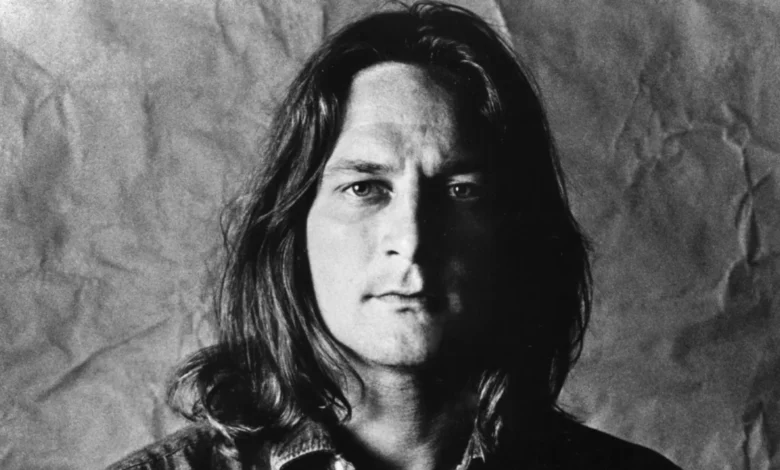
In the annals of rock and roll history, few narratives are as compelling or as cautionary as the attempt to recapture lightning in a bottle. In 1973, the five original members of The Byrds—Roger McGuinn, Gene Clark, David Crosby, Chris Hillman, and Michael Clarke—attempted to do just that. After a half-decade of splintered careers, solo successes, and internal friction, the quintet reunited under the banner of Asylum Records to produce an eponymous album intended to reclaim their throne as the architects of American folk-rock. However, what was positioned as a triumphant homecoming instead became a stark illustration of how the passage of time and the shift in creative priorities can erode the chemistry of even the most influential ensembles.
The 1973 reunion was not merely a musical endeavor; it was a high-stakes industry event fueled by the burgeoning "supergroup" culture of the early 1970s. Despite the commercial viability of the individual members, the resulting LP, titled simply Byrds, failed to resonate with critics or sustain the legacy the band had built during their mid-1960s peak. The story of this failure is a complex tapestry of ego, changing musical landscapes, and the inherent difficulty of returning to a creative well that had long since run dry.
The Genesis of an American Counterpart to the British Invasion
To understand the weight of expectation surrounding the 1973 reunion, one must examine the monumental impact The Byrds had upon their debut in 1965. While the "British Invasion" led by The Beatles and The Rolling Stones dominated the American airwaves in 1964, The Byrds provided the first credible domestic response. By blending the lyrical depth of Bob Dylan with the melodic sensibilities and jangle-pop aesthetics of the Merseybeat sound, they effectively invented folk-rock.
Their 1965 debut, Mr. Tambourine Man, was a cultural earthquake. Roger McGuinn’s compressed, chiming 12-string Rickenbacker guitar became the defining sound of an era, influencing everyone from George Harrison to the burgeoning psychedelic scene in San Francisco. The original lineup was a powerhouse of talent: Gene Clark was a prolific and soulful songwriter; David Crosby provided innovative vocal harmonies and a rebellious spirit; Chris Hillman brought a bluegrass sensibility on bass; and Michael Clarke provided the steady, if rudimentary, beat that anchored their ethereal sound.
However, the very volatility that made their music dynamic also led to their rapid dissolution. Gene Clark, struggling with a fear of flying and resentment over royalties, departed in early 1966. David Crosby was fired in 1967 following clashes over his political outbursts on stage and his insistence on including controversial material like "Triad." By the end of 1968, only Roger McGuinn remained to steer the ship through various iterations, including the groundbreaking country-rock period of Sweetheart of the Rodeo.
The Road to the 1973 Reunion: A Timeline of Convergence
The path back to the original five-piece lineup began in 1972, a year when the "nostalgia" for the mid-60s was already beginning to take root in the music industry. The individual members found themselves at varying stages of success:
- David Crosby: He was at the zenith of his fame as a member of Crosby, Stills, Nash & Young (CSNY). His influence was so great that he was granted production duties for the reunion project.
- Chris Hillman: He had found success with The Flying Burrito Brothers and was a member of Stephen Stills’ band, Manassas.
- Gene Clark: Despite releasing the critically acclaimed White Light, he remained a cult figure struggling for mainstream commercial success.
- Roger McGuinn: He was still fronting a version of The Byrds, but the band’s commercial momentum had slowed significantly.
- Michael Clarke: He had largely moved away from the spotlight after his time with the Flying Burrito Brothers.
The catalyst for the reunion was David Geffen, the ambitious head of Asylum Records. Geffen, sensing a massive commercial opportunity, offered the quintet a lucrative contract to record a one-off album. The deal was finalized in mid-1972, and the band convened at Wally Heider Studios in Los Angeles in October and November of that year to begin recording.
The Recording Sessions: A Lack of Cohesion
From the outset, the sessions for Byrds were plagued by a lack of clear direction. While the 1960s sessions were often characterized by intense, if sometimes combative, collaboration, the 1972 sessions were described by participants as polite but distant. David Crosby, acting as producer, opted for a contemporary, polished sound that aligned with the "mellow" California rock scene of the time. This decision proved to be a double-edged sword.
One of the primary criticisms of the sessions was the democratic but ultimately diluting approach to songwriting. Each of the four main writers (Clark, Crosby, McGuinn, and Hillman) contributed two original songs. To fill out the tracklist, they recorded three covers: Neil Young’s "Cowgirl in the Sand" and "See the Sky About to Rain," and Joni Mitchell’s "For Free."
In retrospect, band members admitted they were "holding back" their best material for their respective solo projects. There was a sense that the reunion was a business arrangement rather than an artistic necessity. This lack of commitment resulted in a collection of songs that, while professionally executed, lacked the experimental edge and urgency of their 1960s output.
Technical and Artistic Shortcomings
When Byrds was released in March 1973, the immediate reaction from the core fanbase and critics was one of confusion. The most glaring omission was the "Byrds sound" itself. Roger McGuinn’s signature 12-string Rickenbacker, which had served as the band’s sonic identity, was buried in the mix or replaced by acoustic guitars and standard electric leads.
McGuinn later reflected on this, noting that Crosby’s production style favored a more "laid-back" vocal-heavy approach typical of the Laurel Canyon scene. While this worked for CSNY, it stripped The Byrds of their unique instrumental character. Furthermore, the vocal harmonies, while technically proficient, lacked the haunting, dissonant quality that had defined tracks like "Eight Miles High."
The song selection also came under fire. While Gene Clark’s contributions, "Full Circle" and "Changing Heart," were highlights that showcased his enduring lyrical depth, the Neil Young covers were seen as redundant, given that Young’s own versions were already definitive. The album felt less like a new statement and more like a collection of talented individuals playing together without a unified vision.
Data and Market Performance
Despite the critical lukewarmness, the album initially performed well on the charts due to the immense hype. It reached number 20 on the Billboard 200, making it the band’s highest-charting album of new material since 1965. However, its stay on the charts was brief. Unlike their 1960s records, which had long-lasting cultural footprints, Byrds (1973) quickly faded from the public consciousness.
| Metric | Detail |
|---|---|
| Release Date | March 1973 |
| Label | Asylum Records |
| Billboard 200 Peak | #20 |
| UK Albums Chart Peak | #31 |
| Lead Single | "Full Circle" (Reached #109 on Bubbling Under Hot 100) |
| Production | David Crosby |
The failure of the lead single, "Full Circle," to break into the Top 100 was a significant indicator that the band had lost its touch with the contemporary singles market. By 1973, the musical landscape had shifted toward harder rock, glam, and more complex progressive styles, leaving the "folk-rock" pioneers looking like a relic of a bygone era.
Official Responses and Internal Dissolution
The aftermath of the album’s release was marked by a quick retreat to individual pursuits. There was no tour to support the record, largely because the members could not agree on the logistics or the repertoire. Roger McGuinn, who had kept a version of The Byrds touring throughout the early 70s, officially disbanded his touring group shortly after the reunion album’s release, effectively ending the "Byrds" name as an active recording entity.
In later interviews, the band members were candid about the project’s failures. Chris Hillman noted that the band "didn’t have the fire anymore," suggesting that the comfortable lifestyles they had achieved by 1973 had sapped the creative tension that once drove them. David Crosby admitted that he may have been the wrong choice for producer, as his proximity to the band made it difficult to provide the objective discipline required to pull a cohesive album out of five strong-willed individuals.
Broader Impact and Historical Implications
The 1973 Byrds reunion serves as a pivotal case study in the history of rock music. It highlighted the "reunion trap"—the idea that a group of musicians can return to a specific point in time and recreate the cultural impact of their youth. The failure of Byrds signaled the end of the folk-rock era’s dominance and underscored the reality that the "Spirit of the Sixties" could not be manufactured in a studio through sheer financial incentive.
Furthermore, the album’s lackluster reception had a cooling effect on the industry’s obsession with 1960s reunions for several years. It proved that brand recognition alone was not enough to sustain a project if the underlying chemistry and innovative spirit were absent.
However, the album is not without its defenders. Over the decades, some critics have revisited the record, finding merit in Gene Clark’s songwriting and the high quality of the vocal performances. It is viewed today not as a total disaster, but as a missed opportunity—a "what if" scenario where the band might have succeeded had they embraced their original sound rather than trying to fit into the early 70s soft-rock mold.
The legacy of the original five Byrds remains untarnished by the 1973 outing, largely because their 1965-1967 output was so revolutionary. They remain the benchmark for American rock sophistication. Yet, the 1973 album stands as a permanent postscript, a quiet "whimper" of an ending for a group that had once soared higher than almost any other in the history of popular music. It remains a definitive lesson that in the world of art, you can occasionally go home again, but you can rarely stay there.