Cypress Hill Unveils ‘Dios Bendiga,’ a Groundbreaking All-Spanish Album Reaffirming Its Enduring Latino Legacy Amidst Global Rap Boom


The iconic hip-hop group Cypress Hill has released Dios Bendiga, their first album composed entirely of original Spanish-language material, marking a significant milestone in their illustrious career. This project arrives at a pivotal moment, coinciding with an unprecedented global surge in Latin rap’s popularity, and serves as a profound reclamation and celebration of the cultural heritage that has been central to the group since its inception over three decades ago. Released on Friday, July 24, the album is a testament to the enduring influence and innovative spirit of B-Real, Sen Dog, DJ Muggs, and Eric Bobo, who have consistently pushed boundaries while remaining deeply connected to their roots.
A Legacy Forged in Identity and Innovation
Since the early 1990s, Cypress Hill has carved an indelible mark on hip-hop history. Emerging from the vibrant yet often turbulent landscape of California and Los Angeles, the quartet became key figures in a scene that masterfully captured the harsh social realities of urban life. Their sound was a groundbreaking fusion of psychedelic rock influences, hard-hitting beats, and the distinctive vocal styles of B-Real and Sen Dog. Crucially, their music was always imbued with a powerful Latino identity, a facet that was not merely a background detail but a foundational element of their artistry.
The group’s early work, particularly their self-titled debut album in 1991 and the seminal Black Sunday in 1993, quickly garnered critical acclaim and commercial success. Black Sunday famously debuted at No. 1 on the Billboard 200, a monumental achievement that cemented Cypress Hill as one of the era’s most innovative and successful acts. Tracks like "Insane in the Brain" became instant anthems, reaching No. 19 on the Billboard Hot 100 in 1993 and remaining one of the most recognizable rap songs of the decade. Throughout their career, Cypress Hill has placed seven songs on the Billboard Hot 100, demonstrating their consistent ability to connect with a broad audience while maintaining their unique artistic vision. Their blend of West Coast sounds, innovative production, and a cultural identity embraced with unapologetic pride ultimately became a crucial reference point, paving the way for countless Latino artists seeking to carve out their own space within the U.S. hip-hop scene and beyond.
The Precedent: Los Grandes Éxitos en Español
The profound connection to their roots was explicitly showcased and cemented in 1999 with Los Grandes Éxitos en Español. This project, a compilation of some of the group’s most iconic songs adapted into Spanish, became a cult classic among Latino audiences worldwide. Tracks such as "Yo Quiero Fumar" (a Spanish rendition of "I Wanna Get High") and "Loco en el Coco" ("Insane in the Brain") were more than just translations; they were re-imaginings that resonated deeply, making it unequivocally clear that the Mexican and Cuban roots of several of its members were not a tangential aspect but a fundamental, defining characteristic of the band’s identity. The album served as an early indicator of the global appetite for Spanish-language hip-hop and Cypress Hill’s willingness to engage directly with their heritage.
"Dios Bendiga": A Divine Legacy and Global Future

Now, nearly three decades after their initial breakthrough and 25 years after Los Grandes Éxitos, Cypress Hill has embarked on a new, bolder endeavor with Dios Bendiga. This album represents a deepening of their cultural connection, featuring entirely original material in Spanish. The timing of its release is particularly significant, as Latin rap is experiencing an unprecedented boom, transcending geographical and linguistic barriers to achieve global recognition. This project aims not only to reclaim but to powerfully assert the cultural heritage that has informed the group’s narrative since its very first beats.
B-Real, the group’s distinctive lead vocalist, articulated the profound meaning behind the album in an interview with Billboard Argentina. "‘Dios Bendiga’ is more than just a collection of songs; it’s a prayer for the culture," he stated. "This album serves as a powerful reminder that our heritage isn’t a trend, but a divine legacy and a global future. We’re living through a historic era for Latin rap, and with this project, we wanted to bring a sound that honors our history and resilience." This statement underscores the album’s dual purpose: a personal artistic expression and a broader cultural declaration, aligning Cypress Hill with the current wave of Latin artists defining the genre’s future.
The Creative Process: A Natural Flow and Swift Realization
The creation of Dios Bendiga was a surprisingly fluid and rapid process, defying expectations for a project of its magnitude and novelty. Eric Bobo, the group’s percussionist, shed light on the album’s organic genesis. "I think it all came from the way things started coming together in the studio – how everything flowed and ultimately clicked into place," Bobo recounted. "At first, we didn’t really know exactly how we were going to approach the process. But as we moved forward, it felt like everything was happening in a very natural way." This natural progression led to the album’s title and central theme. "It was as if the music wasn’t just flowing through us, but coming from something bigger. We felt a presence, something positive. For us, it was like saying, ‘God is with us.’ From that feeling, we started developing that whole theme. On top of that, we knew it was something very close to the hearts of a lot of people in Latin America, so the concept ended up making even more sense."
Remarkably, the entire creative and recording process was completed in a compressed timeframe. "Honestly, it didn’t take as long as you might think," Bobo revealed. "The process started last November. We finished our parts in about a month. That was surprising, because we were doing something completely different for Cypress Hill: a fully Spanish-language album, creating new music and bringing together all the pieces it needed. You’d think a project like that would take a lot longer, but everything flowed very naturally and it ended up coming together that way." This efficiency highlights the group’s seasoned chemistry and the genuine inspiration driving the project.
B-Real emphasized the long-standing desire to create such an album. "It was something we had been planning for a very long time," he explained. "Sometimes your own career gets in the way of your plans. Constant touring and other albums kept taking up our time, and we never fully committed to the idea. But this time we had a serious conversation, and when the opportunity came up, we said, ‘If we’re going to make this album, we have to really do it.’ We cleared our schedules and made sure we had no shows for about four or five months, which is pretty unusual for us because we’re normally performing all the time." This deliberate commitment allowed for the focused creative period that brought Dios Bendiga to fruition, emphasizing that this was not a casual endeavor but a deeply considered artistic statement.
Strategic Single Choices and Esteemed Collaborations
The choice of "Wacha Trucha" and "Campeones" as preview singles was a deliberate strategy to showcase both the album’s thematic depth and its musical versatility. B-Real elaborated on the selection of "Wacha Trucha," stating, "We felt that ‘Wacha Trucha’ was a very important song for the moment we’re living in – especially because of everything that was happening with ICE and the different situations unfolding in the United States. It was kind of an alert song, a message to stay aware. But it also had a very signature Cypress Hill vibe. It reminded us of the energy of ‘We Ain’t Goin’ Out Like That.’ We thought it was the perfect introduction to the album because that’s exactly the kind of sound a lot of people expect from us. We’ve always been a band that takes risks. We like stepping outside the box and trying different things." This choice demonstrated the group’s continued commitment to social commentary alongside their signature aggressive sound.
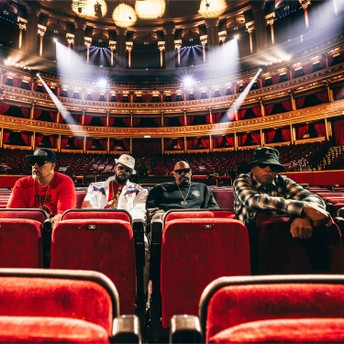
Sen Dog then explained the contrasting choice of "Campeones": "With ‘Campeones,’ we wanted to show our versatility. We wanted to prove that we could also bring a festive vibe, something closer to the Latin spirit. That’s why we chose those songs: first to show the strength, and then to show that we also know how to make music to celebrate and have a good time – not just aggressive or confrontational songs." This duality highlights the album’s comprehensive embrace of the multifaceted Latin experience.
The album features a selective roster of collaborations with influential Latin rap artists, including Argentina’s Trueno, Mexico’s Alemán, and La Santa Grifa. These partnerships were not arbitrary but built on existing relationships and mutual respect. B-Real noted, "I had already worked with several of them before. I’d collaborated with Alemán a couple of times, and Bobo and I had also worked with Trueno. With La Santa Grifa, it was the first time we shared a song, but I’d been listening to their music for a long time and we already knew each other." He added, "Today the landscape is completely different. There are so many artists out there, but we chose the ones we had already built a connection with and who could bring something special to the songs." The synergy was evident, with B-Real recalling that for "Wacha Trucha," "we immediately knew Alemán had to be on it. He has an incredible style and fits perfectly with what we do." Similarly, DJ Lord suggested Trueno for "Saca la Bolsita," a suggestion B-Real embraced without hesitation. Sen Dog praised these collaborators, stating, "Plus, Trueno is clearly a student of hip-hop. All of them are. They’ve shown just how far the genre has grown in Latin America. They’re artists who can write and rap at an impressive level. They’re truly extraordinary at what they do."
Embracing the Linguistic Challenge and Reinvention
Rapping entirely in Spanish presented a unique challenge, particularly for B-Real, who, like many Chicanos in the U.S., grew up with Spanish as a spoken language at home but often without formal education in it. "Absolutely. It’s a constant challenge," B-Real admitted. "I can’t speak for Sen because Spanish was his first language, but in my case I grew up like a lot of Latinos in the U.S., especially in Southern California. Chicanos learn Spanish at home, from our parents. They speak to us in Spanish and we absorb that knowledge. Some people develop the language more, while others mostly understand it without speaking it as much. In school, we weren’t really taught Spanish beyond maybe a basic class. So it’s always going to be a challenge to compete with rappers who are native speakers and have a very advanced command of the language. That pushes us to work much harder."
Sen Dog, while having Spanish as his first language, echoed the sentiment of the challenge when collaborating with native speakers. "I think B-Real explained it perfectly. We grew up speaking Spanish, but at the same time we were also influenced by English through school and our friends. We know the language, of course, but when you’re working with artists from Mexico or South America, you’re dealing with people who have total command of Spanish. When I have to perform in Spanish, I really have to focus. There are words I know perfectly well, but sometimes they slip away from me. That’s why it was incredible to hear these guys doing what they do." This mutual respect and the desire to meet the high standards set by their collaborators underscore the authenticity of Dios Bendiga.
The album is not merely a return to roots but a reinvention, a testament to Cypress Hill’s commitment to staying fresh and relevant. B-Real noted, "It helps you explore places you might not have reached on your own. As an artist, you have to be willing to keep learning no matter how long you’ve been doing this. When you collaborate with younger artists, they’re going to learn something from you, but you can also learn from them. We’ve always been competitive people. We want to do things the right way, and we’re never going to stop showing our strength. So we adapt, take what we can learn from these artists, and keep moving forward trying to make the best songs possible."
Sen Dog directly linked the explosion of Latin American hip-hop to their renewed creative energy. "Without a doubt. The hip-hop scene in South America and Mexico has grown tremendously since the days when we released Los Grandes Éxitos and started traveling to those countries," he observed. "Even back then, we could see that people were really connecting with hip-hop, but watching how everything has evolved since then has been impressive. These artists take their craft very seriously, and they show it all the time. Year after year, they’ve kept developing the style, the writing, and the culture of hip-hop, while also giving it its own identity." He added, "I remember hearing their verses and being genuinely impressed. All of that made me understand even more how rich Spanish is. There’s so much to discover within the language, the slang, and the different cultures. I think people should pay more attention to the music being made outside their own country and try to understand what the new generations are doing."
Global Impact and the Evolution of Hip-Hop

Cypress Hill has been a witness and a catalyst for hip-hop’s journey from a marginalized genre to a global cultural phenomenon. B-Real reflected on this evolution: "That’s exactly the power of hip-hop. We had the chance to witness its growth from a very early stage. When we started traveling through Mexico, South America, and Europe, we saw how people celebrated the arrival of American artists and absorbed that culture with so much passion that they eventually decided to build their own scenes. I remember that around 1992 and 1993, we started touring Europe and seeing that phenomenon. Over the years, it wasn’t just that people started making rap in their own countries – those regions also began producing their own stars." This historical perspective highlights Cypress Hill’s unique position as both pioneers and ongoing contributors to the genre’s international expansion.
Advocacy for Cannabis Normalization
Beyond their musical contributions, Cypress Hill has long been synonymous with cannabis advocacy, a stance that was revolutionary in the early 90s. Through songs like "Light Another," "Something for the Blunted," and "Stoned Is the Way of the Walk," they openly championed cannabis use, often facing criticism and censorship. B-Real expressed satisfaction with the current shift in public perception and policy: "I’m glad to see that everything has become more normalized. People no longer have the same prejudices or labels they used to. Now they understand it much better for what it is. Even people who used to criticize it or speak out against it are now allies and speak in its favor." He continued, "The amount of information out there has allowed a lot of people to really understand what it is. Normalization is a positive thing because it means you’re not going to have as many problems over it."
While acknowledging progress, B-Real emphasized that the fight for full legalization continues. "In some places, it’s even possible to make a living from this industry. But beyond normalization, it still needs to be legalized. There are countries where it already has been legalized, and that’s extraordinary, but there’s still a lot of work to do, both in the United States and in other parts of the world. When I think about where we were 30 years ago and compare that reality to where things are now, it’s honestly pretty incredible." This long-term perspective on social change underscores their role as cultural trailblazers beyond music.
Concert Announcement and Future Implications
To celebrate the release of Dios Bendiga, Cypress Hill will present the album live in Buenos Aires on November 8 at Estadio Malvinas Argentinas. This concert aims to further strengthen their deep relationship with the South American country, a connection that dates back to their first visit in 1996. The performance in Argentina, a nation with a burgeoning hip-hop scene and a strong appreciation for Cypress Hill, symbolizes the album’s intent to bridge cultural divides and celebrate shared heritage.
In the context of their more than three decades in music, millions of records sold, and a legacy that has transcended generations, Dios Bendiga is far from a mere curiosity in Cypress Hill’s extensive discography. Instead, it emerges as a powerful new statement of purpose. It is an album that intricately connects the past with the present, finding Cypress Hill, more than ever, embracing the language and culture that have always been an integral part of their story. This project not only solidifies their standing as hip-hop legends but also re-establishes them as vital cultural ambassadors, influencing new generations of artists and fans across the globe.
A longer version of this interview was originally published by Billboard Argentina.