K’naan cleared of sexual assault charges after Quebec judge finds reasonable doubt in 2010 hotel room case

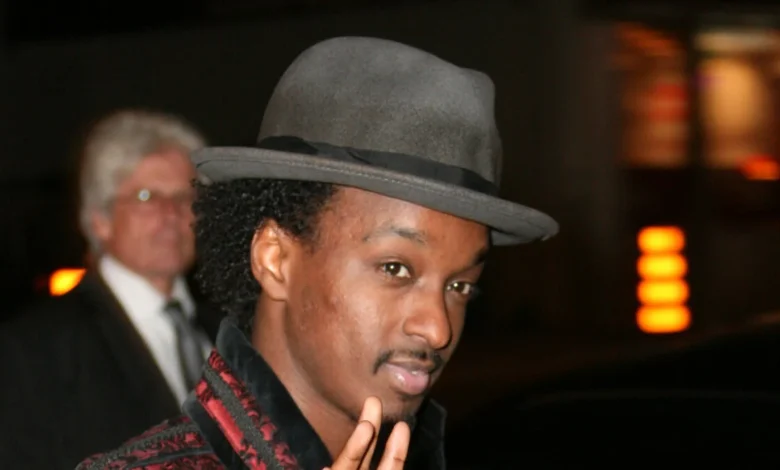
On Wednesday, the Grammy-winning musician K’naan, born Keinan Abdi Warsame, walked out of a Quebec courtroom as a free man, marking the conclusion of a high-stakes legal battle that had lingered for over a decade. Quebec Judge Julie Roy issued a verdict of not guilty regarding a sexual assault charge stemming from a 2010 incident in a Quebec City hotel room. The acquittal brings to a close a legal saga that dates back to a period when the Somali-Canadian artist was at the absolute zenith of his international fame, bolstered by the ubiquity of his anthem, "Wavin’ Flag."
The presiding judge’s decision turned on the rigorous legal standard of proof beyond a reasonable doubt. While Judge Roy acknowledged that she did not find the artist’s testimony entirely credible, she simultaneously determined that the prosecution failed to overcome the threshold required for a criminal conviction. By finding that both the complainant and the defendant provided accounts that were internally consistent enough to be considered plausible, the court concluded that the evidence was insufficient to render a definitive guilty verdict.
A Chronology of the Allegations and Legal Proceedings
The incident in question occurred in the summer of 2010 during the Festival d’été de Québec. At the time, K’naan was one of the most recognizable figures in music, having seen "Wavin’ Flag" adopted as the promotional anthem for the 2010 FIFA World Cup, propelling him to global stardom. According to testimony provided during the trial, the complainant and the artist had initiated contact via an online platform before arranging to meet in person during the festival.
The formal legal process, however, did not begin until May 2022, when the complainant filed a formal report with the Montreal police. The delay of nearly 12 years between the alleged incident and the filing of charges created significant evidentiary hurdles, a common challenge in cold-case sexual assault trials.
During the proceedings, the complainant testified that the evening had escalated into a confrontation within the confines of the artist’s hotel room at the Hilton. She alleged that an argument regarding the use of protection had occurred, during which she insisted on the use of a condom. She testified that her refusal to engage in unprotected intercourse provoked an angry response from the musician. She further alleged that he attempted to force himself upon her, at which point she physically repelled him. The complainant stated that both parties eventually fell asleep, only for her to awaken in the middle of the night to discover the artist engaged in sexual activity with her without her consent.
K’naan maintained his innocence throughout the trial. His defense team argued that the sexual encounter was entirely consensual and that it had occurred in the morning, rather than during the overnight hours as described by the complainant. By presenting this alternative timeline and nature of events, the defense successfully established a narrative that, while contested, the judge found could not be definitively disproven under the strictures of Canadian criminal law.
The Standard of Reasonable Doubt
The Canadian judicial system places a heavy burden on the Crown prosecutor to prove guilt "beyond a reasonable doubt." This does not mean the absence of any doubt, but rather the absence of any doubt that would cause a reasonable person to hesitate before reaching a conclusion of guilt.
In her oral ruling, Judge Roy noted that both the complainant and K’naan provided accounts that, while conflicting, were grounded in enough plausible detail that neither could be dismissed as inherently impossible. Because the court was presented with two contradictory yet plausible versions of the same event—without independent corroborating evidence such as third-party witnesses or forensic data—the judge was legally obligated to rule in favor of the defendant. This acquittal serves as a stark reminder of the complexities inherent in adjudicating "he-said, she-said" cases that lack physical or contemporaneous evidence.
Broader Context and the 2026 Legal Landscape
The acquittal of K’naan is the latest in a series of high-profile legal challenges involving entertainers facing sexual misconduct allegations in 2026. This year has seen a notable cluster of similar trials, bringing increased public scrutiny to the intersection of celebrity, power dynamics, and the justice system.
In July 2026, the British influencer and entertainer Yung Filly was cleared of rape charges in Perth, Australia. While the court acquitted him of the most serious sexual assault allegations, he was convicted on a lesser charge of assault, illustrating the nuanced outcomes that can arise when juries or judges parse complex testimonies. Similarly, in London, British actor Micheal Ward, best known for his role in the acclaimed series Top Boy, was found not guilty of rape and sexual assault charges.
These cases have collectively fueled a national conversation regarding the nature of consent, the impact of historical reporting, and the challenges faced by both victims and defendants in navigating the legal system long after an alleged incident has occurred. Critics of the current system often point to the "re-traumatization" of victims in lengthy trials, while advocates for defendants emphasize the necessity of the presumption of innocence, regardless of the public profile of the accused.
Implications and Future Outlook
The conclusion of this trial provides a definitive legal resolution for K’naan, but it leaves behind a complex legacy. For the music industry, cases of this magnitude often lead to internal debates regarding vetting, the duty of care, and the evolving standards of conduct for touring artists.
From a legal standpoint, the case reinforces the difficulty of prosecuting historical sexual assault allegations. As time passes, memories fade, digital footprints may be deleted, and the corroborating evidence necessary to tip the scales of justice becomes increasingly scarce. The case also underscores the critical role of judicial discretion in evaluating the credibility of witnesses in the absence of hard evidence.
For the public, the outcome of the K’naan trial likely reflects the ongoing tension between the pursuit of justice for survivors and the fundamental right of the accused to a fair trial. As more high-profile entertainers are brought before the courts, the discourse surrounding these incidents continues to evolve, pushing legal systems worldwide to refine how they handle sensitive, decades-old allegations.
While the verdict in the Quebec courtroom is final, the cultural impact of such a high-profile case will likely persist, influencing how fans, industry professionals, and legal experts view the intersection of fame and accountability. As K’naan moves forward, the focus will inevitably shift toward his future endeavors, but the legal precedent set by his acquittal will remain a point of reference in future discussions regarding the threshold of evidence required to secure a conviction in cases involving historical allegations of sexual assault.
The case of R. v. Warsame underscores the reality that, in the eyes of the law, the outcome of a trial is determined not by public perception or the popularity of the parties involved, but by the meticulous application of legal standards to the facts presented on the record. For now, the legal chapter on the 2010 Quebec City event is closed, but the broader societal conversation regarding these sensitive issues remains very much open.