The Triggerman Effect How a Forgotten Queens Record Became the Secret DNA of Southern Hip Hop

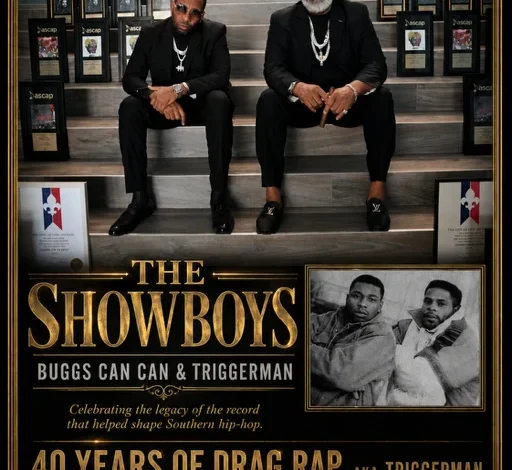
In the sprawling, complex history of American popular music, few phenomena are as peculiar or as culturally significant as the accidental afterlife of the 1986 track Drag Rap. Produced by the Queens-based duo The Showboys—Orville “Buggs Can Can” Hall and Phillip “Triggerman” Price—the song was intended to be a localized hit in the competitive New York City market. However, while the duo initially believed the record had faded into obscurity following its release on Profile Records, it was simultaneously undergoing a transformative process thousands of miles away. Decades later, the song is recognized not merely as a relic of the mid-eighties, but as the foundational “Triggerman” sound that served as the architectural bedrock for Southern Hip-Hop, influencing the development of Memphis rap and New Orleans Bounce.
The Genesis of a Cinematic Sound
The creation of Drag Rap was rooted in the specific cultural landscape of Hollis, Queens, during the mid-1980s. Orville Hall and Phillip Price were operating within an environment defined by the emergence of hip-hop as a dominant commercial force. Having grown up alongside hip-hop icons such as Jam Master Jay of Run-DMC, Hall and Price were deeply immersed in the aesthetic shift occurring in the New York boroughs.
The concept for the song was inspired by the detective television series Dragnet. During that era, it was common for hip-hop artists to experiment with thematic storytelling, often borrowing from television tropes to capture the public imagination. Hall, drawing inspiration from the production techniques of artists like Doug E. Fresh, utilized an 808 drum machine to craft a beat that was both cinematic and percussive. Crucially, the record was produced entirely from scratch; rather than relying on the sampling techniques that would define the Golden Age of Hip-Hop, The Showboys composed every musical element themselves. This distinction is significant, as it allowed the track to possess a unique, organic texture that would later prove highly malleable for Southern producers.
Chronology of a Cultural Shift
The timeline of the record’s trajectory illustrates the disconnect between regional music markets in the late 20th century. In 1986, Drag Rap premiered on the influential Mr. Magic Rap Attack radio program in New York. While it garnered attention, the lack of centralized data tracking systems like Nielsen BDS or SoundScan meant that artists often had no visibility into how their records performed outside their immediate metropolitan area. By the late 1980s, the duo assumed the song had run its course and ceased to be a viable commercial product.
However, the reality in the Southern United States was starkly different. As the record traveled south, it was embraced by local scenes in Memphis and New Orleans. Producers in these regions began deconstructing the track, isolating its percussion and vocal elements, and looping them to create the rhythmic backbone for new sub-genres. This process of “chopping and screwing” and re-sampling transformed the song into what became colloquially known as the “Triggerman” sound. It became a sonic requirement for local clubs and radio, effectively becoming the musical glue for the nascent bounce music scene in New Orleans and the dark, aggressive phonk-adjacent sounds emerging from Memphis.
The Impact on Southern Hip-Hop
The influence of the Triggerman beat is difficult to overstate. It became the essential “roux” of the Southern musical landscape, appearing in countless recordings throughout the 1990s and 2000s. From T. Tucker and DJ Irv’s landmark record “Where Dey At?” to the works of iconic Southern artists like Juvenile, DJ Jubilee, and later mainstream acts like Beyoncé and Chris Brown, the DNA of the original 1986 composition is pervasive.

This cultural phenomenon represents a unique case study in musical evolution. While many songs are sampled, the Triggerman beat was treated as a fundamental instrument—a rhythmic template that allowed for regional variation. In Memphis, it fueled the “Gangsta Walk,” a specific style of dance that required the precise, driving cadence of the original 808 pattern. In New Orleans, it provided the high-energy, infectious rhythm necessary for the rapid-fire vocal delivery of bounce music.
The Reunion and Realization
The Showboys remained unaware of their massive regional influence for years, believing their career had stalled shortly after the release of the record. The revelation only occurred when a promoter from Memphis finally managed to locate the duo, requesting a performance of the track they referred to as “Triggerman.” The ensuing confusion—as the duo did not recognize the title—eventually led to a series of tours that proved to be a turning point in their careers.
Upon arriving in Memphis, Hall and Price were greeted by a level of fame that defied their expectations. The reception they received at the airport, the packed venues, and the sheer saturation of their work in the local airwaves served as a jarring but validating homecoming. It was during these tours that they witnessed firsthand how their work had been woven into the fabric of Southern life. The transition from being perceived as “forgotten” New York artists to being hailed as the architects of a Southern soundscape was profound.
Analysis of Musical Implications
The success of the Triggerman sound highlights a broader trend in hip-hop history: the shift of the genre’s epicenter from New York to the South. By the late 1990s, the Southern influence began to dominate the national charts, and the foundational work laid by tracks like Drag Rap played a subtle but vital role in this transition.
From a legal and musicological perspective, the story of Drag Rap also serves as a testament to the importance of artist rights. As the duo works to reclaim their intellectual property and reassert control over their legacy, the industry is reminded of the importance of recognizing the originators of iconic sounds. The fact that a song created with a $150 drum machine and a television theme song could influence nearly four decades of music underscores the democratizing power of the 808 machine.
Broader Legacy and Future Outlook
Today, the legacy of The Showboys is undergoing a period of formal recognition. As hip-hop approaches its semicentennial milestones, historians and musicologists are looking back at the mid-eighties with greater scrutiny, identifying the tracks that truly moved the needle. Drag Rap occupies a unique space in this history; it is a bridge between the early New York street-party era and the high-production, rhythm-heavy sounds that would eventually define the South.
For Orville Hall and Phillip Price, the journey has come full circle. Having secured the rights to their work, they are now positioned to re-engage with the industry on their own terms. Their story is no longer one of a lost record, but of a timeless contribution to the American songbook. As they return to the stage, the duo serves as a living connection to an era when the rules of hip-hop were still being written, and when a simple, innovative beat could spark a cultural movement that would resonate for generations to come. The Triggerman sound remains, more than ever, a defining element of the American musical experience, proving that the most enduring hits are often those that find their greatest purpose in places their creators never expected to reach.