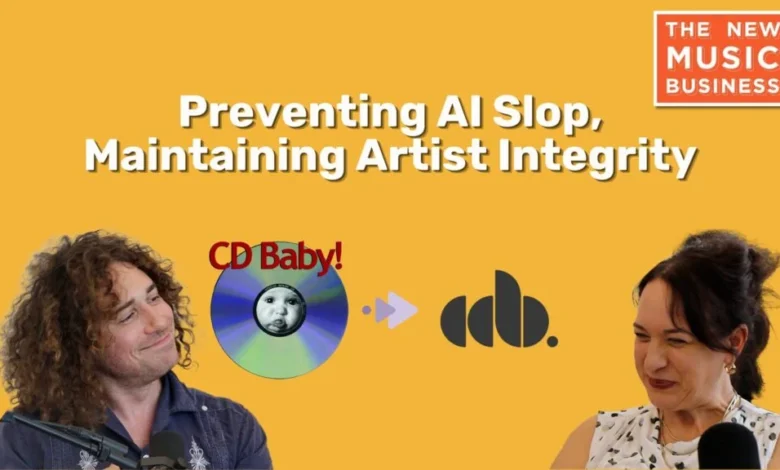
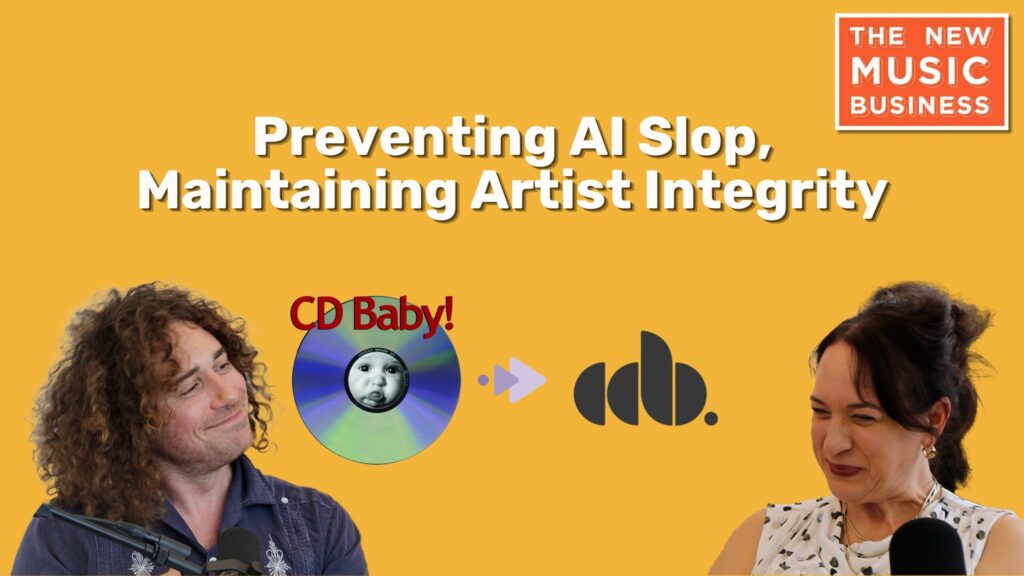
The modern music industry stands at a critical juncture, defined by the rapid proliferation of artificial intelligence, shifting paradigms in streaming economics, and complex corporate consolidations that continue to reshape the independent sector. These profound transformations formed the core of a recent extensive discussion on The New Music Business podcast, hosted by independent artist and author Ari Herstand. Herstand sat down with Molly Neuman, President of CD Baby, one of the world’s largest independent music distributors, to dissect the survival mechanisms, emerging threats, and evolving definitions of success for independent creators navigating the landscape of 2026.
As digital service providers and independent distributors grapple with unprecedented technological disruptions, the conversation offered a rare, behind-the-scenes look at how legacy distribution pillars are adapting. Neuman, whose extensive industry footprint includes leadership tenures at Downtown Music Holdings and the American Association of Independent Music (A2IM), brought decades of advocacy experience to the table. Together, Herstand and Neuman tackled the industry’s most contentious debates, ranging from the ethical quagmire of generative artificial intelligence to the creeping threat of streaming fraud and bot manipulation.
Navigating the Evolution of Independent Distribution
To understand CD Baby’s current operational strategy, it is necessary to examine the historical trajectory of independent music distribution. Founded in 1998 by Derek Sivers as an online CD store for independent musicians, the company evolved into a digital pioneer, becoming one of the first services to deliver independent music directly to Apple’s iTunes Store in the early 2000s. Over the subsequent two decades, the explosion of digital streaming fundamentally altered the company’s business model from physical warehousing to digital aggregation and rights management.
Neuman’s journey to the presidency of CD Baby reflects this broader industry metamorphosis. Her career spans underground indie rock scenes, non-profit advocacy through A2IM—where independent labels band together to negotiate collective interests—and high-level executive positions within major music holdings. During the podcast, Neuman reflected on her path to the executive suite, shedding light on what it truly means for a distributor to maintain its independent ethos while scaling operations to service millions of global creators.
A central point of discussion addressed the ongoing corporate consolidation within the music industry. Questions surrounding CD Baby’s independence following corporate acquisitions—such as Downtown Music Holdings taking ownership and subsequent industry-wide shifts involving major labels—frequently weigh on the minds of independent artists. Neuman addressed these anxieties head-on, discussing how corporate backing affects artist ownership, data privacy, and creative autonomy. While independent purists often view major label proximity with skepticism, Neuman emphasized that institutional backing can provide crucial capital investments required to fight fraud, upgrade technological infrastructure, and secure better monetization tools for independent talent.
The Artificial Intelligence Frontier: Creation Versus Exploitation
Few topics elicit as much anxiety and polarization in the contemporary music community as generative artificial intelligence. The debate extends far beyond simple stylistic mimicry; it strikes at the heart of copyright law, economic survival, and the definition of human artistry. Herstand and Neuman dedicated a significant portion of their discussion to evaluating whether AI-generated music should exist and how streaming platforms are structurally responding to the flood of synthetic tracks.
The technological timeline leading up to 2026 has been marked by an exponential increase in text-to-audio and melody-generation models. Millions of tracks can now be produced daily with minimal human input, threatening to overwhelm digital service providers (DSPs) and dilute the royalty pools available to human musicians. Neuman provided insights into how distributors and DSPs are collaborating to establish guardrails. These measures include watermarking synthetic audio, developing detection algorithms to identify non-human performances, and rethinking royalty attribution models so that genuine engagement is prioritized over algorithmic spam.
However, the conversation also touched on the nuanced boundary between AI as a creative tool and AI as an exploitative mechanism. While some artists utilize machine learning to assist with mixing, mastering, or ideation, unauthorized cloning of an artist’s voice or likeness represents a severe violation of intellectual property rights. Neuman outlined the protective measures distributors like CD Baby are implementing to safeguard their client rosters against unauthorized commercial exploitation by third-party tech developers.
Combating Streaming Fraud and Bot Plays
Compounding the challenges posed by generative AI is the pervasive issue of streaming fraud and artificial stream inflation. In recent years, malicious actors have increasingly deployed automated scripts, botnets, and click-farms to artificially inflate play counts for specific tracks, attempting to siphon revenue from legitimate streaming royalty pools.
This illicit activity triggers severe consequences for unsuspecting musicians. When DSPs detect abnormal listening patterns, they frequently issue blanket penalties, which can include withholding royalty payments, removing entire catalogs, or permanently banning accounts. During the podcast, Neuman explained the mechanics of how streaming fraud operates at scale and why independent artists often find themselves disproportionately affected and penalized through no fault of their own.
Distributors find themselves on the front lines of this battle, acting as intermediaries between paranoid streaming services and independent creators. Neuman detailed the detection protocols CD Baby employs to identify suspicious activity before it triggers punitive DSP actions, advocating for greater transparency and due process for artists whose catalogs are flagged by automated fraud-detection systems.
Redefining Success and Distribution Realities in 2026
Beyond technological threats, the podcast explored the persistent misconceptions musicians hold regarding the function of music distribution. A common pitfall among emerging artists is the assumption that uploading a track to a distributor equates to a marketing strategy. Neuman stressed that distribution is merely the plumbing of the music industry—it delivers the asset to the shelves, but it does not compel consumers to listen. Bridging the gap between mere availability and genuine audience cultivation remains one of the most significant educational hurdles for independent creators.
Furthermore, the discussion evaluated the evolution of customer support within the digital distribution space. As companies scale to serve millions of DIY artists globally, the integration of automated customer support systems has become a point of contention. Neuman addressed the operational necessity and ethical limits of AI-driven support interfaces, debating whether algorithmic assistance can adequately replace human empathy when artists face critical issues regarding their livelihood, royalty payouts, or copyright strikes.
Finally, Herstand and Neuman concluded by redefining what "making it" means in the modern music business of 2026. The traditional metrics of success—securing a major label recording contract, achieving multi-platinum album sales, or dominating terrestrial radio charts—have given way to sustainable, direct-to-fan micro-economies. For many independent artists, success is no longer defined by global superstardom, but by maintaining creative control, retaining 100% of master ownership, and cultivating a dedicated, niche community that generates a reliable living wage through touring, merchandise, sync licensing, and streaming revenue.
As the music industry continues to adapt to an unpredictable future characterized by artificial intelligence and digital consolidation, insights from industry leaders like Molly Neuman provide a vital roadmap for independent creators determined to protect their art, their rights, and their economic futures.