Audient Horizon Series Launches New Multichannel Audio Interfaces to Redefine Professional Studio Scalability

British console manufacturer Audient has officially announced the launch of its flagship Horizon Series, introducing three advanced multichannel audio interfaces designed to cater to various studio scales and professional audio applications. Building upon the legacy of the company’s popular iD Series—which established a strong foothold in home recording environments following its debut in 2013—the Horizon Series elevates Audient’s engineering into the high-end professional and commercial studio sectors. Featuring reference-quality digital-to-analog and analog-to-digital conversion, ADAT expansion capabilities, and a highly scalable architecture integrated with digital recall, the new lineup represents a significant technological leap for the company.
The introduction of the Horizon Series marks a strategic shift for Audient, moving beyond desktop and compact interfaces into rackmount systems that rival high-end dedicated AD/DA converters. As professional and hybrid studios increasingly demand flexible, expandable routing solutions that seamlessly integrate with outboard analog gear, the Horizon series arrives to meet these evolving workflow requirements. Shipping is scheduled to commence globally on September 28, positioning the hardware for immediate adoption by mixing engineers, tracking facilities, and modern hybrid music producers.
Hardware Architecture and Design Philosophy
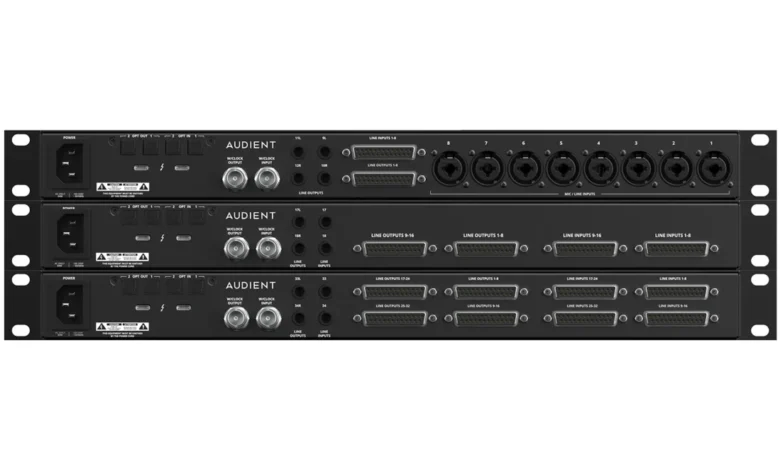
A defining characteristic of the Audient Horizon series is its aesthetic and physical resemblance to dedicated professional AD/DA conversion hardware rather than traditional audio interfaces. This impression is reinforced by the heavy reliance on multi-pin D25 connectors for analog inputs and outputs, bypassing conventional multi-jack configurations to save rack space and streamline studio cabling. However, each unit retains accessible connectivity with a designated pair of balanced TRS analog inputs and a pair of TRS analog outputs for immediate local monitoring or patching.
Housed within a rugged, tour-ready, and fanless 1U all-metal chassis, the Horizon series emphasizes reliability and silent operation, a crucial factor for control rooms where fan noise can compromise critical listening environments. Audient has backed the durability of the hardware by including a comprehensive three-year manufacturer warranty across all models in the lineup. Furthermore, the reliance on high-speed Thunderbolt 3 connectivity ensures ultra-low latency performance and massive bandwidth capacity capable of handling simultaneous multichannel inputs and outputs at the highest resolution settings.
Detailed Breakdown of the Horizon Series Lineup
The Horizon Series comprises three distinct models, each tailored to specific studio configurations, input-output requirements, and workflow methodologies:
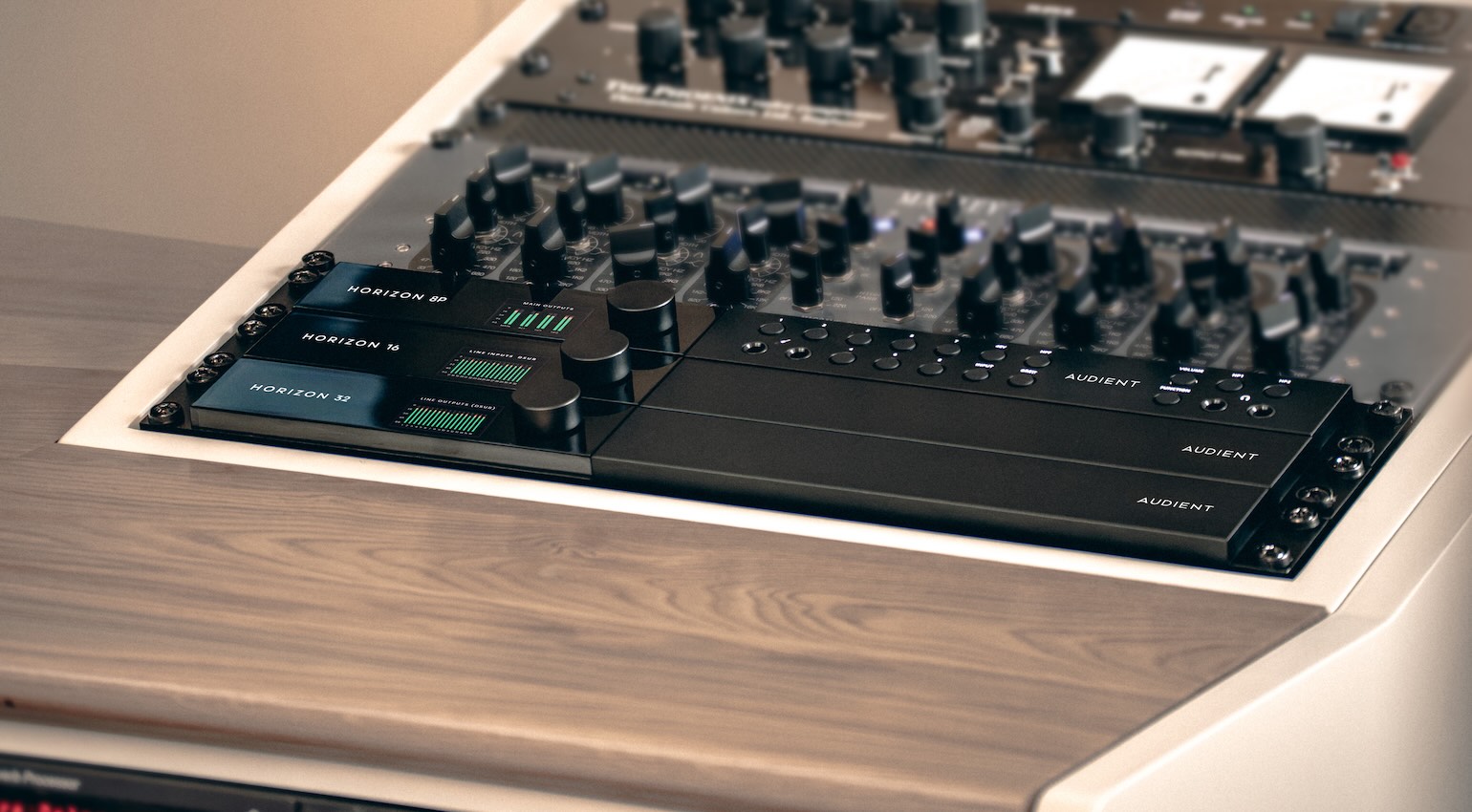
- Horizon 8P: Operating as a 24×32 interface, the Horizon 8P serves as the primary front-end unit of the series. It features eight console-grade microphone preamplifiers equipped with ORBIT Control variable impedance technology, allowing engineers to dynamically shape the input load and alter the harmonic response of the mic pres to match vintage or modern microphones. Because of its comprehensive front-end controls and integrated preamps, the 8P is engineered to function as the master command center of a studio setup.
- Horizon 16: Designed primarily as an expansion unit or a dedicated conversion hub, the Horizon 16 provides a 34×34 I/O architecture. While featuring fewer front-panel physical controls than the 8P, its streamlined design makes it an efficient building block for expanding existing analog chains and integrating external outboard gear.
- Horizon 32: Offering an expansive 50×50 I/O configuration, the Horizon 32 sits at the top of the standard standalone tier. When chained together with additional Horizon units, multiple systems can scale up to an astonishing 200×200 system architecture, accommodating massive multichannel mixing setups, complex immersive audio mixing environments, and large-scale tracking sessions.
All three interfaces support high-resolution 32-bit, 192 kHz audio recording, ensuring maximum dynamic range and audio fidelity suitable for demanding archival and commercial production standards.
Chronology and Development Background
Audient’s entry into the audio interface market in 2013 with the iD Series changed the landscape of budget-friendly recording by bringing console-style preamplification and clean conversion to desktop users. Over the subsequent decade, the demand for hybrid workflows—where digital digital audio workstations (DAWs) interface extensively with analog mixing consoles, summing mixers, and hardware processors—grew exponentially.
Development of the Horizon Series began as an internal initiative to address the limitations of fixed-I/O desktop interfaces in professional environments. Engineers sought to design a modular ecosystem that could grow alongside a studio’s physical and technical expansion. By focusing on scalable architecture, Audient spent years refining the digital recall capabilities and D25 connectivity standards to ensure seamless integration with existing studio infrastructure without forcing users to discard earlier hardware investments.
Industry Implications and Market Impact
The launch of the Horizon Series is expected to alter the competitive landscape for mid-to-high-tier audio interfaces and converters. Traditional studio facilities often face a dilemma when upgrading infrastructure: investing in rigid, proprietary systems that become obsolete, or assembling disjointed multi-brand modular units that suffer from clocking discrepancies and software instability.
By offering a unified, scalable ecosystem ranging from 24 channels up to 200 channels of pristine 32-bit/192kHz audio, Audient provides a cohesive path for studio upgrades. The inclusion of ORBIT Control variable impedance on the Horizon 8P also bridges the gap between digital precision and the sought-after harmonic saturation of vintage analog consoles, appealing directly to engineers who prioritize tactile warmth alongside digital clarity.
As commercial studios continue to adapt to hybrid workflows, immersive audio formats such as Dolby Atmos, and the demand for higher channel counts, the modularity of the Horizon series addresses a clear market gap. The combination of fanless operation, robust metal construction, and Thunderbolt 3 speed positions Audient to capture significant market share among professional facilities looking to modernize their infrastructure without sacrificing analog workflow integrity.