Songwriter Cyril Vetter Urges Supreme Court to Reject Music Industry Challenge in Landmark Global Copyright Termination Case

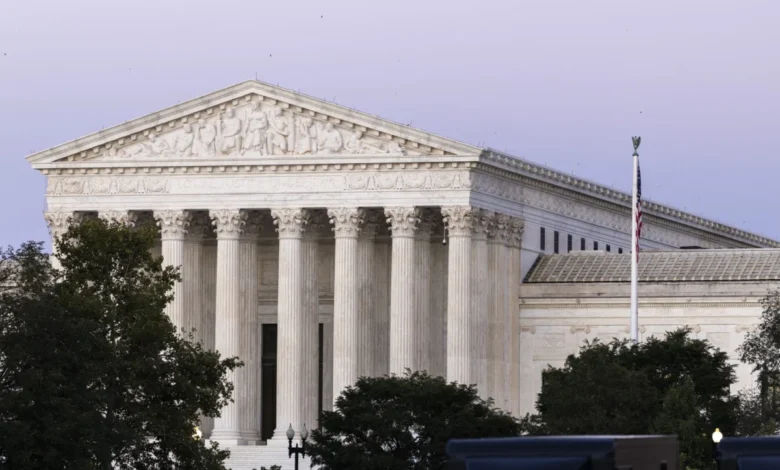
The legal battle over the global reach of copyright termination rights has reached a critical juncture at the United States Supreme Court, where songwriter Cyril Vetter has filed a formal brief urging the justices to reject a petition by major music conglomerates to overturn a lower court ruling. The dispute, which centers on whether musicians can reclaim international copyrights alongside their domestic rights, represents a significant test of the 1976 Copyright Act’s termination provisions in an era of globalized digital music consumption.
The conflict stems from a landmark ruling delivered in January 2026 by a federal appeals court, which concluded that when an author exercises their right to terminate a copyright grant under Section 203 of the Copyright Act, that termination applies globally. For decades, the music industry has operated under the assumption that termination rights were strictly domestic, allowing publishers to retain ownership of foreign rights in perpetuity. The appeals court decision, which favored Vetter in his efforts to reclaim rights to his 1963 rock classic "Double Shot (Of My Baby’s Love)," effectively challenged this long-standing industry standard.
The Chronology of a Legal Confrontation
The origins of this dispute trace back to the implementation of the 1976 Copyright Act, which was designed to protect authors from "unremunerative" long-term transfers of rights. The law allows creators to terminate these transfers after a certain period—typically 35 years—giving them a chance to renegotiate terms or reclaim their work.
In the decades that followed, the music industry maintained a bifurcated system: American copyrights were subject to the termination window, but foreign copyrights remained under the control of the initial publishing entity. This allowed labels and publishers to secure consistent, long-term revenue streams from international markets, even after the original songwriter had successfully terminated the U.S. grant.
In early 2026, the federal appeals court disrupted this paradigm. The court ruled that the statutory language of the Copyright Act does not provide for a geographic limitation on termination. When an author terminates, they recover the entirety of their original grant, regardless of where that copyright might be exercised. Following the ruling, a consortium of major music companies—including Universal Music Group, Warner Music Group, Sony Music Entertainment, and BMG—engaged in a coordinated effort to challenge the decision. These entities reportedly purchased the rights from the small publisher involved in the Vetter case to gain standing to petition the Supreme Court directly.
The Argument for "Chaos" Versus Market Stability
In their June petition to the Supreme Court, the major labels and publishers characterized the appeals court ruling as a catastrophic error. They argued that the decision "unsettled 50 years of industry practice" and threatened to create "chaos" in the global music business. The petitioners asserted that the ruling would jeopardize billions of dollars in revenue and force a radical restructuring of existing contracts across international borders.
In their response filed on September 14, 2026, attorneys for Cyril Vetter—led by Tim Kappel, Loren Wells, and Supreme Court litigator Joshua Rosenkranz—pushed back against these claims. The brief argues that the music industry is attempting to inflate a standard legal disagreement into a "copyright emergency" to force judicial intervention where none is required.
"Petitioners try to depict this case as some sort of copyright emergency that cannot await further litigation," the brief states. "But publishers are doing just fine and will continue to thrive even if some of them have slightly less bargaining power with which to deprive authors of a fair return when their works become wildly successful."
Vetter’s legal team further contends that the industry’s resistance is rooted in a desire to avoid the "open market." By forcing publishers to renegotiate, the ruling theoretically levels the playing field for songwriters, a prospect that the major labels find commercially disadvantageous.

Analyzing the "Circuit Split" Requirement
A central tenet of the Supreme Court’s process for granting a writ of certiorari—a request for the court to hear a case—is the existence of a "circuit split," where two or more federal appellate courts have issued conflicting rulings on the same point of law. Vetter’s attorneys argue that no such split exists in this instance. Because the January ruling is the first of its kind, they assert that the issue has not had sufficient time to "percolate" through the lower courts.
The brief notes that the petitioners barely mention the concept of a circuit split, waiting until the penultimate page of their filing to address it. Legal observers suggest that this omission serves as a tactical signal to the Supreme Court that the petition is premature. The court generally prefers to allow lower courts to weigh in on novel legal interpretations before intervening, as this process often clarifies the practical implications and limits of new legal theories.
Broader Implications for the Music Industry
The implications of this case extend far beyond the rights to "Double Shot (Of My Baby’s Love)." If the Supreme Court were to decline the petition, the appellate court’s ruling would stand, potentially triggering a wave of similar claims from songwriters and their estates.
For the industry, the "global termination" model represents a shift in the balance of power. The ability of songwriters to reclaim international rights would force publishers to renegotiate royalty rates and ownership stakes for some of the most valuable catalogs in music history. Industry analysts suggest that this would lead to increased litigation in the short term, as songwriters test the limits of their newly confirmed rights.
However, supporters of the ruling argue that this is merely a corrective measure intended by Congress. They point to the original intent of the Copyright Act: to ensure that authors are not locked into disadvantageous deals signed at the beginning of their careers. They argue that the "doomsday" scenarios painted by the labels are inconsistent with the industry’s history of adaptation.
Historical Precedent and Industry Resilience
In their response, Vetter’s counsel drew parallels to past legal battles in which the entertainment and tech industries warned of impending ruin, only to thrive after unfavorable rulings. They specifically cited the 2013 Supreme Court case regarding the resale of copyrighted books and the landmark legal battle over the VCR, which film studios infamously likened to the "Boston strangler."
In both instances, the industries involved predicted that the court’s decision would destroy their business models. Yet, the subsequent decades saw unprecedented growth and technological advancement in both the book and film industries. By invoking these precedents, the legal team for the songwriter aims to frame the current industry outcry as a standard lobbying tactic rather than a legitimate warning of economic collapse.
Looking Ahead
As the Supreme Court considers whether to take up the case, the music industry remains in a state of uncertainty. The major labels have staked a significant amount of resources on overturning the ruling, reflecting the high stakes of global copyright ownership in the streaming era. Conversely, songwriter advocacy groups are closely monitoring the case, viewing it as the most significant development in copyright law for creators in over a generation.
If the Supreme Court grants the petition, the case will move into a phase of detailed briefing and oral arguments, likely pushing a final decision into 2027. If the court denies the petition, the appeals court ruling will stand as the law of the land, potentially creating a new, more creator-friendly reality for the music industry. For now, the matter remains in the hands of the justices, who must decide whether this "global termination" issue is a localized dispute or a fundamental transformation of copyright law that requires their immediate attention.
Related posts: