Appellate court upholds dismissal of litigation regarding Bruce Springsteen Only The Strong Survive album artwork

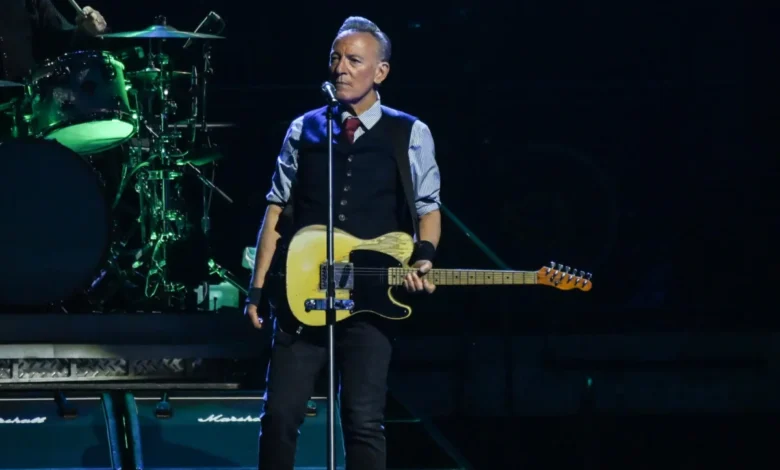
A New Jersey appellate court has definitively closed the door on a protracted legal dispute concerning the cover art for Bruce Springsteen’s 2022 album, Only The Strong Survive. In a ruling issued on Tuesday, September 15, the New Jersey Superior Court Appellate Division affirmed the lower court’s decision to dismiss the lawsuit brought by the estate of Louis Billotti, a classic car enthusiast whose 1967 Pontiac GTO was featured on the record’s sleeve. The decision marks the final legal resolution of a case that pitted the estate of a deceased fan against one of the most iconic figures in rock music history, as well as his corporate partners, Sony Music and manager Jon Landau.
Chronology of the Dispute
The origins of the legal conflict date back to 2021, a period when the global music industry was navigating the tail end of pandemic-related restrictions and artists were returning to production. Bruce Springsteen, known for his deep ties to his home state of New Jersey, arranged for a series of photo sessions at his personal residence. Among the assets utilized for these creative endeavors was a vintage 1967 Pontiac GTO owned by Louis Billotti.
According to court filings, the agreement between Springsteen and Billotti was straightforward: the car owner was paid $1,200 for the use of the vehicle and his participation in the two-day shoot. Following the completion of the project, the image was selected to serve as the primary visual identity for Only The Strong Survive, an album consisting of R&B and soul covers that achieved significant commercial success, debuting at No. 8 on the Billboard 200 in November 2022.
The litigation surfaced in 2023, after Billotti had passed away. His son, acting on behalf of the estate, filed a lawsuit alleging that an oral contract had been established during the 2021 photoshoot. The plaintiff contended that Springsteen had promised the car owner additional, unspecified financial compensation should the imagery be utilized for an album cover. The defense, representing Springsteen, Sony Music, and Jon Landau, categorically denied the existence of any such secondary agreement.
In 2024, a trial court judge granted summary judgment in favor of the defendants, noting a total lack of tangible evidence to support the claims of an oral agreement. The Billotti estate subsequently filed an appeal, leading to this week’s affirmation by the appellate panel.
Legal Analysis of the Appellate Ruling
The core of the appellate court’s decision rested on the evidentiary standards required to validate an oral contract, particularly in cases involving hearsay. The younger Billotti’s claim relied heavily on accounts of conversations he alleged his father had relayed to him—a legal scenario defined as “double hearsay.” Under New Jersey law, such testimony is subject to rigorous scrutiny and is generally inadmissible unless it meets specific, narrow exceptions.
The appellate panel found that the plaintiff failed to provide any corroborating documentation, such as emails, text messages, or third-party witnesses, that would substantiate the existence of a promise for further payment. In contrast, the defense provided testimony from individuals present during the negotiations who maintained that the original $1,200 payment was the full and final consideration for the use of the car.
One particularly damning piece of evidence for the plaintiff was a sworn affidavit from a long-term associate of the late Louis Billotti. The witness described the car collector as a man who simply cherished the experience of interacting with Springsteen and being involved in the creative process of a high-profile musician. The affidavit stated that Billotti was not looking for further profit and was genuinely excited to see his vehicle associated with the music legend. The court noted that these statements fundamentally undermined the credibility of the estate’s claims, leading to the conclusion that the litigation was “legally untenable.”

Contextualizing the Album and Industry Standards
Only The Strong Survive represented a stylistic departure for Springsteen, focusing on interpretations of classic soul tracks. Commercially, the album was a solid performer, reinforcing Springsteen’s endurance as a touring and recording force. The use of the 1967 Pontiac GTO—an American classic—was intended to evoke a specific aesthetic that matched the vintage soul theme of the record.
In the music industry, the use of private assets for album photography is a common practice, typically governed by standard release forms. These documents are designed to protect the artist and the record label from subsequent claims of ownership or royalty rights. The $1,200 payment cited in the court records falls within the standard range for a location or prop rental for a professional photoshoot of this nature. The dismissal of this lawsuit serves as a reinforcement of the importance of these written contracts, signaling that courts are unlikely to entertain speculative claims of oral agreements that contradict established written terms.
Official Responses and Legal Implications
The conclusion of this case offers a degree of finality for Springsteen’s management team and his legal counsel. As of the time of reporting, representatives for Springsteen, Sony Music, and the legal counsel for the Billotti estate have not provided further commentary. The lack of a comment from the plaintiff’s side suggests that the avenue for further appeals is likely exhausted.
The broader implication for the entertainment industry is the protection of artists against claims rooted in unverified oral promises. Legal experts have often noted that “he-said-she-said” scenarios regarding professional agreements are difficult to prosecute, particularly when they involve high-net-worth individuals or entities. By upholding the trial court’s summary judgment, the appellate panel has signaled a continued adherence to the principle that the written contract remains the ultimate authority in commercial disputes.
Furthermore, the case underscores the necessity for estates to have verifiable evidence before initiating litigation against public figures. The court’s rejection of the “double hearsay” argument serves as a reminder that family anecdotes, while personally significant, do not carry the same weight as documented evidence in a court of law.
Broader Impact on Celebrity Legal Battles
This case is part of a larger trend of celebrity-related litigation that has become increasingly common in the digital age. Musicians and performers are frequently targeted by lawsuits ranging from copyright infringement to breach of contract. However, many of these cases—like the one involving the Billotti estate—are dismissed during the preliminary stages due to a lack of merit or sufficient evidence.
For the Springsteen camp, this victory ensures that the visual legacy of Only The Strong Survive remains untainted by ongoing legal controversy. As the artist continues his current world tour, the conclusion of this litigation allows the focus to return exclusively to the music and the performances that define his career. The ruling provides a clear precedent for the New Jersey judiciary in handling claims based on alleged oral modifications to written contracts, emphasizing that in the absence of written proof, professional conduct and documented agreements will prevail.
In summary, the New Jersey Superior Court Appellate Division’s decision is a validation of the trial court’s initial assessment. By dismissing the case, the court has maintained the integrity of standard industry practices, ensuring that the legacy of a musical icon and the business operations of a major record label remain protected from unsubstantiated claims. The matter is now considered closed, bringing an end to a brief but significant chapter of legal proceedings in the artist’s prolific career.
Related posts: