Macklemore Dropped From Ed Sheeran US Tour Following Pro-Palestine Stadium Ultimatum Led by Billionaire Robert Kraft

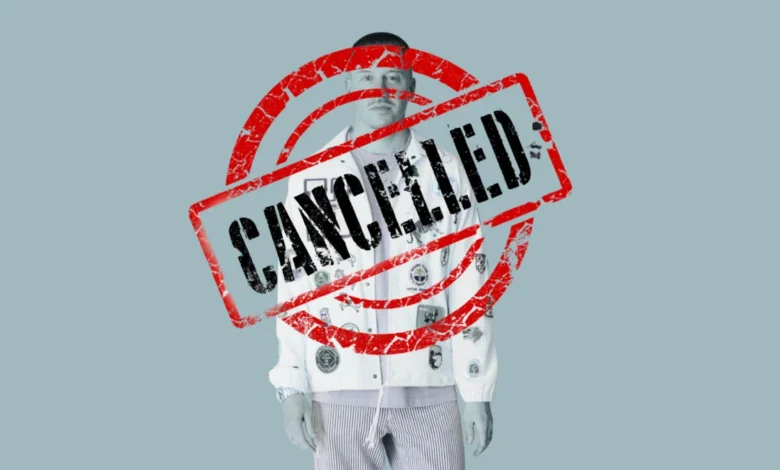
The intersection of modern commercial music, stadium infrastructure, and geopolitical activism has collided in a high-stakes controversy resulting in the removal of American rapper Macklemore from the remaining dates of Ed Sheeran’s ongoing United States stadium tour. Promoters for the multi-platinum British singer-songwriter confirmed that Macklemore, whose legal name is Benjamin Haggerty, will no longer serve as the opening act for eight upcoming concerts. The decision follows a coordinated ultimatum issued by several major US stadium owners, spearheaded by billionaire businessman and New England Patriots owner Robert Kraft, in direct response to Haggerty’s vocal, on-stage expressions of support for Palestine.
The controversy highlights the intensifying pressures faced by performing artists who use high-visibility commercial platforms to address polarizing foreign policy issues. While musical tours are traditionally managed through entertainment conglomerates such as Live Nation and AEG, contemporary stadium routing in the United States frequently requires contracts with independent venue operators, professional sports franchises, and corporate conglomerates. In this instance, the financial and logistical leverage held by venue owners ultimately dictated the composition of the tour lineup, forcing a division between headlining artistic preference and commercial venue management.
Chronology of the Controversy
The sequence of events leading to Haggerty’s removal unfolded rapidly across a series of high-profile stadium performances earlier this month. The initial flashpoint occurred when Macklemore performed as the primary support act during Sheeran’s concerts in New Jersey. During these sets, the rapper delivered a spoken-word segment advocating for Palestinian rights and screened visual footage depicting the humanitarian crisis in Gaza during a performance of his protest track, "Hind’s Hall."
The performances immediately polarized audiences and public advocacy groups. Organizations such as the Israeli American Council (IAC) launched targeted petitions demanding the rapper’s removal from all subsequent tour stops. Concurrently, the civil rights and watchdog organization StopAntisemitism issued formal statements condemning the inclusion of political messaging, arguing that ticket buyers had purchased passes to attend a standard musical performance rather than a political demonstration.
In an effort to address the mounting friction during his second New Jersey appearance, Haggerty directly addressed Jewish attendees in the audience, asserting that criticism of Israeli state policies, military actions, and apartheid conditions did not constitute an attack on Jewish people. Despite these remarks, opposition intensified, most notably from high-profile figures within the American business and sports community. Robert Kraft, whose company operates Gillette Stadium in Foxborough, Massachusetts—a scheduled stop on Sheeran’s itinerary—objected strongly to the rapper’s presence. According to statements released by Haggerty, Kraft contacted Sheeran directly to inform him that the rapper would be barred from performing at Gillette Stadium. Furthermore, Kraft allegedly coordinated with operators of other scheduled venues on the tour route, presenting Sheeran and his management with a collective ultimatum: cancel Macklemore’s remaining support slots or face the revocation of venue access for the entire tour.
Faced with the prospect of widespread venue cancellations that could disrupt performances for hundreds of thousands of ticket holders, Sheeran’s US promoter, the Messina Touring Group, acquiesced to the venue owners’ demands. Messina Touring Group formally notified stakeholders that allowing the rapper to remain on the bill would render the execution of the tour impossible, resulting in official confirmation that Haggerty would be pulled from the remaining dates.
Official Statements and Perspectives
The fallout prompted extensive public statements from both artists, reflecting fundamentally divergent philosophies regarding the role of musicians in political discourse.
Ed Sheeran issued a statement clarifying his position, emphasizing that the decision to remove Macklemore was made by promoters and venue owners rather than by himself. Sheeran acknowledged the devastating human toll of the Israeli-Palestinian conflict, noting that he maintains personal views on the matter but deliberately chooses not to use his professional platform to voice them.
"There is a reason I do not use my professional platform for politics—my audience includes young people, often children, of all backgrounds," Sheeran stated. He added that while he respects Haggerty’s conviction, he views his own role as providing a neutral space for his fanbase. "I choose to use my fame and platform to be a place of safety and sanctuary, to maintain diplomacy and keep conversations open, not closed. If we only focus on shouting the loudest, nothing will ever change."
In contrast, Macklemore framed his removal as a predictable consequence of institutional discomfort with dissent at scale. In a comprehensive written statement, the rapper detailed his private discussions with Sheeran and described the British singer as having been placed in an untenable position by the sudden pressure from stadium executives.
"He told me that the words ‘Free Palestine’ and the image of the Palestinian flag were hurtful to a lot of people he spoke with," Haggerty wrote. "I told him that if those words were more offensive than tens of thousands of Palestinian children being killed by Israel, then there was a fundamental disconnect between where those people stood and where I stood."
Macklemore further argued that standard corporate neutrality in the context of asymmetric geopolitical conflicts serves to protect established power structures. "Taking a side can cost you money, brand deals, sponsorships, festivals, private shows, relationships, and access," he noted, adding that his own experiences have validated those costs. "I’ve lost all of those things. But there is no neutral position between the oppressor and the oppressed. When one side has the bombs and bottomless financial and military support from America, refusing to take a side doesn’t leave you in the middle."
Broader Industry Implications and Analysis
The incident underscores structural vulnerabilities within the contemporary live entertainment ecosystem. Major stadium tours in North America are increasingly dependent on venues controlled by professional sports franchises, real estate developers, and corporate entities. Unlike traditional music promoters who prioritize ticket sales and artistic collaboration, sports stadium owners frequently maintain strict oversight regarding branding, corporate sponsorships, and socio-political expressions within their facilities. This oversight is often codified in standard lease agreements that grant venue operators broad discretion to cancel events or modify lineups to protect public relations or commercial interests.
Industry analysts note that the intervention by stadium owners sets a complex precedent for freedom of expression in live performance settings. When independent venue operators exert veto power over touring personnel based on political speech, headlining acts and booking agencies face difficult economic calculations. Defending an opening act’s right to free expression can result in catastrophic logistical failures if multiple venues simultaneously cancel contracts, potentially exposing promoters to millions of dollars in uninsured losses and damaging relationships with stadium networks.
Conversely, the decision to capitulate to venue demands risks alienating segments of the contemporary concert-going demographic that increasingly expect public figures to leverage their cultural capital in response to international humanitarian crises. As political polarization deepens globally, artists, promoters, and venue executives are likely to confront mounting pressure regarding where the boundaries of permissible speech lie within commercial entertainment spaces. For Macklemore, the conclusion of his involvement with the tour marked a definitive, if costly, amplification of his platform. Reflecting on the two performances he managed to complete, the artist concluded that the exposure achieved was ultimately worthwhile: "If those words cost me the stage, while turning the conversation back to Palestine, then it was the most successful tour I’ve ever been on."
Related posts: