Charlie Wheatley Redefines British Folk Tradition with Unconventional String Arrangements on Live from the Chapel

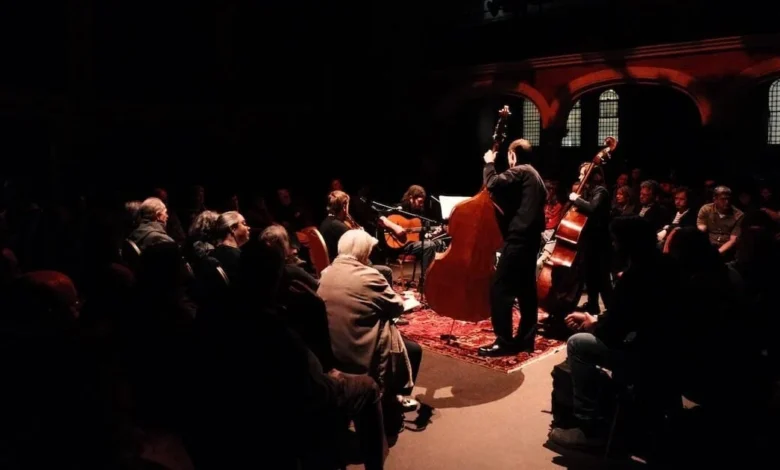
London-based multi-instrumentalist and folk interpreter Charlie Wheatley has officially launched an ambitious three-part recording series with the release of his new twenty-five-minute, four-track EP, Live from the Chapel. Released independently on September 22, 2026, the project serves as a compelling introduction to a broader artistic undertaking: a planned repertoire of approximately forty songs, blending historical traditional compositions with original material. Recorded live inside the cavernous, nineteenth-century Stone Nest—a former Welsh church situated in London’s West End—the EP captures both an intimate acoustic performance and a bold reinvention of historic British Isles folk manuscripts.
The overarching design of the three-part project hinges on a dynamic musical philosophy. For each successive chapter in the series, Wheatley intends to completely overhaul his accompanying lineup of musicians. This rotating configuration underscores his academic and artistic fascination with the organic, constantly evolving nature of folk music across the centuries. Rather than treating traditional tunes as static museum pieces, Wheatley treats them as living blueprints capable of adapting to modern, unconventional instrumental pairings.
A Masterclass in Unconventional Instrumentation
For the inaugural chapter, Live from the Chapel, Wheatley opted for a striking and highly unusual stage arrangement. Centered around his own acoustic Gypsy-jazz guitar, the ensemble features an exceptionally low-end-heavy string section: Tom Moore on viola, alongside a dual double-bass setup performed by Nina Harries and Tom Wheatley.
This configuration breaks sharply from standard folk arrangements, which typically rely on fiddles, accordions, or higher-register accompaniment to carry melodic weight. Instead, the combined low-end frequencies of three distinct stringed instruments interact with the natural acoustics of Stone Nest. The venue’s grand, reverberant architecture amplifies the subterranean resonance of the double basses, filling the historic space with a dense, atmospheric ambience.
This acoustic foundation allows the ensemble to experiment with minimalism, drone textures, and subtle improvisation, effectively altering the DNA of centuries-old melodies without stripping away their historical integrity.
Deconstructing the Traditional Repertoire
The EP’s tracklist dives deep into the folk manuscripts of the British Isles, focusing heavily on traditional dance structures while introducing dark, cinematic undercurrents.
This stylistic duality is immediately apparent on the opening medley, A Tune for Eadie / Old Molly Oxford / Idbury Hill. Drawing from a trio of Cotswolds and Oxfordshire Morris dances, the band avoids a traditional, high-tempo introduction. Instead, the track begins furtively, driven by plucked viola lines that skulk alongside low bowed notes and muted bass thuds. This two-minute minimalist introduction feels jarringly modern and unexpected. When the piece eventually transitions into a more recognizable dance rhythm, the character of the music has been permanently altered. The lower bowed strings work in tandem with sharply flat-picked guitar work to inject a brooding, foreboding tension that capitalizes fully on the venue’s cavernous acoustics.
In contrast, the subsequent track, Roman Wall / Paddy Carey’s, leans into a brighter palette. The piece showcases a vibrant Irish jig propelled by the punchy, energetic attack of Wheatley’s Gypsy-jazz acoustic guitar. Yet, even within a lighter framework, Wheatley’s penchant for subtle, unsettling detail remains evident. Throughout the track, listeners can detect odd, percussive notes emanating from one of the double basses. This persistent rhythmic counterpoint introduces a serious, grounding subtext beneath the jaunty main melody. Meanwhile, the viola largely mirrors the guitar’s melodic lines while interjecting scattered, scratchy shards of notes that maintain the EP’s signature dark hue.
The hypnotic center of the recording emerges during the hornpipe and shanty medley, Bristol / Lemmie Brazil’s no.2 / Y Washael. Here, the interplay between the sturdy guitar melodies and the rolling textures of the backing strings creates a lulling drone effect. The arrangement allows the listener to drift seamlessly between structured melodic phrases and ambient sonic washes, imbuing the traditional shanties with a hypnotic, trance-like quality.
Chronology and Project Trajectory
The release of Live from the Chapel marks the first phase of a multi-year performance and recording campaign. Wheatley’s systematic approach to the forty-song project is structured to unfold in three distinct chapters, each designed to highlight different regional traditions and instrumental collaborations.
- Phase One (September 2026): The release of Live from the Chapel, establishing the project’s baseline aesthetic through a low-string-heavy acoustic quartet inside a West End architectural landmark.
- Phase Two and Three (Upcoming): Subsequent chapters will see Wheatley rotate his personnel entirely, testing how alternative orchestral, electronic, or avant-garde folk configurations alter the interpretation of remaining traditional manuscripts and original compositions.
Industry Implications and Critical Reception
Early critical reception suggests that Wheatley’s curatorial and interpretive choices are striking a chord within the contemporary British folk scene. By integrating the structural rigor of classical chamber music with the improvisational spirit of jazz and the historic roots of Morris dance and Irish jigs, Wheatley is positioning himself at the vanguard of modern folk experimentation.
Industry observers note that independent releases of this scale demonstrate the viability of niche, high-concept acoustic projects in a digital-first marketplace. By leveraging Bandcamp alongside physical live-recording formats, artists are able to cultivate dedicated audiences interested in the granular mechanics of arrangement and performance.
Furthermore, the choice of venue plays a pivotal role in the project’s reception. Stone Nest, known for supporting avant-garde and boundary-pushing performance art, provides a fitting institutional backdrop for a project that challenges traditional genre boundaries. The architectural acoustics do not merely house the sound; they act as a functional member of the ensemble, shaping the decay and resonance of the low-frequency string arrangements.
Future Outlook
As listeners await the announcement of the second installment in Wheatley’s three-part series, Live from the Chapel stands as a masterclass in acoustic reinvention. By refusing to treat folk heritage as a static artifact, Wheatley and his collaborators have demonstrated that centuries-old melodies remain infinitely malleable when subjected to creative tension, unconventional instrumentation, and an ear for atmospheric depth.
Live from the Chapel is self-released and currently available for streaming and purchase via Bandcamp.
Related posts: