The Inaugural AI Music Awards Will Showcase Virtual Performers in a Landmark Los Angeles Event

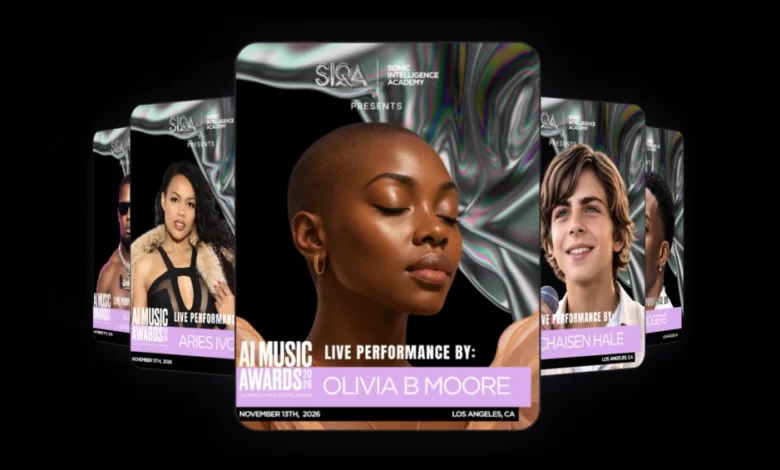
The landscape of modern music production is set to undergo a significant public transformation as the inaugural AI Music Awards prepares to take the stage at The Mayan in Los Angeles on November 13th. This event, which promises to blend the digital precision of artificial intelligence with the visceral energy of live performance, marks a pivotal moment in the music industry’s ongoing struggle to define the role of synthetic creativity. Organizers behind the event, the Sonic Intelligence Academy (SIQA), have positioned the evening as a celebration of the intersection between human ingenuity and machine-learning capabilities.
A New Frontier of Digital Stardom
The centerpiece of the evening is the live performance of several prominent AI-generated "artists." Among the most anticipated acts is Xania Monet, a digital persona who has already achieved what many deemed impossible: securing a position on a Billboard radio airplay chart with the track "How Was I Supposed To Know." The project, helmed by songwriter Telisha "Nikki" Jones, serves as a case study for the commercial viability of AI-driven talent. Monet’s rise to prominence was marked by a highly publicized label bidding war, ultimately resulting in a signing with Hallwood Media for a reported $3 million. This investment underscores a growing trend in the music business, where venture capital and traditional industry players are increasingly betting on the scalability of non-human talent.
Beyond Xania Monet, the event will feature a roster of other virtual stars, including Sheena Taylor, Olivia B Moore, Godfellow, Aries Ivory, Chaisen Hale, and EJ Rogers. These artists, developed through various generative platforms, represent the cutting edge of synthetic vocal and instrumental modeling. SIQA, which operates as a "global hub for ethical, innovative, and groundbreaking AI music," is backing this initiative with support from the venture capital firm 1517 Fund.
The Mechanics of the Hybrid Showcase
The logistical challenge of hosting non-human performers has necessitated a unique approach to stagecraft. According to official briefings from SIQA, the night will not rely solely on pre-recorded playback. Instead, the event will feature "hybrid human and AI showcases," where the human creators behind the software serve as the primary directors of the stage. The performances are intended to be multi-sensory, incorporating live bands, immersive visual projections, and real-time data processing to bring the synthetic voices into the physical realm.
This hybrid model addresses a long-standing criticism of AI music: the lack of a tangible connection between the artist and the audience. By integrating a live band and a directorial human presence, the organizers aim to bridge the gap between algorithmic generation and performance art, providing a framework for how "digital-first" acts can interact with live, ticket-buying crowds.
Industry Context and the Rise of AI Integration
The AI Music Awards arrive at a time of rapid, almost frantic, growth in the adoption of generative music technology. Throughout the current year, streaming platforms and industry regulators have been forced to grapple with the sheer volume of AI-assisted content.
Data from streaming giant Deezer provides a stark illustration of this shift. In April, the platform reported that 44% of all new uploads were AI-generated. By July, that figure had climbed to 50%, a milestone that signaled a permanent change in the composition of streaming catalogs. This surge has been facilitated largely by low-barrier-to-entry tools such as Suno, which allows users to generate full-length compositions from simple text prompts. According to reports from Music Business Worldwide, an analysis of 1,551 tracks submitted to SIQA’s verification services in the first quarter of this year revealed that over 90% utilized Suno, with nearly 76% of those tracks distributed through the independent service DistroKid.
A Regulatory and Ethical Tug-of-War
The rapid influx of AI-generated content has triggered a polarized response within the music industry. While some see a democratization of music production, others express deep concern regarding copyright, transparency, and the potential devaluation of human labor.
In response, the industry has begun to implement guardrails. Beatport, a major platform for electronic music, implemented a ban on fully generative tracks in August, citing the need to protect the integrity of the ecosystem for human producers. Simultaneously, there is a push for "responsible AI." Earlier this month, prominent industry figures, including Armin van Buuren and Laidback Luke, were named as advisors to the company Moises, which focuses on developing AI tools that prioritize ethical usage and artist rights.
SIQA has attempted to address these concerns through its own technological initiatives, specifically the launch of the AI Music Charts and the Verified Registry. The registry is designed to offer a level of transparency by allowing users to document the exact extent of AI involvement in their creative process. This effort to categorize "AI-assisted" versus "fully AI" music is seen by many analysts as a necessary step toward standardizing the industry as it moves into a post-digital era.
Award Categories and Industry Recognition
The inaugural awards ceremony will honor contributions across a wide spectrum of genres, suggesting that SIQA intends to embed itself as a permanent fixture in the awards season calendar. Categories include:
- Primary Honors: Best AI Song, Artist, Album, and Producer of the Year.
- Collaborative and Group Honors: Best AI Group, Best AI Music Video, Best AI Collab, and Best AI-Assisted Song.
- Genre-Specific Awards: R&B, country, gospel, pop, rock/alternative, hip-hop, and jazz.
These categories reflect an attempt to legitimize AI music within the established taxonomy of music criticism. By mirroring the structure of traditional institutions like the Grammys, the AI Music Awards aim to provide a sense of continuity and prestige to a medium that is currently viewed with skepticism by some industry purists.
Broader Implications for the Future of Music
The implications of the November event extend far beyond the stage at The Mayan. If these hybrid performances prove successful, they could initiate a paradigm shift in how talent is scouted and managed. The "Xania Monet model"—where a digital entity is treated as an asset worth millions of dollars—suggests a future where the traditional "star system" is replaced by entities that can theoretically perform in multiple locations simultaneously, never age, and can be fine-tuned to suit the changing tastes of demographic data.
However, the event also raises profound questions about the value of human performance. When a "live" show is directed by a human but performed by a machine, the audience is essentially paying for an experience that is mediated by a synthetic interface. The success of this awards ceremony will likely depend on whether the attendees perceive these acts as genuine artistic expressions or merely sophisticated simulations.
Furthermore, the involvement of venture capital firms like the 1517 Fund suggests that the infrastructure of the music industry is being fundamentally rebuilt. We are moving away from an era defined by record label A&R representatives scouting local scenes and toward an era defined by software developers and data scientists who optimize for streaming algorithms.
Conclusion: A Testing Ground
As the industry approaches the November 13th event, the focus remains on the viability of these performances. If the technology fails to translate the studio experience into a compelling live atmosphere, the event may be dismissed as a gimmick. However, if the performances resonate, the AI Music Awards could serve as the first major step toward a new, normalized reality in which artificial intelligence is an expected, rather than contested, participant in the global music culture.
For the participants, the night is a chance to define their own legacy in a medium that is less than a few years old. For the critics and the wider music industry, it is a litmus test for the sustainability of a model that threatens to disrupt the economic foundations of the professional musician. The data from Deezer and the recent policy shifts at companies like Beatport confirm that the industry is in a state of flux; the AI Music Awards are merely the latest manifestation of a tectonic shift that shows no signs of slowing down. As the curtain rises in Los Angeles, the world will be watching not just to see who wins, but to see if a machine can ever truly hold the stage.