The High-Stakes Battle Between Major Record Labels and Musicians Unions Over Generative AI Licensing Deals and Contractual Obligations

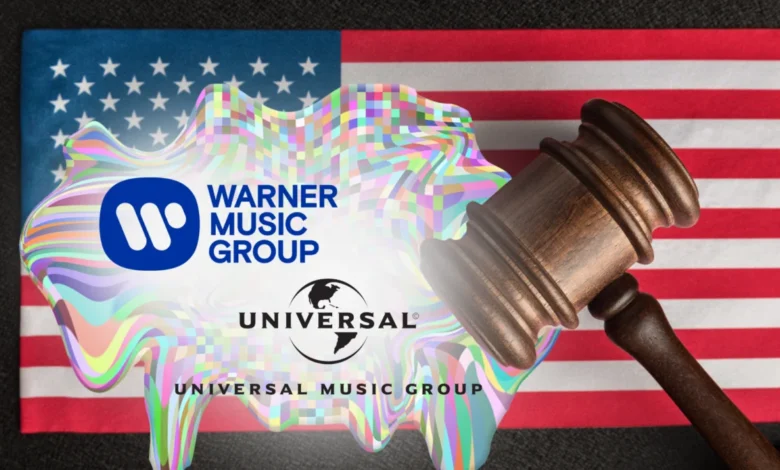
As the global music industry rushes headlong into a new era defined by artificial intelligence, a high-stakes legal showdown is unfolding behind the scenes, threatening to upend how record labels monetize technological innovation. At the heart of this conflict is a fundamental disagreement between two powerhouse major record companies—Universal Music Group and Warner Music Group—and the American Federation of Musicians (AFM), one of the most prominent and influential labor unions representing instrumentalists in the United States.
The core of the dispute centers on whether major labels are legally obligated to compensate and consult session musicians whose past recorded performances have been utilized to train generative AI models. While record executives celebrate lucrative, multi-million-dollar licensing partnerships with pioneering AI platforms like Udio and Suno, union representatives argue that these corporate agreements violate longstanding collective bargaining provisions. As both sides lock horns in federal court over pending motions to dismiss the lawsuit, the outcome of this legal battle could establish a monumental precedent for labor rights, compensation models, and contractual interpretations in the age of machine learning.
The Genesis of the Dispute and the June Lawsuit
The legal confrontation erupted into the public sphere in June, when the AFM formally filed a lawsuit against both Universal Music Group and Warner Music Group. The union’s complaint alleged that the major labels breached their duties under the Sound Recording Labor Agreement (SRLA), a comprehensive collective bargaining pact that governs the employment terms, compensation structures, and authorized uses of recorded performances by union-represented musicians.
According to the AFM, the genesis of the breach lies in recent corporate licensing agreements forged with generative AI developers. Universal Music and Warner Music have increasingly engaged with tech companies—notably Udio, which has partnered with multiple industry entities, and Suno, which has faced similar scrutiny from major rightsholders—allowing these platforms to ingest massive catalogs of copyrighted sound recordings to train artificial intelligence algorithms.
These generative AI models learn from the harmonic, melodic, and textural nuances of professional studio performances, ultimately allowing users to generate synthetic audio content that can mimic human artistry or directly compete with human-made music in the commercial marketplace. Despite the profound implications for the original creators, the AFM maintains that Universal and Warner failed to notify the union of these deals, neglected to seek proper authorization, and categorically refused to distribute any financial compensation to the session musicians whose work laid the foundation for these AI technologies.
A Legal Battleground: Deconstructing the "New Use" Clause
As the litigation progresses, the legal arguments presented by both parties have zeroed in on a specific provision within the SRLA: the "new use" clause. This contractual mechanism was originally designed to protect musicians from technological obsolescence and unauthorized exploitation as the music industry evolved from physical media formats to newer modes of consumption and broadcast.
Under the traditional framework of the SRLA’s new use clause, if a record company employs an existing sound recording for a purpose that was neither anticipated nor explicitly covered at the time the recording was made, specific legal and financial obligations are triggered. Specifically, the label is required to notify the AFM of the novel utilization and provide fair financial compensation to all musicians who contributed to the original recording session.
However, the interpretation of this clause has become the central fault line in the courtroom. The major record labels argue that the clause is fundamentally inapplicable to the current wave of generative AI training. Their reasoning rests on the mechanical construction of the clause itself, which dictates that when a recording is put to a new use, participating musicians must be compensated at the exact rates they would have received if they had been brought back into a studio specifically to record music for that new purpose, based on an existing standard union agreement governing that specific medium.
Because no dedicated collective bargaining agreement or standard union rate schedule currently exists for artificial intelligence training sessions, Universal Music and Warner Music argue that the new use clause cannot logically be invoked. In essence, the labels contend that a contractual remedy cannot be enforced when the benchmark agreement it relies upon does not yet exist.
Universal Music’s Stance and the Push for Dismissal
As court filings continued to mount, Universal Music Group took an uncompromising stance in its latest legal submissions, insisting that the disputed text of the SRLA is entirely "clear and unambiguous" and heavily favors the position of the record labels.
Universal’s legal counsel argued that the provisions of the new use clause leave room for only one objective interpretation: when a signatory company utilizes a covered recording for a purpose outside the scope of the agreement, it must pay an amount directly imported from a separate AFM agreement governing that exact new purpose. Because the AFM has effectively acknowledged that no such dedicated AI agreement exists, Universal asserts that the contractual trigger for payment cannot be pulled.
Furthermore, Universal’s filing launched a sharp critique of the union’s litigation strategy, characterizing the AFM’s arguments as a "scattershot series of arguments that obscure rather than confront what the contract makes clear." In the eyes of the major labels, the lawsuit is an unviable attempt to stretch a decades-old labor agreement far beyond its intended contractual boundaries to capture emerging technologies that were entirely unforeseen when the pact was drafted.
The AFM’s Counter-Argument: Flexibility and Ambiguity
In stark contrast to the rigid interpretation advanced by the major labels, the American Federation of Musicians has adopted a more flexible yet resolute legal posture. In its own court filings, the union forcefully rejected the notion that the absence of a specific AI-related collective bargaining agreement invalidates the application of the new use clause.
The AFM maintains that the textual mandate of the SRLA imposes an absolute, mandatory payment obligation whenever a signatory company puts a covered recording to an unauthorized or uncovered purpose. According to the union, the existence of a separate AI agreement is not a mandatory prerequisite for the clause to take effect. Instead, the AFM argues that existing benchmarks within the broader framework of the SRLA—such as standard session rates, digital streaming distribution formulas, and legacy sampling rates—provide objective, quantifiable measures from which judicial damages can be successfully calculated.
Crucially, the AFM has adopted a tactical advantage by conceding that the new use clause is "reasonably susceptible to more than one interpretation." In standard contract law, if a judge determines that a contractual provision is ambiguous and open to multiple plausible interpretations, the case cannot be dismissed at an early stage. Instead, the litigation must proceed to discovery and trial so that the intent of the contracting parties can be fully examined. By establishing that its reading of the clause is at the very least plausible, the union aims to defeat the major labels’ motions for dismissal and keep the lawsuit alive.
Broader Industry Context: The Silence on Session Musicians
The legal battle between the AFM and the major labels is unfolding against a much wider backdrop of industry-wide anxiety regarding generative artificial intelligence. Over the past two years, major record companies, prominent music publishers, and international distributors have rushed to establish formal partnerships with generative AI startups. These deals are frequently touted as legal pathways to commercialize AI-generated content safely while protecting copyright holders from systemic infringement.
However, a glaring omission persists across nearly all of these corporate arrangements: the systematic exclusion of session musicians, background instrumentalists, and orchestral players from consultation and compensation. While superstar recording artists and major publishing entities negotiate lucrative equity stakes and licensing fees, the rank-and-file instrumentalists whose sweat equity fills out the sonic landscape of modern sound recordings are routinely left out of the financial equation.
Industry observers note that while major artists have varying degrees of contractual leverage to opt out of AI deals or demand individual payouts, session musicians possess little individual bargaining power. Consequently, the protection of session musicians’ rights in the digital age is heavily reliant on two fronts: aggressive labor union negotiations and sweeping copyright law reform.
Analysis of Implications for the Future of Music and Labor
The implications of this federal lawsuit extend far beyond the immediate financial disputes between the AFM, Universal Music, and Warner Music. If the federal judge presiding over the case ultimately rejects the labels’ motion to dismiss and allows the litigation to move forward, it will create a powerful legal precedent. Such a ruling would signal that legacy collective bargaining agreements can indeed be marshaled to protect labor forces against the disruptive tides of artificial intelligence, forcing corporate rightsholders to reckon with the past contributions embedded within their vast master recording catalogs.
Conversely, if the court rules in favor of the major labels and dismisses the lawsuit, it would validate the argument that existing labor agreements are fundamentally ill-equipped to handle the realities of generative AI. This outcome would likely accelerate calls for federal legislative intervention, pushing lawmakers to enact explicit statutory protections and mandatory remuneration schemes for creators whose work is harvested for machine learning.
As both legal teams prepare for subsequent hearings and judicial evaluations, the music industry watches with bated breath. The resolution of this dispute will not only determine the immediate financial fate of thousands of working instrumentalists but will also help define the legal boundaries of artistic labor in an increasingly automated world.