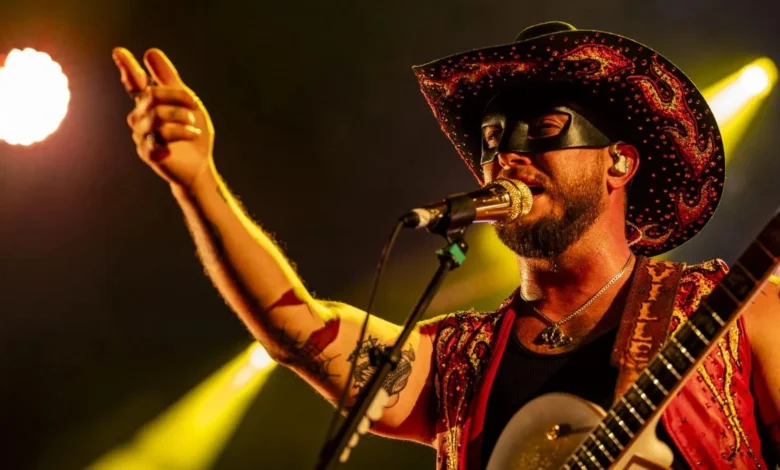
The intersection of professional sports culture and the performing arts has long been a subject of public intrigue, but a recent revelation from country music star Orville Peck has brought this dynamic into sharper focus. In his latest studio album, Mule, released on September 18, 2026, the masked troubadour includes a lyrical admission that he once engaged in a romantic encounter with a member of the Oakland Raiders. The disclosure, featured in the track "Ring the Bell," has sparked a conversation regarding privacy, celebrity culture, and the evolving landscape of professional athletics.
The Lyrical Disclosure in Context
The song "Ring the Bell" serves as a centerpiece for the narrative arc of Mule, an album that has been critically lauded for its introspective themes and departure from conventional country tropes. Within the verses, Peck delivers a line that has since become the subject of significant media scrutiny: he explicitly references having "made out with a guy on the Raiders."
While many artists utilize songwriting as a vessel for hyperbole or artistic abstraction, Peck confirmed in a recent interview with Variety that the lyric is grounded in a literal, historical event. By choosing to include this specific detail, Peck has invited a broader discussion about the intersection of his own public persona—which relies heavily on anonymity through his signature fringed mask—and the rigid, often hyper-masculine world of the National Football League (NFL).
Chronology of the Revelation
The timeline leading up to this disclosure began with the pre-production phases of Mule in early 2026. According to industry insiders familiar with the album’s development, the track "Ring the Bell" was finalized during the late spring. Recognizing the potential for public interest and the necessity of maintaining professional ethics, Peck reportedly reached out to the individual in question prior to the song’s mastering.
- Spring 2026: Drafting and recording of Mule takes place. Peck consults with the unnamed Raiders player regarding the inclusion of the lyric.
- July 2026: Initial promotional materials for the "Man Turned Mule Tour" are released, setting the stage for the album launch.
- September 18, 2026: Mule is officially released across all major streaming platforms, immediately drawing attention to the specific lyric in "Ring the Bell."
- Late September 2026: Peck discusses the track in a feature interview, confirming the veracity of the encounter and clarifying the consent-based process of including the anecdote.
The Ethics of Public Disclosure and Consent
A primary element of this narrative is the deliberate approach Peck took toward consent. In an era where "kiss and tell" culture is frequently criticized for its lack of consideration for the privacy of others, Peck’s insistence on securing permission from the player highlights a shift in how celebrities handle personal anecdotes.
Peck remarked that the player was not only aware of the lyric but was "very thrilled" to be included in the work. This statement provides a rare look into the private lives of professional athletes, who are often bound by strict media policies and public-facing personas that emphasize team loyalty and rigid social archetypes. By clarifying that he would have omitted the reference had it risked outing someone who preferred to remain private, Peck has effectively neutralized the potential for a scandal, transforming what could have been a tabloid-driven controversy into a matter of artistic expression.
Analyzing the Intersection of Country Music and Sports
The connection between country music and professional football is a storied one, with both industries sharing a substantial overlap in audience demographics, particularly in the Southern and Midwestern United States. Historically, however, these industries have maintained a conservative approach to topics involving non-traditional lifestyles or public displays of intimacy outside of heteronormative frameworks.
Peck’s career, which has consistently challenged the boundaries of "outlaw" country, represents a bridge between these worlds. By existing as a queer, masked icon in a genre historically dominated by traditionalist values, his admission regarding a Raiders player acts as a litmus test for the progress of the sports industry. If a player in one of the most high-profile leagues in the world feels comfortable with such an admission being broadcast to a national audience, it signals a quiet but significant evolution in the culture of professional locker rooms.
Broader Implications for the NFL
The NFL has, in recent years, made concerted efforts to promote inclusivity and diversity, though these initiatives are often met with skepticism from various segments of the fanbase. The "Ring the Bell" disclosure adds a human element to these corporate-level efforts. While the identity of the player remains a mystery, the fact that he was open to the public acknowledgement suggests a change in the internal culture of the league.
Economically and socially, the implications of this disclosure are notable. When athletes and artists engage in cross-industry dialogue, it often leads to a shift in sponsorship opportunities and audience perception. The "Man Turned Mule Tour," which is slated to run through November 2026, will likely see an uptick in interest from a demographic that blends traditional country fans with those following the cultural discourse surrounding the NFL.
The Artistry of Orville Peck
It is important to note that the lyric is not merely a sensationalist device but a part of a larger artistic vision. Mule is an exploration of identity, memory, and the "mule-like" endurance required to navigate the pressures of fame. By grounding the album in specific, real-world experiences—such as his time in Oakland or his interactions with various figures in the sports world—Peck creates a sense of intimacy that is difficult to manufacture.
The album itself has been described by music critics as a gritty, honest assessment of the modern American experience. The track "Ring the Bell" serves as a narrative anchor, illustrating the strange, often jarring realities of being a public figure whose life frequently intersects with other high-profile individuals in unexpected ways.
Public Reception and Future Speculation
Since the release of the album, speculation regarding the identity of the player has been rampant on social media platforms and sports forums. However, both Peck and the player have maintained a protective stance over the identity in question. From a media relations perspective, this is a calculated decision. By keeping the identity private, the focus remains on the music and the broader cultural conversation rather than a "whodunit" investigation that could potentially detract from the player’s professional standing or personal peace.
Analysts suggest that this level of discretion actually serves to elevate the status of the player, framing the encounter as a private interaction between two adults rather than a leverage point for publicity. This mature approach to the disclosure sets a precedent for how future artists might choose to handle similar subject matter.
Conclusion
Orville Peck’s revelation regarding his encounter with a Raiders player is a snapshot of contemporary celebrity interaction. It highlights the shifting boundaries of privacy and the increasing overlap between the country music scene and the world of professional athletics. By handling the disclosure with transparency, consent, and a degree of artistic integrity, Peck has managed to turn a potentially intrusive narrative into an extension of his creative work.
As the "Man Turned Mule Tour" commences, the resonance of the song "Ring the Bell" will likely continue to grow. Whether the identity of the player is ever revealed is largely immaterial to the impact of the story. The narrative has already achieved its goal: it has sparked a dialogue about the intersections of identity, sport, and art, while reinforcing Peck’s position as one of the most compelling and unpredictable figures in modern music. As the season progresses, fans and critics alike will be watching to see how this moment influences the cultural footprint of both the artist and the league he has inadvertently brought into the spotlight.
Related posts: