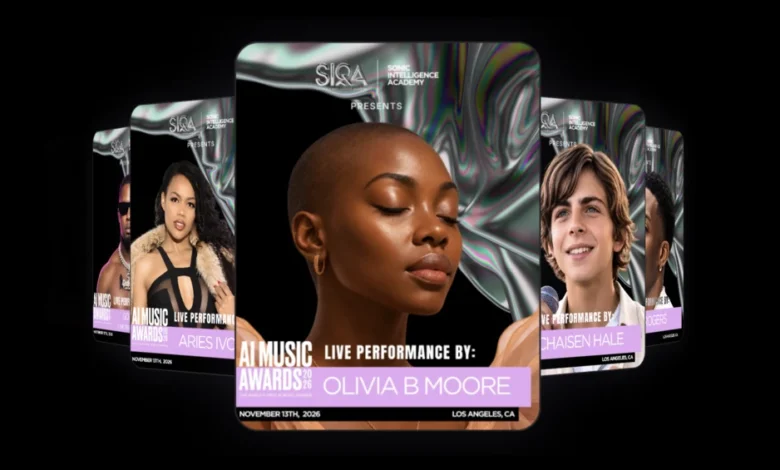
This event, orchestrated by the Sonic Intelligence Academy (SIQA), represents a significant shift in the music industry’s relationship with machine learning. The ceremony will move beyond the traditional digital-only release model, presenting a series of "hybrid" performances where human creators act as directors for their AI counterparts. The production will incorporate live backing bands and immersive visual technology to bridge the gap between algorithmic generation and the visceral experience of a live concert.
The Rise of the Virtual Performer
At the heart of the event is Xania Monet, a trailblazing AI act that achieved notoriety for being the first AI-generated track to break into the Billboard radio airplay charts with the song "How Was I Supposed To Know." Created by songwriter Telisha "Nikki" Jones, Monet represents a new business model for the music industry. Following a high-stakes label bidding war, Monet was signed to Hallwood Media in a deal reportedly valued at $3 million, highlighting the tangible commercial interest in virtual artists.
Joining Monet on the stage at The Mayan are several other notable AI-driven entities, including Sheena Taylor, Olivia B Moore, Godfellow, Aries Ivory, Chaisen Hale, and EJ Rogers. These performers, supported by the venture capital firm 1517 Fund, are part of an ecosystem that SIQA defines as the future of ethical and innovative music production. By staging these performances, the organizers aim to normalize the presence of synthetic artists in a live environment, challenging the industry to reconsider the definition of "live" music.
A Growing Regulatory and Creative Landscape
The debut of the AI Music Awards arrives during a period of rapid, often contentious, development for AI in music. The industry is currently divided between platforms embracing the technology and those attempting to restrict it.
Earlier this year, the electronic music platform Beatport instituted a ban on fully AI-generated tracks to protect the integrity of its catalog. Similarly, streaming giant Deezer has been tracking the meteoric rise of machine-generated content on its servers. In April, the company reported that 44% of its new uploads were AI-generated; by July, that figure had climbed to 50%. This surge prompted the company to implement stricter metadata requirements to differentiate between human-composed and machine-assisted work.
In response to these trends, industry leaders are increasingly positioning themselves as stewards of "responsible AI." In October, renowned DJs Armin van Buuren and Laidback Luke joined the advisory board of Moises, a company dedicated to AI music tools that prioritize ethical development and copyright management. These appointments signal a push toward a collaborative future where AI serves as a creative assistant rather than a replacement for human artistry.
SIQA and the Standardization of AI Music
The Sonic Intelligence Academy has taken a proactive approach to the chaos of the generative music boom. Beyond the awards ceremony, SIQA has launched a series of initiatives aimed at cataloging and legitimizing the medium. These include the world’s first AI music charts, a "Verified Registry," and a dedicated app that allows creators to document the specific extent to which AI contributed to their musical compositions.
Data collected by these services underscores the dominance of specific tools in the current landscape. Analysis of 1,551 tracks submitted during the first quarter of this year revealed that over 90% were produced using Suno, a generative music platform that has rapidly become the industry standard for hobbyists and professionals alike. Furthermore, nearly 76% of these tracks were distributed via DistroKid, demonstrating how existing infrastructure is being repurposed to accommodate the influx of synthetic music.
Award Categories and Industry Recognition
The AI Music Awards will function as a comprehensive industry barometer, acknowledging excellence across a wide spectrum of musical production. The categories reflect the diversity of the current AI output:
- Core Categories: Best AI Song, Best AI Artist, Best AI Album, and Producer of the Year.
- Collaborative and Technical Categories: Best AI Group, Best AI Music Video, Best AI Collaboration, and Best AI-Assisted Song.
- Genre-Specific Awards: R&B, country, gospel, pop, rock/alternative, hip-hop, and jazz.
These categories serve as a formal recognition that AI is no longer a fringe phenomenon but a legitimate creative tool that spans every major genre of contemporary music. By creating these distinctions, SIQA hopes to foster a culture of transparency where AI usage is treated as a skill set rather than a shortcut.
Implications for the Future of Performance
The concept of a "live" AI performance raises profound questions regarding the future of the touring industry. If an AI can be directed by its creator to perform in front of a live band and a physical audience, the traditional barriers to entry for touring—such as physical presence and human fatigue—are removed.
From an economic perspective, the backing of the 1517 Fund and the $3 million valuation of acts like Xania Monet suggest that investors view these digital entities as long-term assets. Unlike human artists, AI performers do not age, require rest, or deal with the logistical complexities of global touring in the same capacity. However, the legal framework surrounding these performances remains in its infancy. Issues of copyright, moral rights, and the ethical use of training data are currently the subject of ongoing litigation in the United States and abroad.
As the industry moves toward the November 13 showcase, the event will serve as a litmus test for public and critical reception. If the hybrid model—where the human creator stands alongside the algorithm—resonates with the audience, it may pave the way for a new era of "synthetic live music." If, conversely, the audience finds the experience disconnected from the emotional core of live performance, it may serve as a reminder of the inherent limitations of the technology.
A Turning Point for Music Tech
The evolution from the early days of basic MIDI sequencing to the complex neural networks used by Suno and other platforms has been rapid. The SIQA initiative is an attempt to impose structure on this growth, providing a platform where innovation is celebrated rather than feared.
Industry observers note that the success of the AI Music Awards will likely depend on the transparency of the participants. By emphasizing "hybrid" performances, the organizers are attempting to avoid the "uncanny valley" of purely virtual performances, choosing instead to lean into the collaboration between the human prompt-engineer and the machine output. This mirrors the trajectory of other creative fields, such as digital art and animation, which initially faced resistance before becoming foundational elements of modern design.
As the music industry navigates this transition, the focus remains on the balance between technological progress and the preservation of human creative intent. The AI Music Awards in Los Angeles are poised to be the first major step in defining that balance for the next generation of listeners and creators. Whether the event serves as a harbinger of a new artistic renaissance or a temporary novelty, its impact on the recording, distribution, and performance sectors of the music industry will be studied for years to come.
With the verified registry and the newly minted charts, the infrastructure for a permanent AI music market is already in place. The question now is how the public will adapt to the reality of non-human stars commanding the stage, and whether the music industry can build a sustainable, ethical, and profitable framework that honors both the silicon and the soul behind the sound.