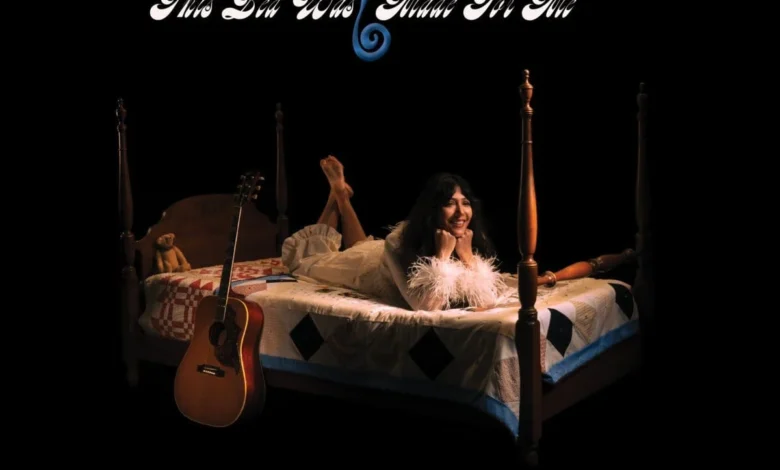
The contemporary landscape of American independent folk music often looks backward to find its footing, frequently borrowing the sun-bleached aesthetics of the 1960s and 1970s Laurel Canyon singer-songwriter movement. Yet, few artists manage to channel that bygone era with the tactile intimacy and sonic precision found on the self-titled debut album from Biita Houdei. The project, spearheaded by singer-songwriter Lisa Houdei—who previously released music under the moniker Léponds—represents a significant stylistic evolution in her burgeoning career. Written largely in the secluded, artistic enclave of Topanga, California, the record marries the rustic isolation of West Coast bohemianism with meticulous modern production techniques. Co-produced by acclaimed contemporary folk artist Haley Heynderickx, who also lends her distinctive musical performances to the tracks, the album functions as both an homage to a golden age of American songwriting and a deeply personal contemporary confession.
The Genesis of Biita Houdei: From Léponds to Topanga Canyon
To understand the weight and texture of the Biita Houdei project, one must examine the trajectory of Lisa Houdei’s career. Operating previously under the name Léponds, Houdei built a modest yet dedicated following within the underground folk scene, releasing intricate acoustic works that leaned heavily into ethereal arrangements and introspective lyricism. However, the transition to Biita Houdei signifies more than a mere rebranding; it marks a deliberate aesthetic pivot toward a warmer, more tangible style of composition.
The foundational tracks of the debut record were conceived and written in Topanga Canyon, a geographic location deeply steeped in countercultural history. For decades, the canyon has served as a crucible for American folk and rock music, famously housing icons such as Joni Mitchell, Neil Young, and members of The Byrds during the late 1960s and early 1970s. This specific geographic and cultural backdrop heavily dictated the thematic and sonic architecture of Houdei’s new material. The isolation of the canyon, coupled with its natural acoustics and bohemian ethos, provided an ideal environment for Houdei to strip away the complex layers of her previous musical identity and focus on core songwriting fundamentals: melody, harmony, and lyrical vulnerability.
The recording process itself was a collaborative endeavor deeply rooted in the contemporary Pacific Northwest and California independent music communities. By bringing in Haley Heynderickx—an artist celebrated for her intricate fingerpicking and emotionally resonant vocal deliveries—as a co-producer and performer, Houdei secured a creative partner who understood the delicate balance between vintage warmth and modern clarity. Heynderickx’s influence is palpable throughout the record, providing structural support and harmonic texture that elevate Houdei’s compositions from simple folk demos to fully realized sonic landscapes.
Sonic Architecture and Production Methodology
From a technical standpoint, the production of the Biita Houdei debut album is a masterclass in acoustic restoration and reverent mimicry. The record relies heavily on vintage recording techniques that were popularized during the analog boom of the late 1960s. Among these is the deliberate choice of microphone placement and signal chain configurations designed to highlight specific instruments above the broader mix, a technique frequently utilized by producers working in Laurel Canyon studios during the genre’s heyday.
Most notably, Houdei’s vocal delivery is characterized by a close-to-the-mic singing style. This technique captures the minute details of the human voice—breaths, subtle vocal fry, and dynamic shifts—creating an intense psychological proximity between the listener and the vocalist. In music journalism and audio engineering, this is often referred to as a "confessional" style, a nod to the singer-songwriter movement of the 1970s where artists like Carole King, James Taylor, and Joni Mitchell used their art to bare their innermost psychological states.
Track highlights such as "Time to Go Home" encapsulate this methodology. The song utilizes organic percussion elements, incorporating handclaps enhanced by the sharp, woody resonance of woodblocks. These percussion choices, combined with lush, multi-tracked vocal harmonies, bear a striking resemblance to the classic arrangements found on landmark recordings by Crosby, Stills, and Nash or Carole King’s seminal 1971 album Tapestry. Yet, despite these clear historical touchstones, the music avoids sounding like a mere pastiche. The arrangements maintain a spaciousness and contemporary emotional candor that anchor them firmly in the present day.
The Contemporary Revival of the Laurel Canyon Aesthetic
The release of Biita Houdei arrives at a fascinating juncture in the broader music industry. Over the past decade, there has been a measurable resurgence in consumer demand for analog-warmth, organic instrumentation, and nostalgic aesthetics. Streaming data from major platforms indicates a steady year-over-year increase in listenership for classic folk, soft rock, and Americana genres, particularly among younger demographics who did not experience the original eras firsthand.
Musicologists and industry analysts point to several cultural and technological factors driving this trend. In an era dominated by hyper-compressed digital audio files, algorithmic playlisting, and synthetic beat production, listeners are increasingly seeking out music that feels human, flawed, and tangible. The tactile imagery often associated with these records—high thread count sheets, golden hour sunlight in Laurel Canyon, driving with windows down through the hills of Burbank—speaks to a broader cultural yearning for comfort, authenticity, and physical presence in an increasingly digital and disconnected world.
Artists like Lisa Houdei, operating under the Biita Houdei banner, are uniquely positioned to capitalize on this cultural moment. By fusing the timeless songwriting craft of the 1970s with the refined production standards of the 2020s, they offer listeners a bridge between past and present. The involvement of respected indie figures like Haley Heynderickx further legitimizes the project within the contemporary critical landscape, ensuring that the album will be evaluated not merely as a nostalgic exercise, but as a vital contribution to modern independent music.
Industry Implications and Future Outlook
As the album rolls out to global audiences, industry observers are closely monitoring how the rebranding from Léponds to Biita Houdei will affect Houdei’s commercial viability and touring prospects. Re-introducing oneself to the market under a new project name always carries a degree of commercial risk, as established listening bases must be informed of the transition. However, early critical reception suggests that the artistic rewards far outweigh the logistical hurdles.
Independent record labels and booking agencies have noted a growing appetite for intimate, seated-theater folk performances, a live circuit where artists like Biita Houdei and Haley Heynderickx traditionally thrive. The intricate acoustic arrangements and vintage instrumentation of the debut record lend themselves naturally to intimate club settings and historic listening rooms, providing a stark contrast to the arena-sized electronic pop productions that currently dominate mainstream commercial charts.
Furthermore, the collaborative nature of the recording sessions in Topanga Canyon highlights a growing trend within the independent music community: the shift away from solitary, bedroom-producer models toward collective, place-based creativity. By retreating to physical spaces with rich musical histories and collaborating closely with peers, contemporary artists are able to forge deeper artistic bonds and produce work that feels culturally grounded rather than digitally fabricated.
Conclusion: A Definitive Artistic Turning Point
Lisa Houdei’s transformation into Biita Houdei marks a definitive turning point in her artistic evolution. By shedding her previous moniker and immersing herself in the creative traditions of Topanga Canyon, she has crafted a debut album that is both deeply reverent of America’s folk heritage and refreshingly modern in its emotional execution. Bolstered by the collaborative contributions of Haley Heynderickx and anchored by meticulous analog production choices, the record succeeds in capturing the ineffable sensations of comfort, memory, and place. As the independent music community continues to navigate its complex relationship with the past, Biita Houdei stands out as a compelling reminder of the enduring power of organic instrumentation, honest songwriting, and the timeless art of the human voice.