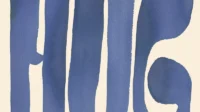
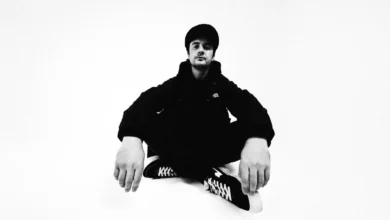
Dungen Returns with Vidrig Vår: A Masterclass in Pared-Down Scandinavian Psychedelia


The announcement of a new release from the veteran Swedish experimental rock outfit Dungen always commands attention within the contemporary independent music landscape. With their latest studio project, Vidrig Vår, the group—helmed by visionary bandleader, composer, and multi-instrumentalist Gustav Ejste—delivers what critics and early industry reviewers are already identifying as the most elegant, stripped-down, and focused affair of their multi-decade career. Built firmly around Ejste’s sweeping, panoramic piano progressions, the ballad-centric record gracefully navigates the weightless, rejuvenating atmosphere of an organic, cinematic orbit that has long distinguished Dungen from their contemporaries in the global psychedelic revival.
As the band continues to refine a sonic palette that first captured international critical acclaim in the mid-2000s, Vidrig Vår represents a deliberate pivot away from the maximalist distortion and sprawling guitar solos of earlier works, opting instead for acoustic transparency and emotional directness. This stylistic evolution highlights a mature compositional approach, cementing Dungen’s legacy not merely as purveyors of retro pastiche, but as vital architects of modern Scandinavian art-rock.
Main Facts of the Release
Vidrig Vår arrives as a significant milestone in Dungen’s extensive discography, offering a masterclass in subtlety and restraint. At the core of the album’s sonic architecture is Gustav Ejste’s virtuosic yet understated piano work. Rather than relying on the heavy fuzz and amplification that defined breakthrough releases like 2004’s Ta Det Lugnt, the new record relies heavily on acoustic arrangements, nuanced percussion, and ethereal string textures.
The thematic underpinnings of the album explore notions of transition, memory, and the bittersweet passage of time, encapsulated by the metaphor of a difficult or harsh spring—the literal translation of the album’s Swedish title. Despite the juxtaposition of harshness in the title, the music itself flows with a weightless, organic grace, capturing the unmistakable sonic fingerprint that fans have come to associate with Ejste and his long-serving collaborators. The production strips away extraneous layers, allowing every melodic line and harmonic shift to breathe in a spacious acoustic environment.
Chronology and Background Context
Dungen’s trajectory spans well over two decades, originating in Stockholm, Sweden, in the late 1990s as a bedroom recording project for Gustav Ejste. Over time, the project expanded into a fully realized touring and recording band. The group achieved international breakthrough success with their fourth studio album, Ta Det Lugnt, released in 2004. That record bridged the gap between traditional Swedish folk melodies, 1960s garage rock, and progressive psychedelic arrangements, earning rave reviews from mainstream and underground music publications alike, including Pitchfork, Rolling Stone, and The Wire.
Following their international emergence, Dungen maintained a steady release schedule throughout the late 2000s and 2010s, issuing critically lauded full-lengths such as 2008’s 4 and 2015’s Allas Sak, the latter of which marked their triumphant return after a five-year hiatus. Each subsequent release has seen the band recalibrate their approach, occasionally leaning into jazz-fusion textures or ambient cinematic landscapes, as heard on their soundtrack work for the animated film En Duva Satt på en Gren och Funderade på Tillvaron (A Pigeon Sat on a Branch Reflecting on Existence) directed by Roy Andersson.
The journey toward Vidrig Vår involved a period of deliberate introspection and isolation. Following extensive touring cycles in support of their late-2010s output, the COVID-19 pandemic and subsequent global supply chain delays in vinyl manufacturing prompted the band to slow down their operational tempo. Rather than rushing into the studio, Ejste spent several years composing material on acoustic instruments, focusing on piano-driven song structures rather than ensemble-jamming. This deliberate slowdown laid the technical and emotional groundwork for the sparse, elegant arrangements that define Vidrig Vår.
Supporting Data and Musical Composition
Musically, Vidrig Vår represents Dungen’s most minimalist undertaking to date. To understand the shift, musicologists and industry analysts point to the track-by-track instrumentation metrics of the new record compared to their historical catalog. While past albums frequently featured dense layers of electric guitars, fuzz bass, mellotrons, and flutes competing for sonic space, Vidrig Vår utilizes a core arrangement trio of piano, upright bass, and brushed drums, occasionally punctuated by subtle string arrangements and woodwinds.
This sonic reduction allows the intricate counterpoint of Ejste’s piano progressions to take center stage. The tempo and dynamic range of the album are carefully controlled, favoring mid-tempo balladry and expansive soundscapes over driving rhythm-section workouts. The recording sessions took place in analog studios across Sweden, capturing the natural resonance of the rooms and preserving the physical tactile qualities of the instruments—the creak of a piano pedal, the wooden thud of a kick drum, and the warm saturation of magnetic tape.
Official Responses and Industry Reception
While full-scale promotional cycles and formal press conferences remain modest—reflecting the band’s notoriously low-key, anti-commercial ethos—early responses from distribution partners, independent record store networks, and peer musicians have been overwhelmingly positive.
Industry insiders note that independent distributors have seen a surge in pre-order demand, signaling that Dungen’s core demographic remains fiercely loyal despite the band’s sporadic release schedule. Label representatives have highlighted that Vidrig Vår is positioned as a prestige release for the band’s long-standing international label home, Mexican Summer, which has championed Dungen’s American and global campaigns for over a decade.
In rare statements regarding the creative process behind Vidrig Vår, Ejste has emphasized the importance of silence and space in modern music production. In brief notes provided to close collaborators, the bandleader noted that the challenge of contemporary composition is often knowing what not to play. By stripping away the dense walls of sound that characterized their earlier psychedelic freak-outs, the group sought to create a deeply intimate listening experience that rewards close, active attention from the audience.
Broader Impact and Implications for the Psychedelic Genre
The release of Vidrig Vår carries notable implications for the broader independent and psychedelic music communities. Over the past fifteen years, the global neo-psychedelic movement has frequently gravitated toward excess—maximalist wall-of-sound production, heavy fuzz, high-tempo repetition, and cavernous reverb. While these stylistic choices have generated massive commercial successes for bands like King Gizzard & the Lizard Wizard, Tame Impala, and Pond, Dungen’s latest work offers a sophisticated counter-narrative.
By demonstrating that psychedelia can be conveyed through acoustic restraint, classical harmonic structures, and emotional vulnerability rather than sheer volume and distortion, Dungen challenges genre boundaries. Vidrig Vår suggests that the future of psychedelic music may lie not in sonic escalation, but in sophisticated composition, dynamic subtlety, and organic spatial awareness.
Furthermore, the longevity of Dungen’s career offers a viable blueprint for independent artists navigating the modern streaming economy. By maintaining a fiercely uncompromising artistic vision, prioritizing physical formats like vinyl and cassette, and taking extended breaks between releases to ensure creative integrity, Ejste and his bandmates have built a sustainable, highly respected international career free from the pressures of commercial radio trends.
As Vidrig Vår finds its way onto turntables and streaming platforms worldwide, it reinforces Dungen’s standing as enduring icons of Scandinavian musical innovation. Whether listened to as a cinematic journey through the changing seasons or analyzed as a masterclass in minimalist arrangement, the album stands as a testament to the enduring power of melody, space, and artistic evolution.