Catalonia Rectifies Centuries of Injustice Through Posthumous Pardons for Victims of Witch Trials

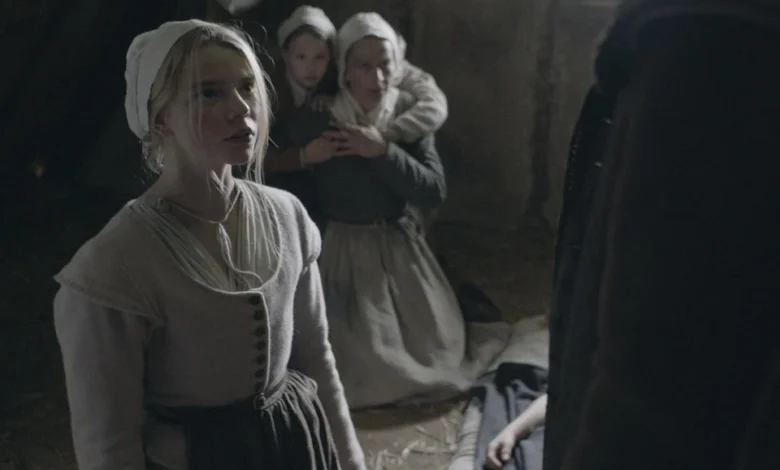
The collective memory of Western history often anchors the phenomenon of witch trials to the 1692 hysteria in Salem, Massachusetts. However, historians have long recognized that the American experience was merely a late, localized echo of a systemic, continent-wide obsession that ravaged Europe for three centuries. Recent legislative action in Catalonia, Spain, has brought a long-overdue focus to this dark chapter, as the regional government has officially moved to clear the names of hundreds of women executed for witchcraft between the 15th and 18th centuries. By passing a landmark resolution in late 2021, the Catalan parliament has initiated a process of historical reparation, signaling a broader movement to re-examine the intersections of gender, power, and state violence in the early modern period.
A Chronology of Persecution and Policy
The systematic persecution of individuals—predominantly women—under the guise of witchcraft reached its zenith across Europe between 1580 and 1630. During this fifty-year window, an estimated 50,000 individuals were executed. While the Spanish Inquisition is frequently cited in popular culture as the primary engine of these persecutions, historical records suggest a more complex reality. In Catalonia, the trials were largely a grassroots, secular affair. Local communities, driven by superstition and the influence of feudal lords, often bypassed the skepticism of the centralized Inquisition.
The Catalan parliament’s move to pardon these victims—amounting to over 700 individuals—was approved with 114 votes in favor and 21 against. This legislative act does more than clear records; it mandates that local municipalities honor these women by naming streets after them, effectively integrating the memory of these victims into the physical and public landscape of modern Catalonia.

The Socio-Economic Drivers of the Trials
The witch trials in Catalonia were rarely the result of theological pursuit; they were deeply rooted in social and economic instability. Historical analysis indicates that the frequency of accusations spiked significantly following environmental or societal crises, such as poor harvests, localized famines, the sudden death of children, or the onset of epidemics. In a society without modern scientific understanding of germ theory or climate patterns, the "witch" became a convenient scapegoat for the inexplicable.
These victims were frequently marginalized members of society, particularly those who lived independently or practiced traditional folk medicine. As these women held specialized knowledge—often related to herbalism and midwifery—they were viewed with suspicion by the patriarchal structures of the time. In many Catalan rural jurisdictions, the legal process was brutal and efficient. Because secular courts operated under different standards than the church-led Inquisition, a mere confession—often extracted through torture—was sufficient for a conviction.
The preference for hanging over burning at the stake, which was prevalent in Catalonia, was largely an economic decision. As noted in historical archival evidence, burning required a significant amount of firewood, a resource that was often scarce or expensive. Hanging was deemed the more fiscally responsible method of execution, illustrating the cold, bureaucratic nature of the injustice.
Data and Comparative Context
The scope of the European witch hunts is difficult to quantify with absolute precision, but data suggest that approximately 80 percent of those executed were women. The variation in intensity across the continent was vast. While regions like the Holy Roman Empire (modern-day Germany) saw thousands of executions, Spain’s experience was distinct. Because the Spanish Inquisition was generally more cautious about accepting testimony regarding the supernatural, they often intervened to shut down secular trials, resulting in a lower overall death toll in Spain compared to its northern neighbors.

Catalonia’s recent initiative is not an isolated effort. Europe has seen a slow, deliberate trend toward reconciling with this history over the last two decades:
- 2008 (Switzerland): The government officially pardoned Anna Göldi, who was executed in 1782 for the alleged poisoning of a child. She is often cited as the last woman to be executed for witchcraft in Europe.
- 2011 (Norway): The municipality of Vardø inaugurated the Steilneset Memorial, a stunning architectural tribute to the victims of the Finnmark witch trials, designed by Peter Zumthor and Louise Bourgeois.
- 2021 (Catalonia, Spain): The regional government passed a comprehensive resolution to exonerate over 700 women, setting a precedent for collective, regional-level pardon in Spain.
Feminist Perspectives and Contemporary Resonance
The legislative debate in Catalonia was punctuated by strong emotional and political rhetoric. Catalan parliament member Jenn Díaz articulated the significance of the movement, telling Vice News, "We are heiresses of the witches, the poisoners and the healers." This perspective frames the witch trials not as a historical anomaly, but as a precursor to systemic gender-based violence.
By drawing a parallel between the historical "witch hunt" and modern-day misogyny, proponents of the pardon argue that the past is far more relevant to the present than traditional historiography would suggest. The linguistic connection—comparing the historical demonization of women to modern pejoratives—underscores a narrative that seeks to understand the "witch" as a symbol of female autonomy that was perceived as a threat to the established social order.
Societal Implications and Institutional Recognition
The decision to rename streets and commemorate these victims serves several functions. First, it acts as an institutional acknowledgement that the state was complicit in the murder of its own citizens. By validating the trauma of the past, the government is attempting to foster a more inclusive national narrative.

Second, the move serves an educational purpose. It forces a reckoning with the fact that these trials were not merely the result of religious extremism, but of community-led paranoia and the weaponization of local laws. The distinction between the Inquisition’s skepticism and the rural feudal courts’ zealotry provides a vital lesson on the dangers of localized, unmonitored judicial power.
Finally, the initiative reflects a shift in how modern democracies handle historical grievances. Rather than ignoring the "inconvenient" aspects of the past, there is an increasing trend toward symbolic and practical reparations. While these pardons cannot restore the lives lost centuries ago, they fundamentally alter the historical record, ensuring that those who were once cast as enemies of society are now recognized as its victims.
Conclusion: The Future of Historical Memory
The movement in Catalonia represents a significant milestone in European history. As more nations and regions begin to revisit their archives, the narrative surrounding the "witch" is being rewritten from one of supernatural villainy to one of targeted, gender-based persecution.
The implications for the future are clear: historical memory is a living process. The act of clearing these names serves to challenge modern audiences to recognize the roots of inequality and to question how present-day societal anxieties might mirror the prejudices of the 17th century. As the street signs in Catalonia are updated and the names of the victims are reclaimed, the region is not merely closing a chapter; it is asserting that the pursuit of justice has no expiration date. By acknowledging the systemic nature of the violence that occurred, the Catalan government has provided a template for other nations to address their own long-hidden histories of state-sanctioned injustice. Through this lens, the "witches" of the past have become the catalysts for a more transparent and reflective society.