Fresh Take on Jane Austen: Inside the Music and Making of the New Sense and Sensibility Adaptation

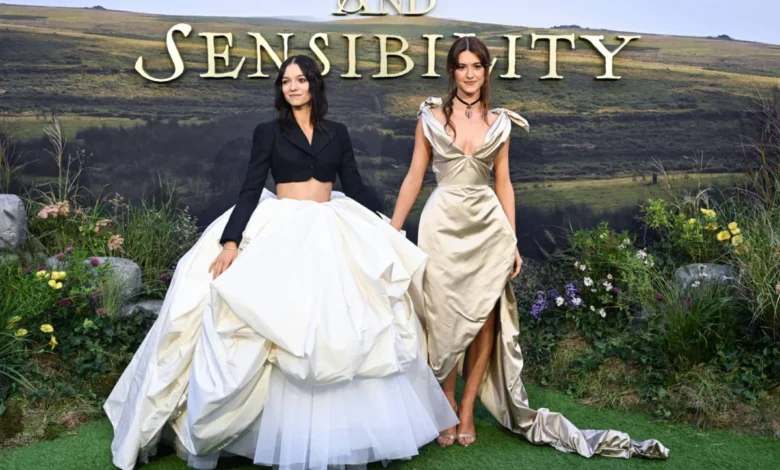
Jane Austen’s timeless 1811 novel Sense and Sensibility has once again made its way to the big screen, arriving in UK cinemas on September 25 with a fresh, contemporary perspective. Directed by Georgia Oakley and adapted for the screen by novelist Diana Reid, this latest cinematic iteration features an acclaimed ensemble cast led by Daisy Edgar-Jones and Esmé Creed-Miles as the iconic Dashwood sisters. While Austen adaptations often lean into established cinematic traditions, this production sets itself apart through a meticulous approach to its period setting, authentic 18th-century musical arrangements, and an organic scoring process that breaks away from conventional Hollywood period-drama formulas.
Main Facts and the Core Narrative
The narrative of Sense and Sensibility remains anchored in the emotional and financial turmoil experienced by the Dashwood family at the turn of the 19th century. Following the death of Mr. Dashwood, his wife and daughters are left in significantly reduced financial circumstances due to strict inheritance laws that favor the male heir. Consequently, Mrs. Dashwood, Elinor, Marianne, and their younger sister Margaret are forced to vacate their comfortable family home of Norland Park and relocate to Barton Cottage in Devon, a modest property provided by a generous cousin.
Within this new environment, the sisters navigate the complexities of class, courtship, and emotional restraint. Daisy Edgar-Jones stars as Elinor, the eldest sister whose pragmatic nature and emotional resilience demand that she conceal her own heartbreak regarding her unspoken attachment to Edward Ferrars, played by George MacKay. Esmé Creed-Miles portrays Marianne, the passionate and impulsive younger sister whose romantic ideals leave her vulnerable to the dashing yet reckless John Willoughby, brought to life by Frank Dillane. Meanwhile, the steadfast and patient Colonel Brandon, played by Herbert Nordrum, watches over Marianne from a distance, adding further emotional depth to the rural drama.
The supporting cast features a wealth of prominent talent, including Caitríona Balfe, Fiona Shaw, Stacy Martin, and Tom Brooke, lending additional gravitas to the ensemble. However, beyond the performances of its star-studded cast, the film has generated significant interest for its distinctive auditory landscape, which meticulously mirrors the late-1790s setting without relying on modern pop influences or overly familiar classical interpolations.
A Chronological Evolution: From Page to Screen
The journey of bringing this new interpretation of Sense and Sensibility to the screen involved a deliberate departure from past cinematic milestones. Most notable among these is Ang Lee’s celebrated 1995 film adaptation, which featured a screenplay by Emma Thompson and an Oscar-nominated score by Patrick Doyle, complete with traditional vocal compositions such as “Weep You No More Sad Fountains.”
While Lee’s version remains a benchmark for Austen adaptations, director Georgia Oakley and adapter Diana Reid sought to recalibrate the material for modern audiences while maintaining strict historical fidelity. Development on the project progressed quietly through pre-production, with casting announcements building momentum ahead of principal photography. By the time the film secured its September 25 theatrical release date in the UK, it was clear that the creative team had prioritized authenticity across every department, particularly within the music and sound design.
Authentic Soundscapes: The Music of Late-18th-Century England
One of the most defining creative choices of the new adaptation lies in its musical supervision and composition. Eschewing modern pop sensibilities or recognizable contemporary covers, music supervisor Connie Farr undertook extensive historical research to source authentic English folk songs from the 18th century. These pieces were specially recorded to ensure they accurately reflected the musical culture of the late 1790s, the era in which the narrative unfolds.
Rather than relying purely on studio musicians to simulate a period atmosphere, the production integrated live performances directly into the fabric of the film. The Fibonacci Quartet, a renowned chamber ensemble, perform on-screen within the movie and contribute significantly to the official soundtrack. This integration of live performance reinforces the verisimilitude of the drawing-room scenes, where music served as a primary form of social engagement and courtship ritual for the gentry.
Complementing the historical folk arrangements is an original score crafted by acclaimed composer Roger Goula. Known for his diverse screen work across projects such as All That Breathes, The Frankenstein Chronicles, and Next Goal Wins, Goula approached the Austen text with a fresh perspective. Under the supervision of Connie Farr, music coordinator GeorgiaMae Bromley, and music director Graham McCusker—who also served as the film’s pianist—the score was shaped to evoke both the rigid social constraints and the inner emotional turmoil of the Dashwood sisters. Hugh Brunt rounded out the musical team as conductor and lead orchestrator, ensuring that Goula’s complex harmonic ideas translated seamlessly to a full symphonic execution.
Spontaneous Creation: The Scoring Process
A particularly unique aspect of the film’s production was the unusually direct method by which the score was generated. Speaking at a Soundtracking event hosted by broadcaster Edith Bowman, director Georgia Oakley revealed fascinating insights into the collaboration between herself and composer Roger Goula.
According to Oakley, approximately 80 percent of the musical sketches that Goula produced during his initial viewings of the early film rushes ultimately found their way into the final cut of the movie. Instead of waiting for a locked edit to begin the scoring process—the standard practice in modern commercial filmmaking—Goula composed responsively and instinctively while watching raw footage. This spontaneous approach allowed the music to capture the immediate emotional resonance of the performances, binding the rhythmic pulse of the strings directly to the breath and pacing of Edgar-Jones and Creed-Miles on screen.
This organic methodology prevented the score from feeling overly calculated or mathematically synchronized to the picture in a rigid manner. Instead, it breathes alongside the characters, mirroring Elinor’s stifled grief and Marianne’s unrestrained emotional outbursts with rare fluidity.
Broader Impact, Reception, and Industry Implications
The release of a new Sense and Sensibility adaptation arrives at a time of renewed appetite for classical literary adaptations that interrogate historical texts through a contemporary lens. While period dramas are a staple of British cinema and television, finding a fresh angle without resorting to anachronistic gimmicks remains a persistent challenge for filmmakers.
By bypassing the temptation to include modern pop covers—a trend popularized by franchises like Bridgerton—Oakley’s production makes a distinct artistic statement. It demonstrates that historical authenticity, when executed with rigorous musicological research and creative flexibility, can offer its own form of modern engagement. The choice to utilize period-accurate folk music performed live on set anchors the narrative in tangible reality, reminding viewers of the actual soundscape inhabited by Austen’s original characters.
Furthermore, the casting of Daisy Edgar-Jones and Esmé Creed-Miles speaks to a broader industry trend of entrusting complex literary heroines to versatile actors capable of balancing psychological depth with period-appropriate deportment. Edgar-Jones, widely recognized for her work in Normal People and Fresh, brings a quiet, internal intensity to Elinor, while Creed-Miles provides a vibrant, volatile counterweight as Marianne.
As the film continues its theatrical run in the UK, early responses from critics and audiences alike highlight its distinct visual and auditory identity. By refusing to rest in the shadow of its 1995 predecessor, this new Sense and Sensibility carves out its own space within the vast pantheon of Jane Austen adaptations. Through its commitment to historical musical integrity, spontaneous compositional techniques, and nuanced performances, the film successfully bridges the gap between 19th-century literature and 21st-century cinema, offering a resonant exploration of sisterhood, restraint, and emotional awakening.