The Vertical Integration of the Modern Music Industry: Performance, Discovery, and Commerce Collide


For the better part of the recorded-music era, the industry functioned as a fragmented ecosystem defined by specialized silos. A venue provided the stage, a label managed the intellectual property, a broadcaster supplied the cultural context, and a ticketing service facilitated the transaction. This rigid separation of duties, which dictated the flow of music from creation to consumption for over a century, is currently undergoing a rapid and irreversible consolidation. A series of strategic developments over the final week of September 2026—ranging from the launch of Apple’s state-of-the-art concert facilities to the shifting editorial policies of streaming platforms—signals a transition toward a highly integrated music economy. In this new paradigm, venues, platforms, and labels are aggressively moving to own every touchpoint in the journey between the artist and the audience.
The Chronology of a Shift
The week of September 22 to September 28, 2026, serves as a focal point for this structural transformation. On September 23, Blue Note London opened its doors, signaling a move toward the hospitality-based venue model. By September 24, Spotify had expanded its "Reserved" ticketing program, while Qobuz implemented its aggressive new AI-tagging and fraud-detection policy. The trend continued through September 25 with a wave of significant album releases—including works from Kiefer and Ekep Nkwelle—each utilizing a vastly different commercial strategy. Finally, the opening of Apple Music Hall on September 28 at the Battersea Power Station solidified the industry’s pivot toward the "venue-as-content-engine" model.
The Venue as a Content Factory
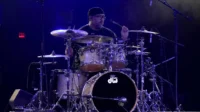
The most ambitious iteration of this integration is the newly inaugurated Apple Music Hall in London. Designed as a 600-capacity room, the space is fundamentally a multi-purpose broadcast and production facility. By integrating 48-speaker Spatial Audio systems and high-definition, hardwired camera arrays directly into the architecture, Apple has removed the friction traditionally associated with capturing live performance.
This model effectively turns the venue into a factory. A single evening of music is no longer merely a ticketed event; it is a raw data set that can be simultaneously converted into a high-fidelity audio release, a multicam video feature, a radio broadcast, and a global livestream. For jazz, a genre that thrives on the technical nuance of improvisation and the intimacy of small-room acoustics, this development is particularly consequential. Unlike pop concerts that prioritize spectacle, jazz performances are often treated as distinct "documents" of creative output. By controlling the entire chain—from the microphones on the stage to the streaming interface on the listener’s phone—Apple is positioning itself to extract value from the performance long after the house lights dim.
Data-Driven Ticketing and the End of the One-Off Transaction
Parallel to the physical evolution of the venue is the digital evolution of ticketing. Spotify’s expansion of its "Reserved" program highlights how behavioral data is replacing traditional marketing in the concert industry. By analyzing granular listening habits—streams, skips, saves, and share counts—Spotify can now predict which fans are most likely to convert into ticket buyers.
This creates a closed-loop system where the platform acts as the primary gatekeeper for live commerce. For artists, the utility is clear: the ability to bypass general-market advertising and target the "super-fan" demographic. However, this shift places significant pressure on independent media. If a platform holds the data, the concert-goer’s journey—from discovery via a playlist to ticket purchase via an integrated link—happens entirely within the ecosystem. The challenge for independent publishers and journalists is to prove that editorial context still holds value in an environment where the transaction is increasingly automated.
Defining the Human Element: The Qobuz Initiative
While tech giants focus on efficiency, the platform Qobuz is focusing on curation and integrity. On September 24, the service began implementing a policy of tagging AI-generated content, removing it from editorial recommendations, and scrubbing millions of low-quality, AI-associated tracks from its search architecture.
Qobuz claims that 60 percent of streams linked to the identified AI content were fraudulent—a figure that, while internal, highlights the systemic issue of "noise" on streaming services. This policy creates a new standard for what constitutes "authentic" music, a distinction that is vital for jazz musicians. Because jazz relies heavily on the "human touch"—the micro-phrasing and improvisational intent that are notoriously difficult for current AI models to replicate—the platform’s move to distinguish human-made art from industrially generated filler is a strategic defense of the genre’s value. The debate remains contentious, especially as companies like Suno face legal challenges from major labels regarding the use of copyrighted material in training models. For the artist, the takeaway is clear: provenance is becoming as important as the recording itself.
Institutional Resilience: The Partisan and Blue Engine Models
Integration is not strictly the domain of technology companies. The acquisition of OTM Music by Partisan Records and its merger with the Left Music publishing arm illustrates how independent labels are attempting to achieve scale. By owning publishing and synchronization rights, Partisan is building a hedge against the volatility of streaming royalty payments.
Similarly, the release of Joe Block’s "There Is Always Hope" via Blue Engine Records shows how institutions like Jazz at Lincoln Center are leveraging their own internal networks. By housing the label, the venue (Dizzy’s Club), and the distribution platform (JazzLive) under one roof, the institution ensures that every album release is supported by a bespoke ecosystem of performances and educational outreach. This reflects a broader trend: in a market saturated with content, the most successful jazz projects are those that are "vertically integrated" with a specific venue or cultural brand.
Global Shifts and the Future of Jazz Leadership
The geopolitical center of gravity for the music industry is also shifting. Research from Chartmetric reveals a stark reality: the combined dominance of the U.S. and U.K. markets in the top tier of non-legacy artists has declined significantly over the past five years, dropping from 55.7 percent in 2021 to 40.7 percent in 2026. Markets in India, Brazil, and Nigeria are experiencing more rapid growth, suggesting that the "Western-first" model of career building is losing its monopoly.
This shift coincides with a critical transition at Jazz at Lincoln Center, where Weston Sprott has assumed the role of executive director. The challenge for new leadership in such a storied institution is to reconcile the deep-rooted tradition of American jazz with a global audience that increasingly demands localized, digitally native engagement. The era where a successful jazz career was defined by "making it" in New York or London is being replaced by a model that prioritizes regional digital networks and local cultural partnerships.
Conclusion: The New Ecosystem
The music business is moving toward a future where the distinction between a "record label," a "venue," and a "platform" is purely historical. Whether through Apple’s integrated production halls, Spotify’s predictive ticketing, or the archival curation of Blue Note and Craft Recordings, the industry is betting that the path to profitability lies in controlling the entire lifecycle of a musical experience. For the artist, this creates a double-edged sword: there is unprecedented potential to reach dedicated, data-identified audiences, but the power to reach those audiences is increasingly concentrated in the hands of entities that control both the stage and the screen. As the industry continues to integrate, the value of the music itself will depend on the ability of creators to navigate these proprietary systems without sacrificing the human connection that defines the jazz tradition.