The modern music industry has undergone a radical transformation, shifting away from traditional promotional avenues like radio play and print journalism toward an algorithmic digital ecosystem. Behind the polished facade of viral social media hits lies a sophisticated, industrialized infrastructure of digital promotion. Major record labels—including Universal Music Group, Warner Music Group, and Sony Music—are increasingly relying on cutting-edge marketing technology, artificial intelligence, burner accounts, and scaled clipping networks to manufacture virality and dictate consumer trends.
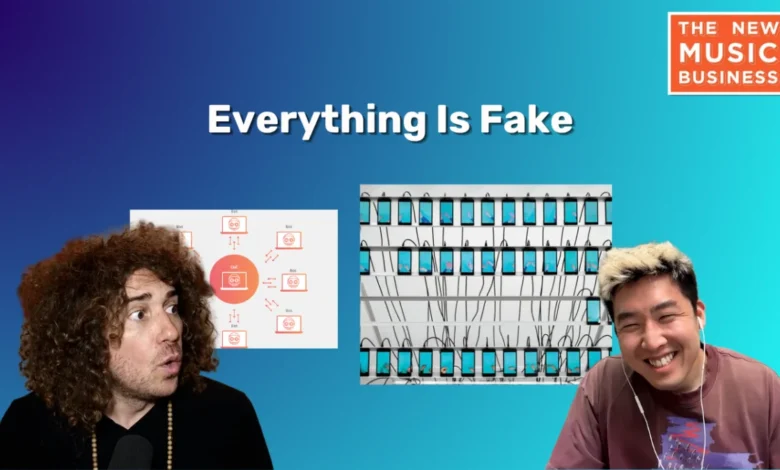
These revelations came to light during a recent episode of the New Music Business podcast, hosted by industry educator Ari Herstand, who sat down with Joe Lim, the founder and CEO of Floodify. Lim’s marketing technology firm has successfully distributed more than two million short-form videos on behalf of major record labels. The discussion peeled back the layers of contemporary music promotion, exposing a complex underworld of phone farms, commercialized clipping networks, AI-generated content, and comment-farming operations that challenge the very definition of authenticity in the digital age.
The Evolution and State of Modern Music Marketing
For decades, the music business lagged behind other consumer goods industries in adopting advanced, data-driven digital marketing practices. While retail, fashion, and tech sectors pioneered targeted digital acquisition funnels, algorithmic personalization, and hyper-scaled influencer networks early on, the music industry largely relied on legacy models of radio plugging, public relations campaigns, and passive playlist pitching.
However, the proliferation of short-form video platforms—such as TikTok, Instagram Reels, and YouTube Shorts—forced a rapid evolution. Today, attention is the most valuable commodity in the entertainment sector. Major labels have realized that organic discovery is increasingly rare, prompting them to engineer environments where songs are repeatedly pushed into user feeds until familiarity breeds streams.
According to Lim, the music industry is no longer just competing against other artists for ears; it is competing against the entire landscape of digital entertainment, from gaming streams to viral meme accounts. To capture fleeting consumer attention, labels have turned to technological solutions that can operate at a volume and velocity that human teams simply cannot match. This necessity birthed the era of industrial clipping, burner accounts, and algorithmic distribution.
Demystifying Burners, Fan Pages, and Clipping Networks
To the average social media user, a fan page dedicated to a major pop star or hip-hop artist appears to be a grassroots community of passionate supporters. In reality, a significant portion of these accounts are part of sophisticated networks known as "clipping operations."
Clipping involves taking long-form video content—such as podcast appearances, live performances, or music video interviews—and slicing it into dozens of bite-sized, highly engaging vertical video clips. These clips are then posted across hundreds of secondary or tertiary accounts, commonly referred to as "burner accounts."
Rather than relying strictly on the artist’s official profile, labels and specialized marketing agencies flood the platform ecosystem with these fragments. By distributing content across a vast array of niche accounts, marketers increase the surface area for algorithmic discovery. If one burner account’s video goes viral, the embedded audio track receives a massive influx of plays, driving listeners back to the primary streaming platforms.
This strategy has become so industrialized that it is now fully commercialized. Platforms like WHOP and similar digital marketplaces have emerged to connect labels and marketers with decentralized armies of independent editors and clip-posters. These individuals are incentivized through financial payouts, affiliate links, or streaming revenue splits to clip and distribute promotional content at scale.
Scaling Up: Phone Farms, AI, and Automated Content Generation
Operating hundreds or thousands of social media accounts manually is inefficient and economically unviable. Consequently, advanced marketing operations utilize infrastructure that borders on industrial automation.
Phone farms—physical installations housing dozens or hundreds of mobile devices running concurrently—are employed to manage accounts, automate engagement, and execute repetitive posting schedules. These setups allow marketing firms to bypass platform restrictions and simulate organic community interaction across a massive portfolio of profiles.
Furthermore, artificial intelligence has fundamentally altered how promotional assets are sourced and generated. AI tools are now deployed to scan long-form audio and video archives, automatically identifying high-tension moments, emotional peaks, or catchy soundbites that possess viral potential. Once these moments are identified, AI programs can rapidly crop the video, add dynamic captions, generate visual enhancements, and prepare the assets for multi-platform distribution.
This integration of AI allows major labels to test multiple variations of a promotional hook simultaneously. By analyzing early engagement metrics across different burner accounts, marketers can instantly determine which lyrical snippet or visual angle resonates best with audiences, reallocating promotional budget toward the winning variation within hours.
The Dead Internet Theory, Bot Activity, and Comment Farming
The widespread deployment of automated accounts, AI-generated content, and synthetic engagement has breathed new life into the "Dead Internet Theory"—a concept suggesting that the internet has been largely overtaken by automated bots and AI-generated activity designed to mimic human interaction.
In the realm of music marketing, this manifests as comment farming and artificial engagement rings. When a promotional clip is published by a burner account, automated systems often seed the comments section with targeted remarks, debates, or questions designed to provoke real users into responding. Because social media algorithms prioritize content that generates comments and shares, jumpstarting the conversation artificially can trick the recommendation engine into pushing the video to a wider, organic audience.
This raises profound ethical questions about transparency and consumer trust. When fans interact with a post, comment on a track, or believe they are participating in a spontaneous online trend, they are frequently engaging with a manufactured ecosystem orchestrated by corporate marketing algorithms.
Economic Implications for Independent Artists
While major labels possess the financial resources to deploy multi-million-dollar clipping networks, phone farms, and AI-driven distribution suites, independent artists often find themselves at a distinct disadvantage. However, industry analysts note that the proliferation of these tactics also offers a blueprint for independent creators willing to adapt.
Independent musicians are increasingly adopting decentralized clipping strategies on a micro-scale. By empowering their genuine fanbases to create and distribute clips—often by providing dedicated Google Drive folders filled with stems, interviews, and raw footage—indie artists can replicate the mechanics of major-label clipping networks without the corporate budget.
Platforms that incentivize user-generated clipping are becoming accessible to independent acts through third-party distribution tools and community-building apps. By understanding how algorithms respond to short-form video volume, independent creators can optimize their own promotional efforts to punch above their weight class.
Authenticity in an Algorithmic Era
The central paradox of modern music marketing is the tension between manufactured virality and the consumer’s persistent demand for authenticity. As audiences become increasingly media-literate, many are developing an intuition for algorithmic manipulation. When every feed is saturated with the same hyper-optimized hooks and formulaic video edits, listener fatigue can set in.
Yet, as Joe Lim emphasized during his podcast appearance, surviving and building a career in the contemporary industry often requires artists and marketers to "play the game." Navigating the modern music business is no longer solely about artistic purity; it demands a pragmatic understanding of digital architecture, distribution mechanics, and attention economics.
As artificial intelligence continues to mature and social media platforms evolve their recommendation algorithms, the boundary between organic fandom and engineered marketing will likely blur even further. For industry professionals, artists, and consumers alike, navigating this landscape requires a clear-eyed recognition of the machinery operating behind the screen.