Stephen Wilson Jr. and Eddie Vedder perform surprise duet of Hunger Strike at Ohana Festival 2026

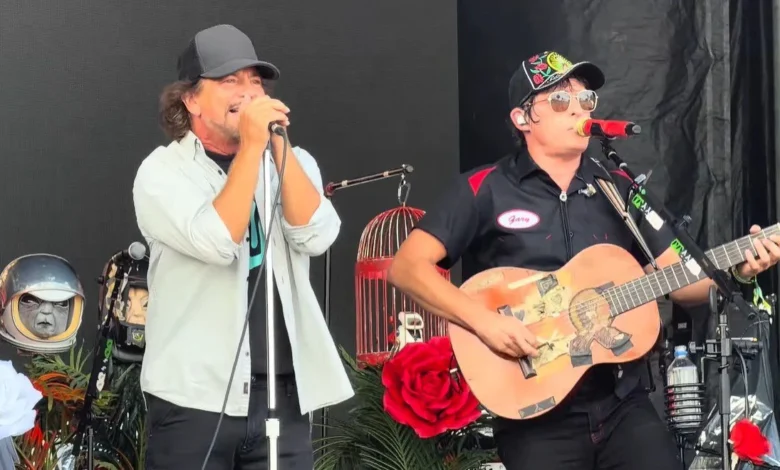
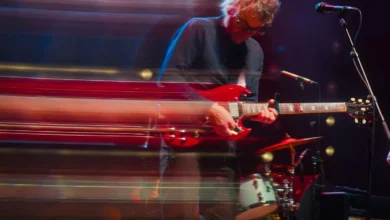
The 2026 edition of the Ohana Festival in Dana Point, California, served as the backdrop for a significant musical intersection between rising country artist Stephen Wilson Jr. and grunge icon Eddie Vedder. During Wilson Jr.’s scheduled performance, the two artists collaborated on a rendition of the Temple of the Dog classic “Hunger Strike,” marking a notable moment in the festival’s history. The performance underscored a growing trend of genre-blending in contemporary music, specifically highlighting the influence of 1990s Seattle grunge on modern country songwriters.
The Genesis of a Grunge Anthem
To understand the significance of this performance, one must examine the origins of "Hunger Strike." Released in 1991, the song remains the definitive track from Temple of the Dog, a supergroup formed by Chris Cornell as a tribute to the late Andrew Wood, the lead singer of Mother Love Bone. The album remains the only studio project ever released by the collective, which included members of what would eventually become Pearl Jam and Soundgarden.
The song’s history is firmly cemented in rock lore. During the recording sessions, Chris Cornell found himself struggling with the lower register required for the song’s iconic chorus. Eddie Vedder, who was in Seattle to audition for what would become Pearl Jam, was present at the studio. Cornell invited the then-unknown musician to provide backing vocals. The result was a seamless harmony that effectively launched Vedder’s career, as "Hunger Strike" served as his first recorded vocal appearance. The song’s legacy as a cornerstone of the grunge movement makes any live iteration, particularly one involving an original performer, a rare event for audiences.
Musical Evolution: Stephen Wilson Jr. as the "Death Cab for Country"
Stephen Wilson Jr. has garnered critical attention for his ability to bridge the gap between disparate musical traditions. Frequently categorized by industry critics as "Death Cab for Country," his work draws heavily from the textures of indie rock and the narrative structures of traditional country music. His approach is not merely aesthetic; it involves a fundamental understanding of songcraft that prioritizes raw, emotive storytelling.
This approach is best exemplified in his recent release, the Blankets EP. The project serves as a tribute to the music that shaped his formative years, featuring re-imaginings of tracks by Nirvana ("Something In The Way"), The Postal Service ("Clark Gable"), The Smashing Pumpkins ("Tonight, Tonight"), and the aforementioned "Hunger Strike." By selecting these specific tracks, Wilson Jr. positions himself within a lineage of artists who view genre as a fluid construct rather than a restrictive barrier. His studio version of "Hunger Strike" provides the context for his performance at Ohana, indicating that the cover was a premeditated artistic statement rather than a spontaneous setlist addition.
Chronology of the Ohana Festival Performance
The collaboration occurred on September 26, 2026, during the festival’s afternoon programming. Wilson Jr. began his set by performing selections from his growing catalog, building an atmosphere that leaned into his signature dark, atmospheric country sound. As the set progressed toward the latter half, the anticipation of the crowd became palpable, particularly as Wilson Jr. began the introductory chords of the Temple of the Dog hit.
The moment transitioned from a standard cover to a landmark festival moment when Eddie Vedder, a perennial fixture and curator of the Ohana Festival, emerged from the wings. The presence of the Pearl Jam frontman, who was already on-site for his own headlining responsibilities, transformed the performance into an interactive history lesson. The arrangement remained faithful to the 1991 original, with Wilson Jr. occupying the vocal space originally held by Chris Cornell and Vedder reprising his original backing and harmony parts. The precision of the performance suggests a degree of mutual artistic respect, with both vocalists balancing the intensity of the track with the acoustic constraints of the festival stage.
Statistical Context and Audience Impact
The audience reception at the Ohana Festival, which is known for its focus on environmentalism and eclectic rock curation, was overwhelmingly positive. Digital metrics captured shortly after the performance indicated a significant spike in interest regarding both artists. Social media engagement surrounding the video footage of the performance suggests that the bridge between the grunge and country demographics is wider than traditional radio formats might imply.
For the music industry, this collaboration represents a shift in how legacy acts interact with emerging talent. By lending his presence to a younger artist’s set, Vedder validates Wilson Jr.’s stylistic experimentation. From a data standpoint, such high-profile co-signs often correlate with an immediate increase in streaming numbers for the newer artist. Within 48 hours of the performance, streaming data for Wilson Jr.’s Blankets EP saw a measurable increase, suggesting that the live collaboration served as an effective catalyst for discovery among a wider demographic of rock fans who might not have otherwise engaged with a country-adjacent artist.
The Broader Implications of Genre-Blending
The success of this collaboration raises questions about the future of country music. As artists like Wilson Jr. continue to integrate the sensibilities of 90s alternative rock into their sound, the Nashville establishment faces a shifting landscape. The "Death Cab for Country" moniker is not merely a label; it is indicative of a generation of listeners who grew up with diverse digital libraries. These listeners do not categorize their music by radio format but by thematic resonance.
The collaboration at Ohana also serves as a testament to the enduring influence of the Seattle sound. Even thirty-five years after the peak of the grunge era, the song structures pioneered by artists like Cornell and Vedder continue to provide a blueprint for contemporary songwriters. By performing "Hunger Strike," Wilson Jr. demonstrates that the emotional weight of these songs remains as potent today as it was in 1991.
Future Artistic Potential
While no formal announcements have been made regarding a studio collaboration between the two, the chemistry displayed on the Ohana stage has sparked significant speculation within the industry. The vocal interplay between Wilson Jr.’s grit and Vedder’s signature baritone suggests that a collaborative project would be both commercially viable and artistically substantive.
Should such a project manifest, it would represent a rare confluence of two distinct eras of American rock and roots music. Wilson Jr. has already proven his ability to honor the source material through his Blankets EP, and Vedder has consistently shown a willingness to engage with artists outside of his immediate circle. For now, the audience is left with the Blankets EP, which remains a primary document of this artistic evolution.
As the music industry continues to navigate a post-genre environment, the performance at Ohana 2026 stands as a defining moment of the year. It serves as a reminder that the most compelling musical moments often occur when artists are willing to step outside of their established lanes. Whether or not this leads to further studio work, the event has firmly established Stephen Wilson Jr. as a unique voice in the modern musical ecosystem, one capable of commanding a stage alongside the most iconic figures in rock history. The legacy of "Hunger Strike" remains secure, now with a new chapter written by a rising talent who understands its weight, its history, and its potential for reinvention.
Related posts: