International Jazz Saxophonist Jan Kus Bridges European Roots and American Modernism with Critically Acclaimed Debut Album Faith

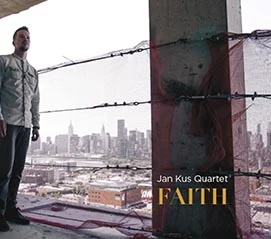
The contemporary jazz landscape is continually shaped by cross-cultural pollination, where artists bring distinct regional upbringings into conversation with the foundational idioms of American jazz. Slovenian-born saxophonist, composer, and bandleader Jan Kus represents this modern archetype. His 2016 self-produced debut full-length album, Faith, serves as a comprehensive synthesis of his classical European training, his rigorous New York mentorship, and an expansive global perspective. The release not only showcases Kus’s technical dexterity on both tenor and soprano saxophones but also highlights a cohesive ensemble chemistry involving a diverse roster of established and emerging jazz talents.
Main Facts and Album Composition
Released in 2016, Faith features 13 distinct tracks that traverse hard bop, contemporary modal jazz, and Latin-infused rhythms. The core quartet driving the recording consists of Jan Kus on tenor and soprano saxophones, pianist and Fender Rhodes player Sean Fitzpatrick, double bassist Dan Martinez, and drummer Joel Mateo.
To expand the sonic palette of the project, Kus invited a selection of high-profile guest artists. Among them is Kus’s former mentor and celebrated alto saxophonist Antonio Hart, trumpeter Alex Sipiagin, electric guitarist Rafal Sarnecki, percussionist Carlos Maldonado, electronic artist Ziga Murko, and vocalist Mélanie JB Charles. Charles, a prominent voice among the millennial jazz generation, plays an integral role on multiple tracks, shifting the album’s dynamic between instrumental fire and evocative vocal storytelling.
The complete track listing for Faith includes:
- Disconnect
- Emptiness
- One for the Band
- Aqui
- One for the Band — Jan’s Story
- I’m Just a Little Person
- One for the Band — Sean’s Story
- Rhythm A Ning
- Strength
- One for the Band — Dan’s Story
- Neófito
- Faith
- I’m Just a Little Person (trio version)
Chronology and Educational Foundation
Kus’s journey to the release of Faith spans multiple continents and rigorous academic milestones. As a youth in Slovenia, his prodigious talent on the saxophone quickly gained regional recognition. This early promise earned him a prestigious scholarship from the Slovenian Ministry of Culture, enabling him to study at the Royal Conservatory of The Hague in the Netherlands.
During his time at the conservatory, Kus expanded his performance profile by touring extensively across Europe. He performed alongside fellow young European jazz musicians in Belgium, Cyprus, Greece, Hungary, Italy, Slovenia, Slovakia, and the Netherlands. This foundational period exposed him to diverse European acoustic traditions and fostered a collaborative transnational mindset that would later define his compositions.
Seeking to immerse himself directly in the epicenter of the jazz tradition, Kus crossed the Atlantic in 2012 to pursue a Master’s degree at the Aaron Copland School of Music at Queens College in New York City. There, he studied under the tutelage of renowned saxophonist Antonio Hart. Kus’s academic excellence and performance capabilities were further validated when he received the Jimmy Heath Award, a distinction reserved for exceptionally promising wind players. The move to New York and the mentorship of Hart proved to be pivotal turning points, bridging his European classical sensibilities with the aggressive, swinging dynamics of the New York modern jazz scene.
Musical Analysis and Interplay
The synergy between Kus and his mentors is immediately evident on tracks such as "Emptiness," where Hart’s focused, piercing alto saxophone contrasts and intertwines with Kus’s brash, full-bodied tenor. Rather than competing for sonic space, the two horn players execute intricate harmonic counterpoint, building emotional fervor through elongated, purposeful lines that elevate the improvisation into a cohesive storm of sound.
On the quartet-driven reimagining of Thelonious Monk’s classic bop composition "Rhythm A Ning," Kus is joined by trumpeter Alex Sipiagin. The front line blazes a high-velocity path through Monk’s complex thematic material. Simultaneously, the rhythm section—anchored by Fitzpatrick’s piano and Mateo’s drums—generates palpable harmonic tension. Bassist Dan Martinez utilizes this tension to pivot the tune into an intricate Latin rhythm, demonstrating the ensemble’s collective command of polyrhythms and time feel.
The inclusion of vocalist Mélanie JB Charles introduces a distinct textural layer to the recording. On the track "Strength," Charles utilizes her voice as a fourth horn, intertwining vocalizations with Kus’s saxophone lines in a seamless instrumental dialogue. Conversely, the ballad "I’m Just a Little Person" highlights spatial awareness and tonal control. The album features two distinct versions of the piece: a spacious vocal setting that accentuates the breathy resonance of Charles’s voice alongside the controlled sustain of Kus’s tenor, and an alternate trio version. In the trio rendition, Kus shifts to the soprano saxophone, initiating the piece with an open, exploratory approach supported by a loping, longing pulse from the rhythm and bass section.
Among the album’s rhythmically complex offerings, "Neófito" stands out as a muscular, heavy Latin-infused composition. Driven by layered textures and modern harmonic structures, the track encapsulates the transnational identity of Kus’s musical vision.
Broader Impact and Industry Implications
The release of Faith established Jan Kus as a notable voice among the new generation of international jazz bandleaders. By successfully synthesizing the academic rigor of European conservatory training with the improvisational spontaneity of the New York jazz circuit, Kus demonstrates the evolving nature of jazz as a truly global art form.
Industry analysts and critics have noted that debut albums of this caliber often signal long-term career viability. Kus’s mastery of breath control, harmonic dexterity, and compositional maturity—exhibited at a relatively early stage in his professional recording career—positions him as an artist capable of bridging generational divides within the genre. The collaborative framework of Faith, uniting seasoned veterans like Hart and Sipiagin with emerging voices like Charles and Fitzpatrick, underscores a broader industry trend toward cross-generational and cross-cultural ensembles.
As contemporary jazz continues to absorb influences from electronic music, Latin rhythms, and classical traditions, artists like Kus provide a blueprint for how technical proficiency can serve emotional and narrative depth. With Faith, Kus has laid a formidable foundation, signaling a promising trajectory for his future contributions to the international jazz canon.