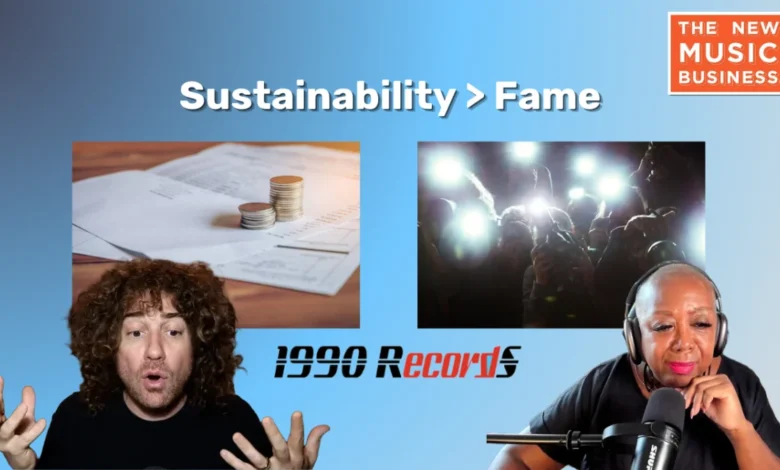
The modern music industry operates in a vastly different landscape than it did two decades ago, driven by the digital revolution, the proliferation of streaming services, and the unprecedented accessibility of direct-to-consumer marketing tools. Navigating this ecosystem requires more than raw artistic talent; it demands a sophisticated understanding of business operations, intellectual property protection, data analytics, and psychological resilience. Shedding light on these foundational elements, a recent episode of the New Music Business podcast—hosted by industry veteran Ari Herstand—features an in-depth conversation with Toni Nelson, an accomplished artist manager, business manager, and co-founder of 1990 Records.
Nelson brings a uniquely multidisciplinary perspective to the music business. Before establishing herself as a formidable force in artist management and independent label operations, her professional background spanned retail fashion and clinical mental health work. By merging the principles of behavioral science with the operational demands of the modern music business, Nelson has carved out a niche centered on sustainable artist development. Her philosophy prioritizes long-term, monetizable career growth for independent acts—such as R&B/soul singer-songwriter Adrian Daniel—while fiercely protecting their intellectual property and psychological well-being.
The conversation between Herstand and Nelson offers a comprehensive masterclass for emerging musicians looking to bypass traditional major label conglomerates and build self-sustaining careers from the ground up.
The Intersection of Behavioral Science and Music Management
To understand Nelson’s approach to artist development, one must examine her background in clinical mental health work. The music industry is notoriously high-pressure, often associated with burnout, anxiety, depression, and the psychological toll of public scrutiny. Nelson applies behavioral science not only to help artists manage the emotional rigors of the profession but also to understand consumer psychology and fan engagement.
Building a loyal creative and fan community is rarely an accident; it is the result of deliberate, behavior-based strategies. Nelson emphasizes that modern fandom is built on authenticity, shared values, and consistent touchpoints between the artist and the audience. In the digital age, passive listeners must be converted into active community members who feel a personal stake in the artist’s journey. This requires artists to balance creative output with strategic community management, fostering environments—ranging from Discord servers to exclusive mailing lists—where fans can interact meaningfully with one another and the creator.
Furthermore, Nelson’s psychological training informs how she handles the fragile nature of creative output. By establishing structured routines and boundaries, she helps artists protect their mental health, arguing that longevity in the music business is inextricably linked to an artist’s emotional stability and self-care practices.
Safeguarding Intellectual Property and Studio Protocols
One of the most critical topics addressed in the podcast is the protection of intellectual property (IP). Independent artists frequently make the mistake of entering the recording studio without establishing clear legal and administrative frameworks regarding who owns what percentage of a master recording or a composition.
Nelson advocates for the strict use of split sheets during every recording session. A split sheet is a written agreement signed by all contributing songwriters and producers that outlines the exact ownership percentages of a song’s publishing rights before the track leaves the studio. Failing to utilize split sheets often leads to costly legal disputes, delayed royalty payments, and strained professional relationships down the line.
The discussion also dives into the nuanced differences between producer credits, writer splits, and "work for hire" agreements. Artists must clearly define whether a producer is working for a flat fee (work for hire) or taking a percentage of publishing and master royalties (points). Misunderstanding these distinctions can result in independent artists accidentally signing away significant portions of their long-term revenue streams to collaborators who contributed to a single track. Nelson advises artists to educate themselves on these legal mechanics or secure competent legal representation early in their careers to ensure their copyrights remain secure.
Harnessing Data Analytics and Strategic Release Planning
Gone are the days when releasing music relied solely on gut instinct and radio promotion. Today’s independent music business is profoundly data-driven. Nelson outlines how emerging artists can utilize music analytics platforms—such as Spotify for Artists, Apple Music for Artists, and social media insight tools—to reverse-engineer their release strategies and tour routing.
Tracking data allows artists to identify where their core audience is geographically concentrated, which tracks are driving the highest listener retention rates, and how fans are discovering their music. For instance, rather than booking a national tour based on wishful thinking, Nelson points out that artists should look at their streaming and social analytics to pinpoint specific cities where they already have a critical mass of active listeners.
Release strategies must also be structured to maximize algorithmic momentum. Rather than dropping a full-length album with no prior buildup, independent artists generally benefit from a waterfall release strategy—dropping a series of singles over several months to trigger algorithm playlists, maintain continuous engagement, and collect rolling data points that inform subsequent marketing pushes.
Monetization Models and the Independence Dilemma
Monetizing an audience effectively is the cornerstone of career sustainability. Nelson breaks down how independent artists can diversify their revenue streams beyond meager streaming payouts. While streaming services are vital for discovery, direct-to-fan commerce—such as merchandise, vinyl sales, digital downloads, Patreon subscriptions, and ticketed virtual or live events—often provides the financial oxygen necessary for an independent artist to survive.
A central debate in the modern industry is whether an emerging artist should remain completely independent or sign a label licensing deal. Nelson addresses this dichotomy by analyzing the leverage required to secure a favorable deal. Labels can offer extensive funding, global distribution, and marketing muscle, but they often demand significant equity in master recordings and recoupable advances that can trap an artist in debt. Nelson’s work with 1990 Records demonstrates that modern distribution networks, sync licensing, and independent service providers (ISPs) now allow artists to retain full ownership of their masters while still accessing professional-grade distribution and marketing support.
Case Study: Developing Adrian Daniel
To ground these theoretical concepts in real-world application, the podcast features a detailed case study of R&B artist Adrian Daniel, whose career has been co-managed and developed under Nelson’s guidance. Daniel serves as a prime example of how an independent artist can build a dedicated global following without the financial backing of a major label.
Through meticulous release strategies, targeted digital marketing, consistent touring, and careful cultivation of a niche R&B audience, Daniel has steadily grown his streaming numbers and physical merchandise sales. The case study highlights the importance of patience in artist development. Sustainable careers are rarely built overnight; they require years of consistent branding, high-quality output, meticulous financial management, and iterative adjustments based on real-time audience analytics.
Broader Industry Implications and Future Outlook
The insights shared by Toni Nelson reflect a broader, structural shift within the global music economy. According to recent reports from industry trade bodies like IFPI and WIN (Worldwide Independent Network), the independent sector continues to outpace the broader market growth, accounting for a massive share of total recorded music revenues. Artists are increasingly recognizing that ownership of their intellectual property yields superior long-term financial returns compared to traditional major label structures, which historically favored the corporation over the creator.
However, this shift places a heavy operational burden on the artist. Transitioning from a purely creative mindset to acting as the CEO of a small enterprise requires access to reliable education, mentorship, and professional frameworks. Podcasts like Ari Herstand’s New Music Business and organizations like 1990 Records play a vital role in democratizing this knowledge, equipping a new generation of creators with the tools needed to navigate complex publishing laws, data analytics matrices, and mental health management.
As the industry continues to evolve—particularly with the integration of artificial intelligence, shifting streaming royalty models, and changing consumption habits—the core principles articulated by Nelson remain timeless. Sustainable success in the new music business is not defined by a fleeting viral moment on social media, but by the deliberate cultivation of intellectual property, data-informed strategy, financial literacy, and unwavering psychological resilience.
Related posts: