The Rise of WORSHIP: How Four Drum and Bass Heavyweights Are Uniting Global Audiences and Conquering North American Arenas

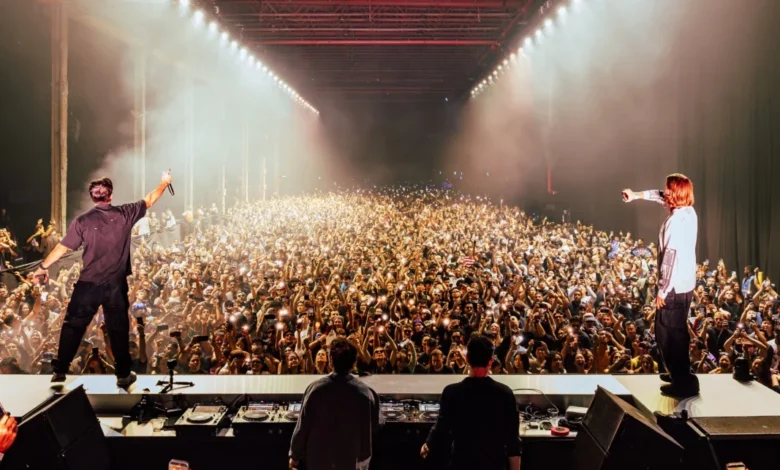
The global electronic music landscape is experiencing a profound structural shift, driven largely by the aggressive international expansion of high-tempo bass genres. At the vanguard of this movement is WORSHIP, a collaborative supergroup comprising four of the United Kingdom’s most accomplished drum and bass acts: Sub Focus, Dimension, Culture Shock, and 1991. Individually, these artists spent over a decade establishing themselves as foundational pillars of the modern electronic scene, headlining international festivals and securing chart success in the UK. Together, they have forged a unified collective designed to dismantle genre boundaries, introduce high-energy bass music to fresh international demographics, and redefine what an electronic music tour can achieve on a global scale.
Following years of independent success and intermittent collaboration, the quartet embarked on their landmark North American arena tour. This milestone run included a sold-out performance at the prominent Brooklyn Storehouse in New York City, a venue emblematic of the industrial, large-scale aesthetic increasingly favored by underground dance music productions. Behind the high-octane live shows and seamless collaborative tracks lies a meticulous creative operation rooted in decades of collective studio experience, deep-seated reverence for rave culture, and an ambitious blueprint for global market penetration.
From Underground Pirate Radio to UK Chart Dominance
The origin story of WORSHIP is inextricably linked to the formative eras of UK rave culture during the 1990s, a period when jungle and nascent drum and bass were strictly underground phenomena. Nick Douwma, widely known as Sub Focus, traces his initial exposure to the genre back to a school break in 1994, when a classmate played a compilation featuring the seminal anthem "Incredible." The track’s breakneck tempo and complex syncopated percussion represented a radical departure from conventional popular music forms, instantly captivating a generation of British youth.
Concurrently, Culture Shock discovered the genre through the static-heavy frequencies of unauthorized FM pirate radio stations operating out of British urban centers. In an era before streaming algorithms or specialized radio programming, these clandestine broadcasts were the lifeblood of underground dance music, disseminating chopped-up, time-stretched drum loops to dedicated listeners.
For years, this subculture remained insulated within the UK underground, characterized by warehouse parties, specialist record shops, and independent labels. However, the genre’s trajectory shifted dramatically over the subsequent two decades. Drum and bass transitioned from a niche British phenomenon into a commercial powerhouse, eventually securing number-one positions on the official UK charts and filling major festival mainstages. This domestic success provided the four members of WORSHIP with the platform, capital, and cultural authority required to export the sound to resistant international markets, most notably North America.
The North American Expansion and Global Ambitions
For decades, the North American electronic music market was dominated by mainstream house, techno, and commercial electro-house, with high-tempo UK bass music historically struggling to gain a foothold outside of specialized coastal enclaves. Recognizing this gap, Sub Focus, Dimension, Culture Shock, and 1991 initiated a concerted push into the North American market approximately five to six years ago.
This sustained touring strategy has culminated in their current arena tour—a commercial milestone that few drum and bass acts have managed to achieve on a multi-city North American scale. According to William Ward (Dimension), approaching the North American market requires a delicate balance of cultural stewardship and commercial accessibility. While the quartet aims to introduce new listeners to the genre, they remain acutely aware of the rich, distinct histories of underground electronic music already established across the continent.
Building on their success in North America, the collective is actively executing a broader geographic diversification strategy. Following recent performances in South America—including a landmark set at the Electric Daisy Carnival (EDC) in Medellín, Colombia—the group is expanding its footprint into emerging markets. Notably, Dimension’s Spanish heritage has influenced ongoing sessions involving Spanish-language vocal integrations, signaling a targeted approach to the Hispanic global market. Furthermore, the group has scheduled its debut performances in mainland China, targeting East Asia as a primary frontier for future growth due to the region’s rapidly expanding electronic music infrastructure.
Collaborative Studio Dynamics and Production Methodology
The operational model of WORSHIP diverges sharply from traditional musical bands or conventional electronic music supergroups. While standard collaborative projects often feature a division of labor—such as dedicated instrumentalists, vocalists, or producers—every member of WORSHIP operates as an established, self-sufficient solo artist and producer.
This parity of experience alters their creative workflow. Rather than spending months wrestling with foundational arrangements, the quartet leverages their individual technical proficiencies to accelerate production timelines. Sessions are frequently conducted in London-based studios between relentless international touring schedules, or compiled remotely using laptops during long-haul flights and hotel stopovers.
The group’s internal dynamic relies on rapid consensus and creative friction. Culture Shock notes that the presence of four seasoned producers allows for rapid-fire ideation, where distinct elements of a track can be delegated, executed, and evaluated instantaneously. Ideas that fail to gain immediate traction among the group are swiftly discarded, maintaining a rigorous quality-control standard that accelerates the completion of new material.
Each artist brings distinct technical specializations to the studio environment:
- Sub Focus: Specializes in macro-level song arrangement, structural pacing, and final mixdown completion.
- Culture Shock: Focuses on sound design, textural synthesis, and sonic detail.
- 1991: Excels at rapid ideation, conceptual launching points, and structural remixing.
- Dimension: Channels efforts into melodic direction, vocal arrangement, and song-oriented compositions.
This division of labor has allowed WORSHIP to maintain a prolific release schedule without sacrificing the individual sonic signatures that originally propelled each member to prominence.
Architectural Approach to Live Performance
Live performance curation within WORSHIP reflects a conscious departure from traditional drum and bass mixing conventions. While the genre has historically been defined by aggressive double-drops, rapid-fire track switching, and high-frequency mixing styles, WORSHIP approaches their collaborative sets through the structural lens of house and techno DJs.
The collective structures their performances as continuous, narrative-driven journeys. By prioritizing smooth transitions, deliberate harmonic progression, and extended build-ups, the group aims to make the high-tempo music more accessible to first-time listeners while maintaining the intensity required by legacy fans. Setlists are constructed collaboratively, balancing spontaneous track selection with pre-planned transition sequences designed to maintain emotional momentum from the beginning of a set to its climax.
This methodology is central to their overarching mission: converting non-believers. By delivering a polished, visually and sonically cohesive arena experience, the group actively works to demystify drum and bass for audiences accustomed to slower electronic subgenres.
Economic and Cultural Implications for the Genre
The commercial trajectory of WORSHIP underscores a wider economic shift within the global electronic music industry. As festival promoters and venue operators seek fresh intellectual property to fill large-scale arenas, collaborative supergroups offering unique, exclusive touring packages have emerged as high-value commodities.
For the drum and bass genre, the success of WORSHIP’s arena tour represents a vital validation of commercial viability outside of the UK and European festival circuits. By proving that high-tempo electronic music can successfully anchor arena-scale productions in North America, the collective is paving the way for secondary and tertiary acts to secure international routing previously reserved for mainstream pop and EDM headliners.
The Horizon: Manifesting Madison Square Garden
As the current tour cycle progresses, the ambitions of WORSHIP show no signs of deceleration. Bolstered by the cultural resonance of their Brooklyn Storehouse engagement, the group has set its sights on even larger institutional benchmarks within the North American live entertainment ecosystem.
Reflecting on the trajectory of their international expansion, the members have openly targeted iconic institutions such as Madison Square Garden as future performance milestones. While such aspirations once seemed unattainable for a genre historically confined to late-night club circuits, the current commercial momentum of WORSHIP suggests that a drum and bass takeover of mainstream American arenas is no longer a speculative ambition, but an unfolding reality.
Fans and prospective attendees seeking further information regarding upcoming tour dates, ticket releases, and collaborative releases can visit the official WORSHIP Artist Portal.
Related posts: