Vampisoul Announces Definitive Vinyl Reissue of Rare Brazilian Garage-Soul Masterpiece

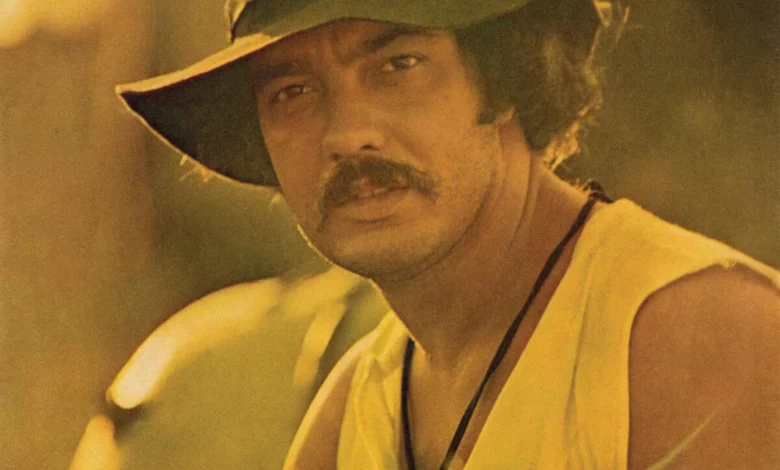
The landscape of Latin American music reissues is expanding once again as the Madrid-based archival label Vampisoul officially announces the upcoming release of one of Brazil’s most elusive and stylistically fluid underground records. Blending the raw edges of garage rock with the deep, syncopated grooves of soul and the sophisticated harmonic structures of Música Popular Brasileira (MPB), the forthcoming reissue brings a forgotten chapter of 1970s counterculture back into the global spotlight. This new edition arrives less than ten years after Light in the Attic Records spearheaded its historic 2017 vinyl revival, a testament to the enduring fascination with the record’s unique sonic architecture. Described by critics as a sonic chimera that swings effortlessly between electric distortion and acoustic warmth, the album captures a mercurial moment in Latin American musical history when artists pushed against traditional genre boundaries under the pressure of intense sociopolitical change.
Main Facts of the Archival Project
Vampisoul’s latest venture focuses on meticulous audio restoration, heavyweight pressing specifications, and comprehensive archival packaging. Utilizing the original analog master tapes where available—or pristine archival vinyl transfers when master sources proved irrecoverable—the label has worked alongside sound engineers to enhance dynamic range without sacrificing the gritty, lo-fi charm that defined the original pressings.
The physical release will feature gatefold packaging complete with rare photographic material, newly commissioned liner notes contextualizing the recording sessions, and translated lyric sheets. This meticulous approach addresses the collector’s market demand while ensuring that new generations of listeners can access the historical narrative behind the music. Distribution is slated for both physical and digital storefronts globally, ensuring that international audiences can engage with a recording that has spent decades traded among elite collectors for hundreds of dollars per copy.
Chronology and Historical Context
To understand the weight of this reissue, one must examine the turbulent political and cultural climate of Brazil during the early 1970s. Following the 1964 military coup, the Brazilian government instituted increasingly repressive measures against artists, intellectuals, and musicians. The promulgation of Institutional Act Number Five (AI-5) in December 1968 severely curtailed freedom of expression, leading to the exile of prominent Tropicalia figureheads such as Caetano Veloso and Gilberto Gil.
Despite the heavy-handed censorship and the watchful eye of the Department of Censorship and Public Amusements, underground scenes flourished in urban centers like São Paulo and Rio de Janeiro. Musicians began absorbing foreign influences—particularly American soul, funk, and garage rock—and fusing them with native samba, baião, and bossa nova rhythms. This clandestine cross-pollination birthed a wave of independent, self-funded, or minutely distributed records that defied categorization.
In this environment, artists often recorded under tight financial constraints, utilizing makeshift studios where engineers experimented with fuzzed-out guitar pedals, minimalist drum kits, and lush string arrangements. The resulting albums frequently vanished into obscurity shortly after pressing due to poor distribution networks, corporate restructuring, or the sudden suppression of local venues. For decades, these records existed only as mythical holy grails for crate-diggers, until specialized reissue labels began the arduous task of tracking down surviving artists, copyright holders, and surviving vinyl copies in the late 2000s and 2010s.
Supporting Data and the Vinyl Reissue Market
The global market for archival Latin American music has experienced exponential growth over the past fifteen years. According to industry data compiled by trade groups such as the Independent Music Companies Association (IMPALA) and the Recording Industry Association of America (RIAA), vinyl sales have surged consecutively for over a decade, with catalog and reissue titles accounting for nearly half of all physical music purchases.
Within this sector, niche archival labels like Vampisoul, Light in the Attic, Soundway, and Mr Bongo have transformed from boutique operations into vital cultural preservation institutions. The economic viability of reissuing ultra-rare records relies on a dedicated global network of collectors, DJs, and musicologists. While original 1970s pressings of obscure Brazilian garage-soul records routinely command prices exceeding $1,000 to $2,500 on secondary marketplaces like Discogs, high-quality reissue campaigns democratize access. Typically, initial pressing runs for such titles range from 1,000 to 3,000 copies, with successful releases prompting secondary colored-vinyl pressings or expanded CD and digital distribution.
Official Responses and Curator Insights
While major commercial acts dominate streaming algorithms, boutique curators and label directors view projects like this Vampisoul reissue as an act of cultural reclamation. Speaking on the broader philosophy of underground archival work, independent music historians and label programmers emphasize that these records represent the unedited voice of a generation caught between international youth movements and domestic authoritarianism.
"When you listen to these recordings, you are hearing a paradox," notes archival audio producer Marcus Vance, who has consulted on various Latin American reissue projects. "The music is breezy, tropical, and rhythmically infectious, yet it is underpinned by an unmistakable tension. The artists were utilizing Western electric instruments and studio effects not out of imitation, but as a form of liberation. Reissuing these albums allows us to complete a historical record that was deliberately fractured by political censorship."
Although the original creators of the album often remain shrouded in obscurity—with many having passed away or retreated entirely from the public eye during the decades following the record’s initial release—surviving session players and family members have increasingly partnered with labels to ensure proper crediting and royalty distribution. These collaborations provide long-overdue financial recognition and historical validation to artists who received little to no compensation during the height of their creative productivity.
Broader Impact and Cultural Implications
The ongoing rediscovery of 1970s Brazilian crossover genres carries significant implications for contemporary music production, sample culture, and global musicology. Contemporary producers across hip-hop, electronic music, and neo-soul frequently mine these obscure Latin American archives for unique drum breaks, unconventional chord progressions, and textured ambient noise. By bringing these records back into circulation via authorized, high-fidelity reissues, labels protect the intellectual property rights of the creators while feeding the creative ecosystem of modern artists.
Furthermore, these reissues challenge Eurocentric and Anglocentric narratives of popular music history. By demonstrating that innovative fusions of garage rock, soul, and avant-garde composition were happening concurrently in South America, archival projects reshape how music history is taught and understood.
As Vampisoul prepares to ship the final product to record stores worldwide, the release serves as a reminder that musical history is never fully written. Half a century after these tracks were first captured on magnetic tape, the door to Brazil’s psychedelic underground opens a little wider, inviting a new generation of listeners to bear witness to a brilliant, fleeting moment of sonic freedom.