The Mississippi Hill Country, a region defined by its rolling topography and distinct socio-economic history, has long served as an incubator for a raw, hypnotic strain of blues music that stands apart from the better-known Delta tradition. At the heart of documenting and preserving this unique sonic heritage is Dr. David Evans, a professor emeritus at the University of Memphis, ethnomusicologist, and musician whose career-spanning work has provided the definitive scholarly framework for understanding this genre. Inducted into the Blues Hall of Fame in 2023, Evans has spent over five decades peeling back the layers of a tradition characterized by its percussive, riff-based structure and deep, communal roots.
The Socio-Economic Origins of a Regional Sound
The distinction between the Mississippi Delta blues and Hill Country blues is not merely stylistic but grounded in the region’s land-ownership patterns. While the Delta was historically dominated by large-scale plantations where Black labor was relegated to sharecropping, the Hill Country—a region encompassing counties such as Marshall, Panola, Tate, Lafayette, and Tippah—was defined by a higher frequency of small, independent Black landholders. This geographic and economic independence afforded the community a level of stability that fostered unique cultural expressions, including fife-and-drum ensembles, string bands, and banjo traditions.
According to Evans, the Hill Country blues that emerged in the early 20th century represents a synthesis of these older folk forms. Unlike the structured, harmonically complex 12-bar blues associated with the Delta or the elaborate, "showy" techniques of the East Coast Piedmont style, Hill Country music is defined by its repetitive, one- or two-chord riffs. This percussive, hypnotic style—often played with a bottleneck slide—is less about melodic variation and more about rhythmic intensity, designed specifically to drive the energy of outdoor picnics and house parties.
Chronology of Documentation and Preservation
The scholarly effort to capture this music began in earnest in the mid-20th century, though it remained largely overlooked by commercial labels for decades. A foundational moment in this timeline occurred in 1942, when folklorist Alan Lomax recorded musician Sid Hemphill. These recordings serve as a vital link to 19th-century traditions, including panpipe and string-band music that had been largely ignored by the commercial blues industry of the 1920s.
The subsequent decades saw a lull in documentation until Evans began his own extensive fieldwork in 1969. His efforts, which continued through the early 1980s, were pivotal in preserving the legacies of artists like R.L. Burnside, Junior Kimbrough, and Jessie Mae Hemphill. Through the University of Memphis’s High Water record label, Evans produced recordings that introduced these artists to international audiences. The culmination of this work was the 1978 release of Afro-American Folk Music from Tate and Panola Counties, Mississippi (reissued in 2000), which expertly combined Lomax’s 1942 field tapes with Evans’s own recordings from 1969 to 1971.
Key Figures and Their Artistic Contributions
The canon of Hill Country blues is anchored by a select group of musicians whose individual styles helped formalize the genre’s characteristics.
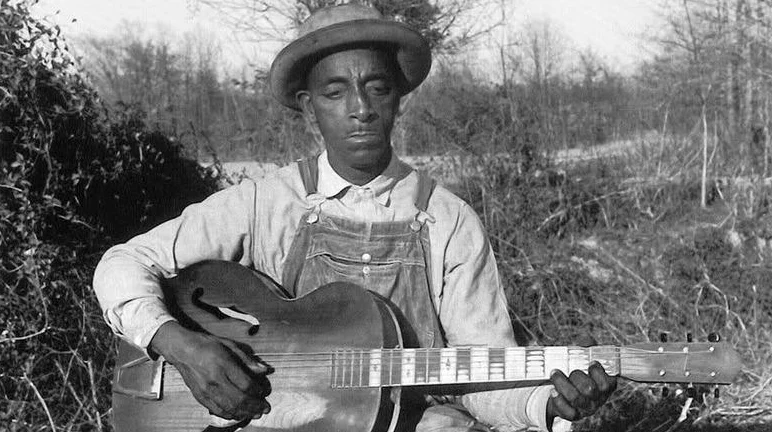
Mississippi Fred McDowell, a native of western Tennessee who settled in the Hill Country, serves as the most prominent bridge between early folk traditions and the later blues revival. McDowell’s influence cannot be overstated; he was the first artist from the region to achieve international recognition, performing at the 1964 Newport Folk Festival. Evans notes that McDowell represented the "oldest layer" of documented blues in the region, possessing a vast, flexible repertoire that provided a template for subsequent generations.
Jessie Mae Hemphill, granddaughter of the legendary Sid Hemphill, stands as a singular force in the genre. Though her early career was hindered by a lack of commercial support and equipment issues, her unique, stripped-back approach—which she described as the "blues boiled down to its essence"—became a hallmark of the Hill Country sound. Despite a debilitating stroke in 1993, her influence only grew posthumously, solidifying her status as a pioneer who seamlessly blended the church-based gospel traditions of her upbringing with the secular, percussive blues of the juke joints.
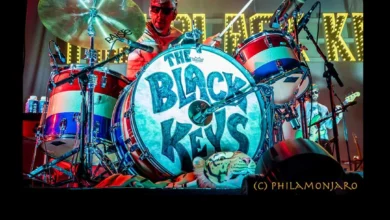
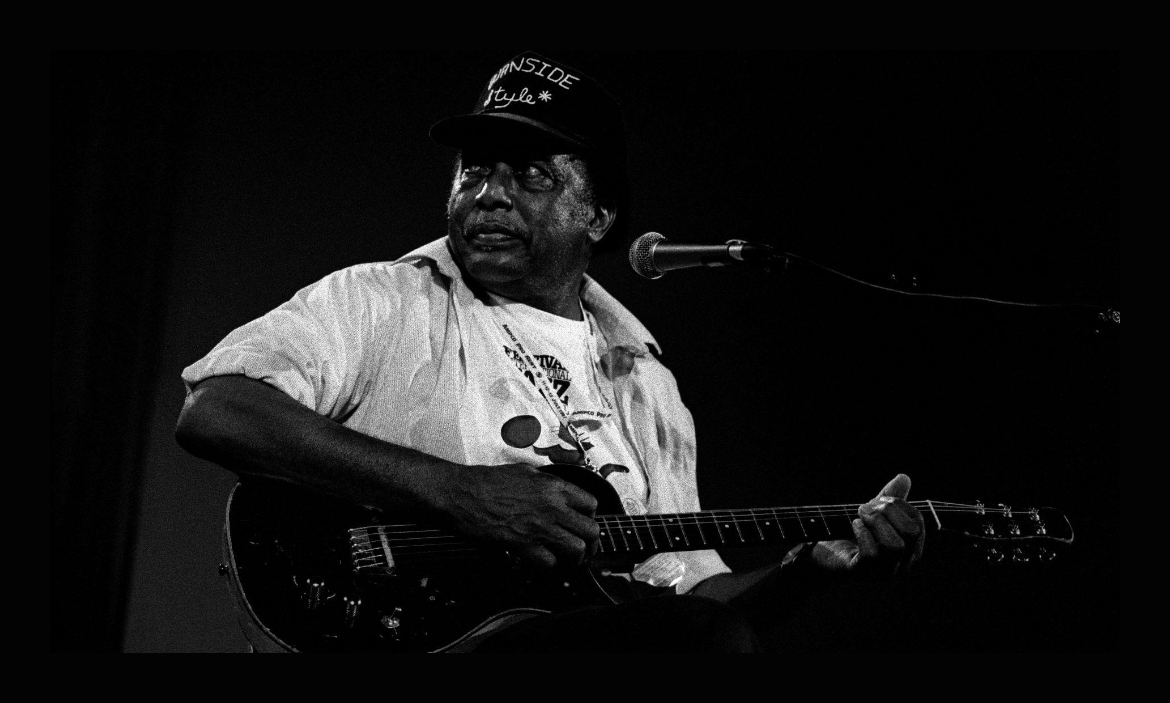
R.L. Burnside, another titan of the region, transitioned from an acoustic soloist to an electric bandleader, notably forming the "Sound Machine" in the 1980s. While Burnside’s later, commercially successful work with Fat Possum Records brought the genre to a modern, indie-rock-adjacent audience, his roots remained firmly planted in the traditional songs he learned from local contemporaries like Ranie Burnette.
Structural Characteristics and Musical Philosophy
For the uninitiated, the structural simplicity of Hill Country blues can be deceptive. Evans notes that musicians expecting standard, predictable chord progressions often struggle to adapt to the genre’s lack of traditional structure. The music is built on a "riff-as-structure" philosophy. A single line or verse might be repeated with variations, creating a meditative, trance-like state that prioritizes communal solidarity over lyrical coherence.
Evans emphasizes that the purpose of the blues in this context is to create an immediate, visceral connection with the audience. In the rowdy, high-energy environment of a summer picnic or a juke joint, lyrics often jump between unrelated themes. However, a single, potent line can resonate with a listener, forging a momentary bond between the singer and the crowd. This social function—music as a tool for dance and collective release—remains the driving force of the tradition.
Broader Impact and Scholarly Implications
The documentation of Hill Country blues carries significant weight for American musicology. Evans argues that the genre was a late-developing tradition, likely taking its modern form in the 1930s or 1940s, and its origins remain somewhat elusive due to the thin historical record. The scarcity of early recordings means that much of the music’s evolution is lost to time.
However, the implications of Evans’s work extend beyond simple preservation. By identifying the unique characteristics of the region—the use of fife-and-drum rhythms on the guitar, the "dead thumb" picking technique, and the unusual song structures—Evans has provided a map for future researchers to understand how regional geography influences cultural production.
Furthermore, the rise of the Hill Country sound in the 1990s, largely driven by Fat Possum Records, served as a case study in how "rediscovered" regional styles can influence broader popular music trends. The success of artists like R.L. Burnside and Junior Kimbrough demonstrated that there was a global appetite for the raw, unvarnished intensity of traditional music.
Conclusion: A Legacy of Intensity
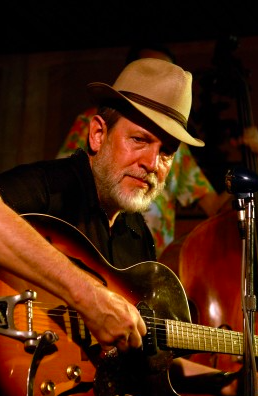
The contribution of David Evans to the field of ethnomusicology is defined by his commitment to treating Hill Country blues not as a primitive relic, but as a sophisticated, evolving tradition. His work serves as a reminder that the most profound musical movements often occur outside the spotlight of commercial recording hubs. As Evans noted, the power of the blues lies in its ability to hit the listener with a truth that is both personal and shared. Through his meticulous recordings, scholarly writing, and decades of advocacy, Evans has ensured that the percussive, dance-oriented heartbeat of the Mississippi Hill Country will remain a permanent fixture in the American cultural canon. The genre stands today as a testament to the creative ingenuity of musicians who, working within a specific community context, crafted a sound that transcends the boundaries of the Mississippi soil from which it sprang.