DJ Godfather Unleashes Instinctive Sonic Journey on GROOVE Podcast 511, Signifying Evolving Artistic Direction

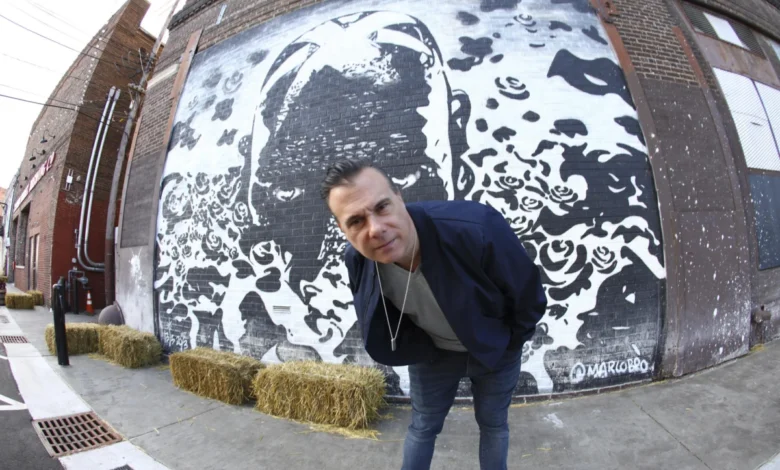
Detroit electronic music luminary DJ Godfather, widely recognized as Brian Jeffries, has delivered the 511th installment of the esteemed GROOVE Podcast series, presenting a mix characterized by raw instinct and a compelling evolution of his signature sound. This latest offering, which seamlessly navigates from pure electro to intricate techno inflections and features a significant portion of his original productions, serves as a definitive statement of his artistic philosophy: a meticulously crafted "deep, syncopated mayhem." The mix, released on the long-running German electronic music platform GROOVE, underscores DJ Godfather’s enduring relevance and his dynamic approach to curation and performance.
The Instinctive Art of the Mix: A Departure from Rehearsal
In an era where meticulously planned sets and pre-recorded sequences often dominate, DJ Godfather’s approach to his GROOVE Podcast mix stands out for its audacious spontaneity. He candidly revealed that the mix was recorded without any prior rehearsal, a testament to his confidence and deep-seated understanding of his craft. "To be honest, nothing at all," he stated when asked about his mindset during the recording process. "I never rehearse mixes. I just go." This philosophy of improvisational performance is a hallmark of many pioneering DJs, particularly those rooted in the foundational electronic music scenes of Detroit and Chicago, where the ability to read a crowd and respond in real-time was paramount.
This instinct-driven method allows for a fluid, organic sonic narrative that mirrors the energy of a live performance. It also highlights a notable shift in his recent artistic output and live sets. While historically, his performances have been dominated by his prolific catalogue – often comprising 90 percent of his own tracks – the GROOVE mix reflects a broader embrace of other artists’ work. This deliberate diversification sees him incorporating a deeper spectrum of electro and techno, enriching his sound palette and demonstrating a continuous exploration beyond his established ghetto tech foundations. This evolution is crucial for an artist with a career spanning decades, ensuring freshness and continued engagement with contemporary electronic music trends while staying true to his roots. The inclusion of tracks from foundational figures like Model 500 (Juan Atkins), Robert Hood, and Cybotron alongside modern innovators such as Annika Wolfe and Truncate exemplifies this expansive vision.
Technological Backbone: The Studio and Strategic Gear Choices
The creation of such a dynamic mix necessitates a robust and familiar technical setup. DJ Godfather recorded the GROOVE Podcast mix within the confines of his extensive private studio, equipped with multiple DJ configurations tailored to his precise needs. For this particular session, he opted for a setup comprising the Pioneer DJM-S9 mixer and a pair of Pioneer PLX-CRSS12 turntables. His enthusiasm for the latter is evident: "I’m in love with them," he affirmed.
The Pioneer DJM-S9 is a high-performance two-channel battle mixer specifically designed for professional scratch DJs and turntablists. Its intuitive layout, robust build, and advanced Magvel Fader Pro, along with customizable performance pads and effects, make it a preferred choice for DJs who prioritize tactile control and intricate mixing techniques. The inclusion of this mixer underscores DJ Godfather’s commitment to hands-on, physically engaging DJing, allowing for the precise cuts, scratches, and rapid transitions that define his energetic style.
The Pioneer PLX-CRSS12 turntables represent a significant leap in DJ technology, combining the tactile feel and aesthetic of traditional analog turntables with the advanced capabilities of digital control. These hybrid turntables allow DJs to control digital music files (via DVS software) with vinyl records, or even operate without a tonearm for purely digital scratching and manipulation. This innovation offers unparalleled precision and durability, eliminating potential issues like needle skipping during aggressive scratching. DJ Godfather’s adoption of these cutting-edge turntables highlights his continuous embrace of technological advancements that enhance his performance capabilities without sacrificing the authentic feel of vinyl. This choice positions him at the forefront of DJ technology, demonstrating how traditional turntablism can coexist and thrive with modern digital tools.
Beyond his DJ setup, DJ Godfather also revealed a "secret weapon" in his production arsenal: his Roland TR-1000. While a standard Roland TR-1000 model does not exist in the company’s historical product lineup, this unique designation likely refers to a highly customized, modified, or uniquely named Roland drum machine – possibly an 808 or 909 variant – that he has personalized. Roland’s TR series drum machines (TR-808, TR-909) are legendary for shaping the sounds of techno, house, and electro, particularly in Detroit. The fact that he used this specific piece of gear exclusively for an upcoming EP, titled 1000 Musik, demonstrates a profound dedication to challenging his creative process and extracting every sonic possibility from a single instrument. This self-imposed limitation often leads to innovative results, forcing artists to think outside conventional boundaries and discover new textures and rhythms within familiar hardware. It underscores his identity not just as a DJ, but as a meticulous sound designer deeply engaged with the foundational elements of electronic music.
A Legacy Forged in Detroit: The Movement Festival Connection
When reflecting on his most memorable performances, DJ Godfather’s thoughts invariably return home to Detroit and the iconic Movement Electronic Music Festival. "That’s a tough one," he admitted, "I have the most memories at home in Detroit at Movement Festival." His connection to Movement is profound and singular: he is one of a select few DJs who have played every single iteration of the festival since its inception. This consistent presence is a testament to his foundational role in Detroit’s electronic music scene and his enduring appeal.
Movement Festival, originally known as Detroit Electronic Music Festival (DEMF), began in 2000 and has since grown into one of the most respected electronic music festivals globally. Held annually over Memorial Day weekend at Hart Plaza, it is a pilgrimage site for fans and artists alike, celebrating the city’s unparalleled contribution to techno and house music. For DJ Godfather, each year at Movement holds a unique story, a collection of experiences that blur the lines between professional performance and personal history. This deep, almost familial bond with the festival contrasts sharply with the often-ephemeral nature of his international gigs, which, as he noted, "get to be a blur after a while."
His consistent slot at Movement is not merely a booking; it is an affirmation of his status as a living legend and a vital ambassador for Detroit’s sound. His sets at Movement are often highlights, known for their high energy, technical prowess, and ability to connect with a diverse audience that ranges from seasoned veterans to new converts. This enduring relationship with Movement underscores the unbreakable link between DJ Godfather, the city of Detroit, and the global electronic music community. It symbolizes a career built on authenticity, innovation, and an unwavering commitment to his hometown’s musical heritage.
A Glimpse into the Sonic Future: Upcoming Releases and Databass Records
The GROOVE Podcast mix not only showcases DJ Godfather’s current artistic trajectory but also serves as a potent preview of his prolific output in the coming months. His label, Databass Records, remains a primary vehicle for his creative endeavors and a cornerstone for the distinctive ghetto tech and electro sounds he helped pioneer. Databass, founded by DJ Godfather, has been instrumental in shaping the sound of Detroit’s underground, releasing a steady stream of high-energy, often irreverent, and always innovative tracks that blend elements of techno, electro, hip-hop, and house.
Scheduled for release on July 31st, an electro single titled "Get Back" is set to drop on Databass. This release promises to further solidify his reputation for crafting intricate, driving electro rhythms that are both dancefloor-ready and sonically adventurous. Electro, characterized by its prominent drum machine rhythms, synthesized basslines, and often futuristic or robotic themes, is a genre DJ Godfather has consistently pushed and evolved throughout his career.
Following "Get Back," the much-anticipated 1000 Musik EP is slated for release next month. This EP holds particular significance as it represents the fruits of his "secret weapon" challenge, having been produced entirely using his Roland TR-1000 drum machine. This creative constraint is likely to result in a cohesive and uniquely textured body of work, demonstrating the depth of sound and rhythmic possibilities that can be extracted from a single, focused instrument. It’s an artistic statement on minimalism and mastery, showcasing how limitations can fuel boundless creativity.
Further expanding his collaborative efforts, DJ Godfather also has another EP in the pipeline with Dastardly Kids, a project he expresses considerable excitement about. Collaborations allow artists to cross-pollinate ideas and push their boundaries, often leading to unexpected and fresh sonic outcomes. The partnership with Dastardly Kids indicates a willingness to explore new dynamics and maintain a vibrant, interactive presence within the electronic music landscape. These forthcoming releases collectively paint a picture of an artist in a highly productive and creatively charged phase, continually pushing his boundaries and enriching the electronic music ecosystem with his distinctive sound.
The Architect of Sound: Deconstructing the Tracklist
The tracklist for GROOVE Podcast 511 is a meticulously curated journey through DJ Godfather’s sonic universe, offering a comprehensive look at his influences, his own productions, and the contemporary artists he champions. It serves as an educational tool, revealing the intricate tapestry of sounds that define his "deep, syncopated mayhem." The mix kicks off with his own "This Is Not A Test," immediately establishing his presence, followed by an acapella from "Only One City," a nod to his Detroit roots.
The selection expertly weaves between his originals and tracks from revered figures and rising talents. Classics such as Orlando Voorn’s "Detroit Is The Name" (remixed by Godfather himself), Model 500’s "OFI," Cybotron’s "Parallel Shift," and Robert Hood’s "Spectra" provide historical context and demonstrate the enduring influence of Detroit and minimal techno on his sound. These tracks represent the bedrock of electronic music, showcasing the sophisticated rhythmic and melodic structures that continue to inspire.
Interspersed are tracks from contemporary artists like Annika Wolfe ("Let Em Breathe (Club Mix)"), Truncate ("Jerk"), Lake Haze ("Astral Waves"), and Lauren Flax ("Dada Entry," "Work That" with DJ Slugo). This inclusion signifies his active engagement with the current scene, highlighting artists who are pushing boundaries while resonating with his aesthetic. The presence of DJ Manny ("Circus," "Keep The Bass Flowing") also points to his appreciation for footwork and its rhythmic complexities, a genre that shares a spiritual lineage with ghetto tech’s rapid-fire beats.
Crucially, the mix is heavily populated by DJ Godfather’s own work, including numerous tracks from his extensive catalog: "Sporadic (909 Mix)," "Make Your Body Jerk Feat. DJ Deeon," "Shake That Booty," "Make That Add Go BOOM Feat. GoodMoney G100," "Big Booty Gurls," and the upcoming "Get Back." These selections showcase his versatility, ranging from raw, jacking tracks to more melodic and vocal-driven pieces. The blend of acapellas ("Only One City," "Jit Like Me") with full tracks demonstrates his skill in crafting dynamic transitions and building narrative within the mix. The inclusion of collaborative tracks like "Heart Attack" with Dastardly Kids and his remix of Dastardly Kids’ "Icy Hot" further solidifies his community ties and ongoing creative partnerships. The tracklist is not merely a collection of songs; it is a masterclass in genre blending, rhythmic precision, and a personal journey through the soundscapes that have defined and continue to define DJ Godfather’s unparalleled career.
Broader Implications and Enduring Influence
DJ Godfather’s latest GROOVE Podcast and his subsequent insights offer a compelling narrative about an artist who, despite a long and storied career, remains firmly at the vanguard of electronic music. His willingness to eschew rehearsal for spontaneity in his mixes speaks to a deep, intuitive connection with the music, a quality often admired but rarely mastered. This approach allows for a more authentic and emotionally resonant experience for the listener, mirroring the unpredictable energy of a live club set.
The shift in his programming from predominantly self-produced tracks to a more diverse selection of other artists’ music signifies a mature evolution. It reflects an artist confident enough in his own identity to celebrate the broader electronic music ecosystem, fostering community and demonstrating an expansive taste that transcends personal branding. This move could also be interpreted as a strategic way to keep his sound fresh and relevant, continually drawing from new inspirations while simultaneously introducing his audience to emerging talents and revered peers.
His choice of cutting-edge gear like the Pioneer PLX-CRSS12 turntables underscores a commitment to staying technically proficient and embracing advancements that enhance performance. This adaptability ensures that he remains a formidable force in live settings, capable of leveraging the best of both analog and digital worlds. Simultaneously, his dedication to the "secret weapon" Roland TR-1000 for the 1000 Musik EP highlights a deep respect for hardware-driven production and a desire to explore the nuances of sound design through focused experimentation. This dual approach – embracing modern performance tech while returning to foundational production tools – positions him as a bridge between different eras of electronic music creation.
DJ Godfather’s unwavering connection to Movement Festival and the city of Detroit serves as a powerful reminder of the geographical and cultural roots of his sound. His story is inextricably linked to the city that birthed techno and ghetto tech, and his continued presence at its most iconic festival reinforces the idea that true innovation often springs from a strong sense of place and community. His upcoming releases on Databass Records, his own label, further solidify his role as an independent tastemaker and a consistent source of innovative electronic music.
In essence, DJ Godfather’s GROOVE Podcast 511 is more than just a mix; it is a snapshot of an artist at a peak moment of creative flow, blending instinct with experience, tradition with innovation. It reaffirms his status not just as a Detroit legend, but as a global icon whose influence continues to shape the trajectory of electro, techno, and the broader electronic music landscape. His ongoing contributions ensure that the vibrant, syncopated mayhem he champions will continue to resonate with audiences worldwide for years to come.