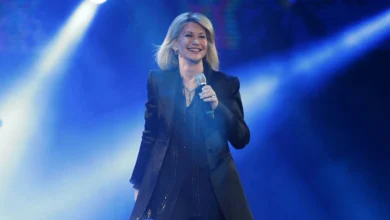
Global Music and Film Communities Mourn the Passing of Olivia Newton-John as Tributes Pour In for the Grease Icon

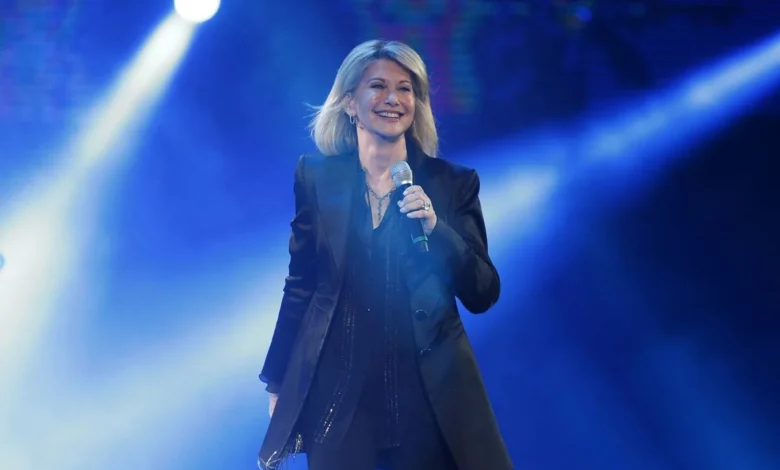
The world of entertainment has entered a period of mourning following the announcement that Dame Olivia Newton-John, the multi-platinum-selling singer and star of the era-defining musical film Grease, passed away at the age of 73. Her husband, John Easterling, confirmed that she died peacefully at her ranch in Southern California on Monday morning, surrounded by family and friends. While Newton-John had been a public figure for over five decades, her courageous thirty-year battle with breast cancer had become a secondary hallmark of her public life, turning her into a global symbol of hope and a dedicated advocate for plant-based medicine and cancer research.
As news of her passing spread, a massive wave of tributes from the highest echelons of the music and film industries began to flood social media and news outlets. These statements do more than just offer condolences; they paint a picture of a woman whose influence spanned generations and genres, impacting artists from pop divas to country superstars and rock legends.
Voices of the Industry: Celebrities Share Touching Tributes
The depth of Newton-John’s influence was perhaps most poignantly expressed by Mariah Carey, who took to Twitter to share a series of heartfelt posts. Carey, a global superstar in her own right, detailed how Newton-John’s vocal style served as a foundational inspiration for her own career. Carey noted that she first fell in love with Olivia’s voice as a young girl upon hearing the 1974 hit "I Honestly Love You." She highlighted the "beautiful airy tone and signature sound" found in tracks like "Magic," "Suddenly," and "Have You Never Been Mellow," which helped define the sound of pop radio in the 1970s and early 1980s.
Carey’s tribute also touched on the cultural phenomenon of Grease, admitting she was "obsessed" with the film. In a relatable anecdote, Carey recalled dressing up as "Bad Sandy" for Halloween in the fifth grade. The connection between the two artists eventually came full circle years later when Newton-John joined Carey on stage in Melbourne, Australia. The duo performed a duet of "Hopelessly Devoted to You," a moment Carey described as an unforgettable highlight of her life. Beyond the professional admiration, Carey emphasized Newton-John’s personal character, describing her as "one of the kindest, most generous and lovely people" she had ever encountered.
The Australian music community, where Newton-John was regarded as a national treasure, also expressed profound grief. Country music star Keith Urban shared a joint statement with his wife, actress Nicole Kidman, praising Newton-John for the "divine light" she brought into the world. Urban’s tribute emphasized her reputation for kindness and inspiration, echoing the sentiment that her legacy would continue to be met with "hopeless devotion" by fans and colleagues alike.
Adding to the chorus of voices was 1970s rock icon Peter Frampton. Frampton, who shared the spotlight with Newton-John during the height of their respective careers, characterized her as a "genuinely beautiful soul." He noted that she was the "definition of the phrase ‘Down to earth,’" highlighting a humility that often stood in stark contrast to the massive scale of her global stardom.
A Trailblazing Career: From Melbourne to Global Superstardom
To understand the magnitude of Olivia Newton-John’s passing, one must look at the sheer scale of her professional achievements. Born in Cambridge, England, and raised in Melbourne, Australia, Newton-John’s career was a masterclass in evolution. She initially found success in the early 1970s as a country-pop artist, a move that was initially met with some resistance from the Nashville establishment but ultimately proved to be a bridge between genres.
Her early success was validated by the Recording Academy, as she earned her first of four Grammy Awards in 1973 for Best Country Female Vocal Performance for "Let Me Be There." She followed this with the Record of the Year and Best Female Pop Vocal Performance for "I Honestly Love You" in 1974. Over the course of her career, she would sell an estimated 100 million records worldwide, making her one of the best-selling music artists of all time.
The 1978 release of Grease propelled her from a successful singer to a global icon. As Sandy Olsson, Newton-John portrayed the transformation from a wholesome "girl next door" to a leather-clad rebel, a narrative arc that mirrored her own musical transition. The film’s soundtrack remains one of the most successful in history, featuring the chart-topping duets "You’re the One That I Want" and "Summer Nights" with co-star John Travolta, as well as her solo ballad "Hopelessly Devoted to You," which earned an Academy Award nomination for Best Original Song.
Chart Dominance and the Physical Era
Following the success of Grease, Newton-John successfully reinvented her image once again with the 1981 release of "Physical." The title track spent ten weeks at number one on the Billboard Hot 100, becoming the biggest hit of the entire 1980s decade. This era marked a shift toward a more sophisticated, synth-pop sound and cemented her status as a pioneer of the music video medium. Her "Physical" video album won the Grammy for Video of the Year in 1983, a testament to her ability to adapt to the burgeoning MTV era.
Statistical analysis of her chart performance reveals a remarkable consistency. Between 1971 and 1982, Newton-John placed 15 singles in the Top 10 of the Billboard Hot 100, including five number-one hits. Her versatility allowed her to top the Adult Contemporary, Country, and Pop charts simultaneously, a feat few artists have replicated.
A Thirty-Year Journey of Advocacy and Health
While her artistic contributions are monumental, Newton-John’s legacy is equally defined by her resilience in the face of health challenges. First diagnosed with breast cancer in 1992—the same weekend her father passed away—she became a vocal advocate for cancer screening and early detection. Her journey was not a single battle but a recurring one; the disease returned in 2013 and again in 2017, when it was revealed the cancer had spread to the base of her spine.
Rather than withdrawing from the public eye, Newton-John used her platform to found the Olivia Newton-John Foundation Fund, dedicated to researching plant medicine and "kinder" treatments for cancer. She was a pioneer in discussing the benefits of medical cannabis for pain management and wellness, contributing to a global shift in how such treatments are perceived. In Melbourne, the Olivia Newton-John Cancer Wellness & Research Centre stands as a physical testament to her commitment, providing world-class treatment and support for thousands of patients.
Chronology of a Remarkable Life
- 1948: Born September 26 in Cambridge, England.
- 1954: Moves to Melbourne, Australia, at age five.
- 1966: Records her first single, "Till You Say You’ll Be Mine," in England.
- 1971: Releases her first solo album, If Not for You, with the title track becoming an international hit.
- 1973: Wins her first Grammy Award for "Let Me Be There."
- 1974: Represents the United Kingdom in the Eurovision Song Contest; wins Grammys for "I Honestly Love You."
- 1978: Stars as Sandy in Grease, becoming a global superstar.
- 1980: Stars in Xanadu, which, despite mixed reviews, produces a multi-platinum soundtrack.
- 1981: Releases "Physical," which dominates the charts for 10 weeks.
- 1992: First diagnosis of breast cancer; begins her journey as an advocate.
- 2008: Raises funds to build the Olivia Newton-John Cancer Wellness & Research Centre in Melbourne.
- 2012: Reunites with John Travolta for a Christmas album to benefit her charities.
- 2017: Announces the cancer has returned and progressed to Stage IV.
- 2020: Appointed Dame Commander of the Order of the British Empire (DBE) for her services to charity, cancer research, and entertainment.
- 2022: Passes away on August 8 at her home in California.
Broader Impact and Implications
The passing of Olivia Newton-John marks the end of an era for the "Golden Age" of the Hollywood musical and the 1970s pop explosion. Her death has sparked a renewed interest in her catalog, with streaming numbers for "Grease" and "Physical" seeing a significant surge in the 24 hours following the announcement.
Beyond the entertainment metrics, her impact on the medical and wellness community cannot be overstated. By being transparent about her use of medical marijuana and natural therapies alongside conventional medicine, she helped destigmatize integrative oncology. Medical professionals have noted that her "wellness-first" approach encouraged many patients to take a more holistic view of their recovery and quality of life.
In the film industry, Newton-John’s performance in Grease remains the blueprint for the "transformation" trope in cinema. Her ability to hold her own alongside John Travolta, who was coming off the success of Saturday Night Fever, ensured that the film became a multi-generational touchstone. Today, Grease remains one of the most-performed musicals in schools and community theaters worldwide, ensuring that her image as Sandy will remain immortalized for future generations.
As the industry reflects on her life, the consensus remains that Olivia Newton-John was a rare figure who managed to maintain a reputation for genuine kindness despite the pressures of immense fame. Her story is one of grace under pressure, artistic evolution, and an unwavering commitment to helping others. While she will be missed by her peers, including Mariah Carey, Keith Urban, and Peter Frampton, her "divine light" continues to shine through her music, her films, and the lives saved through her medical advocacy.