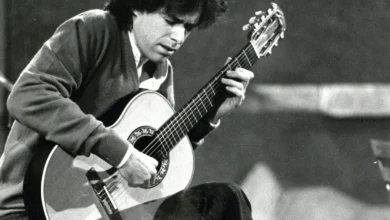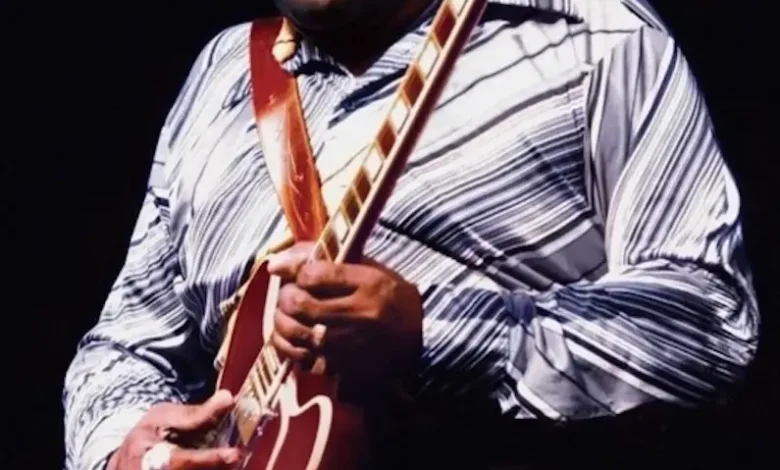
The release of this comprehensive live recording marks a significant milestone for blues historians and enthusiasts, capturing a pivotal moment in the career of the "Texas Cannonball" during his final years. Recorded on October 10, 1975, at the Nancy Jazz Pulsations festival in France, the album offers a definitive look at Freddie King’s high-octane performance style, which bridged the gap between traditional Chicago blues and the burgeoning blues-rock movement of the 1970s. Released by Elemental Records in a deluxe format comprising two CDs or three LPs, this archival discovery provides nearly two hours of music that underscores King’s enduring influence on the genre.
The Historical Context of the Texas Cannonball
Freddie King, born in Gilmer, Texas, and raised in the blues crucible of Chicago, occupied a unique space among the "Three Kings" of the blues, alongside B.B. King and Albert King. While B.B. was known for his sophisticated, orchestral approach and Albert for his massive, string-bending tone, Freddie was celebrated for his aggressive, finger-picked guitar attack and a vocal range that possessed both grit and soulful depth. By the mid-1950s, King had already established himself as a force to be reckoned with, producing instrumental classics such as "Hideaway" and "San-Ho-Zay" under the King/Federal label.
The 1970s represented a period of transition and resurgence for King. After leaving Federal Records, he signed with Leon Russell’s Shelter label, a move that successfully introduced him to a younger, predominantly white rock audience. This era saw King performing at iconic venues like the Fillmore East and sharing stages with rock royalty. By 1975, the year of the Nancy concert, King was a seasoned international headliner. His appearances in Europe were particularly well-received, as European audiences often showed a deeper reverence for American blues pioneers than their domestic counterparts at the time.
The Nancy Jazz Pulsations Performance: A Chronology of Energy
The 1975 Nancy Pulsations concert occurred during a relentless touring schedule that would eventually take a toll on King’s health—he would pass away just over a year later in December 1976. However, the recordings from this night show no signs of fatigue. The setlist is a masterclass in blues dynamics, alternating between the driving rhythms of "Going Down" and the deep, emotive storytelling of "Have You Ever Loved A Woman."
The performance begins with an assertion of King’s guitar prowess, featuring a band that included his brother, Benny Turner, on bass. The chemistry between the siblings provided a telepathic rhythmic foundation, allowing King the freedom to explore extended solos. The inclusion of tracks like "Big Legged Woman" and "Woman Across the River" (though often rotated in his sets) highlights his ability to infuse traditional blues with a funk-inflected groove that was contemporary for the mid-70s.
A standout moment in the Nancy set is King’s rendition of John Lee Hooker’s "Boogie Chillun." Unlike the sparse, foot-stomping original, King’s version is transformed into a high-speed musical locomotive, showcasing his "stinging" guitar style—a technique characterized by using a plastic thumb pick and a metal index finger pick. This technical choice allowed for a sharper, more percussive sound that could cut through the volume of a full electric band.
Technical Specifications and Archival Significance
Elemental Records has positioned this release as a premium archival document. The sound quality has been meticulously restored from the original 1975 tapes, preserving the "loud-soft" dynamics that King utilized to command his audience. The package is enriched with rare photography and extensive liner notes, featuring contributions from King’s daughter, Wanda King. These notes provide an intimate perspective on King’s life on the road and his dedication to his craft despite the physical demands of his career.
The discography of the release is divided into two primary sections:
- Disc 1 focuses on the foundational blues numbers and the high-energy "Going Down," a song that became a staple for rock guitarists including Jeff Beck and Stevie Ray Vaughan.
- Disc 2 delves into medleys and tributes to his peers, including T-Bone Walker and B.B. King, concluding with a powerful take on Traffic’s "Feeling Alright," which serves as the album’s namesake.
Charlie Wood: Bridging Memphis and New Orleans
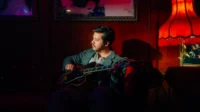
While Freddie King’s release looks back at a legendary figure, the contemporary jazz and R&B scene continues to evolve through artists like Charlie Wood. His latest effort, Your Love Is My Home, released via Stunt Records, serves as a contemporary companion to the soulful traditions King helped establish. Wood, a Memphis-born and New Orleans-bred keyboardist and vocalist, brings a sophisticated "wistfulness" to his work.
Wood’s career has been defined by his ability to blend genres. Having spent years as a resident performer on Memphis’s Beale Street and later relocating to the United Kingdom, his style is a hybrid of American soul and European jazz sensibilities. Your Love Is My Home features a diverse array of covers and original compositions. Notably, his interpretation of Jimmy Rowles’ "The Peacocks" (retitled "A Timeless Place") demonstrates his vocal dexterity, utilizing a "purring" timbre that contrasts with the raw power of traditional blues singers.
The album also includes reimagined versions of Elvis Costello’s "Shipbuilding" and Amy Winehouse’s "Love Is A Losing Game." The latter is particularly noted for its original string and rhythm arrangements, which strip away the retro-soul production of the original to reveal the song’s inherent jazz foundations. Wood’s ensemble, featuring musicians like Robin Aspland and Daniel Franck, provides a lush, atmospheric backdrop that emphasizes mood over technical pyrotechnics.
Caleb Wheeler Curtis and the Evolution of the "Stritch"
In the realm of modern jazz, Caleb Wheeler Curtis’s Ritual offers a stark contrast to the blues-rooted sounds of King and Wood. Released on Chill Tone Records, Ritual is an exploration of "cosmic post-bop," a subgenre that seeks to balance structured composition with avant-garde freedom.
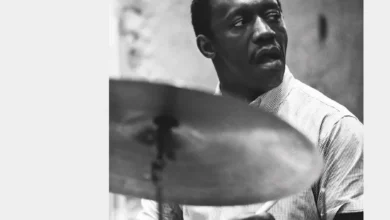
Curtis is notable for his use of the "stritch," a straight alto saxophone popularized by Rahsaan Roland Kirk. The instrument produces a punchy, clear tone that Curtis utilizes to navigate complex melodic structures. The album, recorded in Astoria in late 2025, features a formidable lineup including pianist Orrin Evans and bassist Vicente Archer.
The tracks on Ritual, such as "Bleakout" and "Black Box Extraction," are characterized by "hypnotic space grooves." While the music is occasionally inaccessible to casual listeners due to its "nervy" soloing and "headstrong" arrangements, it represents the cutting edge of jazz instrumentation. Curtis’s ability to draw a "pomegranate-like" richness from the stritch adds a unique textural layer to the contemporary jazz landscape, proving that the genre remains a fertile ground for sonic experimentation.
Analysis of Implications for the Music Industry
The simultaneous interest in archival blues releases like the Freddie King Nancy concert and modern jazz explorations like those of Curtis and Wood highlights a dual trend in the music industry. There is a growing market for high-quality, physical archival releases (2CD, 3LP) that cater to collectors and historians who value the "tangible" history of music. These releases serve as a form of cultural preservation, ensuring that the peak performances of 20th-century masters are not lost to time or poor-quality bootlegs.
Conversely, the work of Wood and Curtis demonstrates that the genres of blues and jazz are not static. By integrating influences from pop (Costello, Winehouse) and experimenting with rare instrumentation (the stritch), these artists ensure the genres remain relevant to modern audiences.
Conclusion
Freddie King’s Feeling Alright – The Complete 1975 Nancy Pulsations Concert is more than just a live album; it is a testament to the "Texas Cannonball’s" role as a bridge between the roots of the blues and the future of rock and jazz. When viewed alongside the contemporary contributions of Charlie Wood and Caleb Wheeler Curtis, it becomes clear that the lineage of soulful, improvisational music is both well-preserved and actively expanding. Whether through the "razor-edge licks" of King’s 1975 performance or the "cosmic grooves" of Curtis’s 2025 sessions, the spirit of musical exploration continues to thrive across decades and continents.