Bob Dylan Continues Unrelenting Tour Schedule with Mesmerizing UK and European Leg of the Rough and Rowdy Ways World Wide Tour

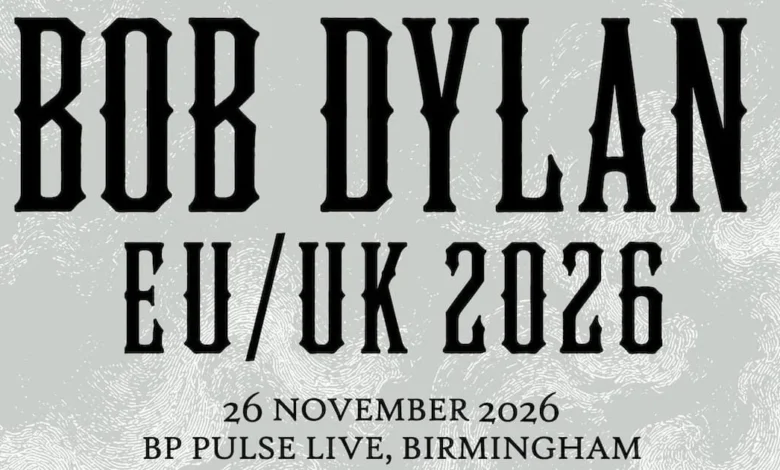
The relentless work ethic of legendary American singer-songwriter Bob Dylan shows no signs of abating as the octogenarian artist traverses the globe on his ongoing, multi-year concert itinerary. Following the conclusion of his extensive Rough and Rowdy Ways World Wide Tour in Texas this past May, Dylan wasted little time before returning to the stage. He immediately embarked on a 35-date, United States-only run titled The Long Hot Summer ’26 Tour, which sustained his performance schedule through August. By mid-October, the Nobel laureate crossed the Atlantic to land in Norway, officially launching the Lights Of Autumn Tour UK/EU 2026. This latest European leg is slated to culminate in a prestigious five-night residency at London’s iconic Royal Festival Hall, running from December 3 through December 8.
The rigorous nature of this schedule underscores a career that has defied conventional retirement norms for decades. Rather than resting on the immense laurels of a catalog that reshaped modern popular music, Dylan remains deeply committed to the ephemeral, communal experience of live performance. His current routing reflects a deliberate choice to remain perpetually mobile, treating the highway and the concert hall as his primary domains.
An Intimate and Uncompromising Live Production
Audiences attending the Lights Of Autumn Tour are greeted by an atmosphere that deliberately strips away the technological fripperies of modern arena concerts. Promptly at 8:00 PM, the evening begins under strict regulations regarding device usage. Patrons are required to lock away their smartphones in pouches, ensuring that no glowing screens disrupt the auditorium. There are no video projections, no pre-show background music, and no formal verbal introductions to welcome the artist to the stage.
Upon arrival, the visual presentation is stark and minimalist. The stage illumination is comparable to the ambient lighting of a domestic living room, furnished primarily with a selection of upscale standard lamps and subtle fairy lights interwoven around the monitor speakers. This aesthetic reinforces a recurring truth for concertgoers: a Bob Dylan performance is never engineered as a conventional pop spectacle, nor is it designed to pounce on nostalgic expectations by serving up a predictable parade of greatest hits.
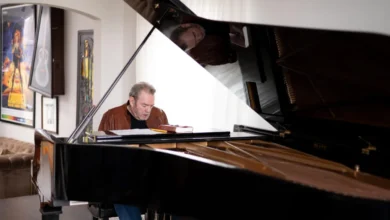
Stepping onto the stage in a light-colored hoodie with the hood pulled firmly up, Dylan assumes his position behind the keyboard. With minimal fanfare, he adjusts his microphone and immediately drives into the opening number, selecting 1971’s Watching The River Flow to set the tone for the evening.
Chronology of the Set and Musical Progression
The performance unfolds with a seamless, unrelenting momentum. Without pausing for stage banter or acknowledgment of the crowd, Dylan transitions from his opening number directly into Love Sick, a haunting track from his critically acclaimed 1997 album Time Out Of Mind. The arrival of the classic 1964 composition It Ain’t Me, Babe generates pockets of audible cheering throughout the hall as the familiar melody weaves its way through the arrangement, before the set pivots back to Time Out Of Mind with Tryin’ to Get To Heaven.
Throughout the 100-minute performance, Dylan alternates between standing at the microphone and sitting at his keyboard. Though physically a subtle, hooded presence whose face remains largely obscured, his vocal delivery demonstrates remarkable resilience. Observers and critics note that his voice appears to grow stronger and more assured as the evening progresses, culminating in a particularly delicate and emotionally resonant reading of Sugar Baby.
The setlist also incorporates material from his most recent studio output, notably Rough And Rowdy Ways tracks such as Black Rider. The evening builds toward its dramatic conclusion with Every Grain Of Sand from 1981’s Shot Of Love, serving as the final piece and providing one of only two rare moments during the evening where Dylan steps away from the keyboard to play the harmonica.
Cover songs have formed a staple of his live sets in recent years, and the European leg continues this tradition. Alongside enduring interpretations of Bo Diddley’s I Can Tell and the Charlie Rich-penned I’ll Make It All Up To You, the London performances introduce a notable addition: Sister Rosetta Tharpe’s venerable gospel standard How Far From God, marking its live debut on the tour.
The Ensemble and Musical Architecture
Rather than functioning as a collection of isolated songs designed for individual sing-alongs, the performance operates as a sustained exercise in world-building. Dylan cultivates an air of perpetual mystery, taking listeners on a journey through a mythical, dusty America that exists primarily within the realms of poetry, fiction, historical memory, and song. The musical foundation spans blues derivations, slow-burning grooves, and subtle jazzy flourishes. While the overall tempo remains steady and deliberate, the cumulative effect is profoundly hypnotic.
Minor imperfections do surface, such as fleeting moments where the piano parts are struck with a heavy, percussive force. However, the material quickly rights itself, guided by the exceptional dexterity of Dylan’s backing quartet. The ensemble features guitarists Julian Lage and Joel Paterson, bassist Tony Garnier, and percussionist Anton Fig, whose expressive yet understated drumming anchors the dynamic shifts of the entire performance.
Upon the conclusion of the final song, Dylan maintains his characteristic economy of movement. He turns his back to the audience, stretches his ankles and legs, steps away from the keyboard, offers a brief bow and a short clap, and saunters off stage to a resounding standing ovation.
Broader Impact and Critical Analysis
The persistence of Bob Dylan’s touring schedule offers significant insight into the economics and psychology of heritage acts in the modern era. While many artists of his generation rely on retrospective box sets or occasional high-ticket residencies in fixed locations like Las Vegas, Dylan’s approach remains rooted in the relentless tradition of the "Never Ending Tour"—a conceptual framework he initiated in 1988 and has maintained with few interruptions ever since.
Musicologists and industry analysts frequently point out that Dylan’s refusal to pounce on audience nostalgia is a vital component of his enduring relevance. By continuously rearranging his catalog, introducing unexpected cover versions, and prioritizing new or lesser-performed material, he subverts the expectations of commercial concertgoing. The restriction of mobile phones at his recent shows has further transformed the concert environment, encouraging a rare level of collective presence and attentive listening that has largely vanished from contemporary live music.
As the Lights Of Autumn Tour UK/EU 2026 winds down toward its final destination at the Royal Festival Hall, it reinforces the status of Bob Dylan as an anomalous figure in American culture—an artist who continues to explore the boundaries of his own vast repertoire while remaining resolutely anchored in the present moment.