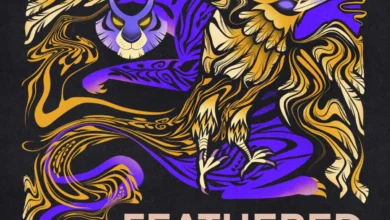
Hard Proof Expands the Boundaries of American Afrobeat and Funk with the Release of Stinger


The contemporary instrumental music landscape has long grappled with the challenge of cross-cultural translation, particularly when North American artists attempt to capture the complex, polyrhythmic vernacular born in West Africa. Yet, within the vibrant cultural ecosystem of Austin, Texas, a ten-piece instrumental collective known as Hard Proof has systematically dismantled conventional geographical and stylistic boundaries. Since their formation, the ensemble has dedicated itself to a rigorous study of the foundational blueprints laid down by Nigerian pioneer Fela Kuti and his legendary Africa 70 band, blending those hypnotic sub-Saharan rhythms with the heavy syncopation of American funk, jazz improvisation, and the raw energy of rock. Their latest studio offering, Stinger, represents a critical milestone in this ongoing sonic evolution. Building directly upon the experimental momentum established by their previous release, Public Hi-Fi Sessions, the new record demonstrates an elevated level of compositional maturity, tighter ensemble cohesion, and a fearless willingness to push the limits of genre-bending instrumental music. Recorded with the meticulous attention to live-room dynamics that has become a hallmark of the group’s output, Stinger captures the visceral impact of a large-scale band operating at the absolute peak of its creative powers.
A Brief Chronological Evolution of Hard Proof
The trajectory of Hard Proof is rooted in the fertile, eclectic music scene of Austin, Texas, a city historically recognized for its vibrant blues and rock traditions but increasingly known as a incubator for progressive soul and global grooves. The group’s genesis can be traced back over a decade, when a core group of musicians, bound by a shared reverence for Afrobeat, began convening to dissect the complex structural arrangements of Fela Kuti’s seminal recordings. Unlike many tribute projects, these musicians recognized that true homage required authentic innovation rather than mere replication. By integrating their individual backgrounds in American jazz, deep funk, and rock guitar culture, the collective gradually forged a distinct voice. Over the years, the band expanded into a formidable ten-piece unit, carefully curating a lineup of horn players, percussionists, and rhythm section specialists. Early live performances across Texas established their reputation as an unstoppable live act, capable of holding festival audiences in thrall with relentless, danceable energy. Their debut recordings laid the groundwork, but it was the 2016 release of Public Hi-Fi Sessions that brought national critical attention to the collective. That album showcased a band comfortable moving between hypnotic grooves and jagged, cinematic tension. The release of Stinger in subsequent years marked the next logical chapter, crystallizing the lessons learned on the road and in the studio into a cohesive, highly focused masterclass in modern instrumental groove.
An Analytical Track-by-Track Breakdown of Stinger
The sonic architecture of Stinger is immediately established by its title track, a hard-hitting, aggressive piece that serves as an overture for the entire record. "Stinger" relies on a dense, cutting rhythm section that drives the composition forward with an unyielding momentum, anchored by deep, resonant foundations laid down by the baritone saxophone and a muscular bassline. Rather than easing the listener into the album, the band plunges headfirst into a complex web of overlapping horn lines and jagged guitar interplay. This aggressive stance quickly gives way to the dynamic tonal shifts of "Men of Trouble." On this track, the ensemble explores the expressive range of contrasting instrumentation, introducing a deeply soulful, funky flute solo that dances above the groove before yielding to a searing, rock-infused guitar solo. The composition successfully traverses various rhythmic feels and ambient textures, utilizing classic wah-wah pedal effects to sustain a continuous, soulful journey without sacrificing the underlying tension.
As the album progresses, "Trickle Down" functions as a strategic transitional piece. It initially settles the atmospheric energy of the record before steadily accumulating intensity, ultimately erupting into a soaring rock guitar solo driven by unmistakable Afrobeats percussion and a commanding horn section. Music critics and fans alike have frequently highlighted the synergy of the horns on this track, noting that their synchronized phrasing evokes the communal fervor of a traditional gathering. However, it is the track "Lots" that stands out as the definitive centerpiece of Hard Proof’s Afro-funk mastery. Featuring awe-inspiring syncopation and breathtaking rhythmic precision, "Lots" delivers a masterclass in relentless, danceable momentum. The interplay between the congas, drums, and interlocking guitar patterns creates a magnetic pull that defies passive listening, ensuring that the listener’s physical engagement matches the intellectual appreciation of the arrangement’s complexity.
Musical Lineage and Stylistic Comparisons
To fully contextualize the sound of Hard Proof, musicologists and critics frequently invoke a constellation of contemporary instrumental acts that similarly draw from the well of Afrobeat and deep funk. If one were to imagine a musical recipe for the collective, it might resemble a rich, complex stew featuring a generous dapple of Antibalas and Bixiga 70, fortified by a substantial chunk of Snarky Puppy’s progressive jazz-fusion complexity, seasoned with a dash of Ikebe Shakedown’s cinematic grit, and stirred by the hypnotic rhythms of The Funk Ark. Yet, despite these stylistic touchstones, Hard Proof maintains a distinctly American southern grit that prevents them from being categorized as mere revivalists. Their ability to fuse the specific, highly disciplined polyrhythms of West African highlife and Afrobeat with the improvisational freedom of American jazz and the raw voltage of rock guitar creates a singular sonic identity. This cross-pollination is executed with a level of eloquence and authenticity that has earned the band respect among purists and contemporary innovators alike.
Comprehensive Personnel Roster and Collaborative Synergy
The intricate execution of Stinger is a testament to the collective talent and collaborative synergy of Hard Proof’s ten-piece lineup. The band’s sonic depth is anchored by a robust rhythm and percussion section, featuring Stephen Bidwell on drums and percussion, Tony Cruz anchoring the foundational pulse on congas, and Tommy Spampinato adding further textural layers with auxiliary percussion. The low-end frequencies and harmonic framework are expertly managed by Joe Sokolik on bass, while the multifaceted guitar and keyboard duties are shared among Aaron Sleator, Gerardo Larios, and John Branch, whose collective backgrounds allow the group to seamlessly pivot between jagged rock riffs, shimmering funk rhythms, and atmospheric jazz voicings. The horn section—comprising Derek Phelps on trumpet, Jason Frey on tenor saxophone, and Joseph Woullard handling the dual responsibilities of baritone saxophone and flute—delivers the blistering arrangements and soaring melodic lines that define the band’s signature sound. Every member functions not merely as a sideman, but as an essential pillar in an intricate architectural design where individual virtuosity consistently serves the greater collective groove.
Broader Impact and the Future of Modern Instrumental Music
The release and critical reception of Stinger carry broader implications for the landscape of modern instrumental and global-fusion music. In an industry frequently dominated by vocal-centric pop and digitally constructed tracks, the continued success of a ten-piece analog band like Hard Proof underscores a persistent, robust audience appetite for organic, high-energy musicianship. By successfully bridging the cultural gap between the traditional tenets of Nigerian Afrobeat and the diverse stylistic palette of American southern musicians, Hard Proof has carved out a unique niche that enriches the global music conversation. Their work demonstrates that cross-cultural musical exploration, when approached with rigorous study, genuine respect, and exceptional technical skill, can yield innovative art that transcends geographical limitations. As the band continues to tour and refine their live presentation of the Stinger material, their trajectory offers a compelling blueprint for the future of instrumental collective artistry—proving that the groove, when executed with precision and soul, remains a universal language.