William Shatner Performs Ozzy, Metallica, Motörhead Classics at His Debut Metal Show: Video + Setlist

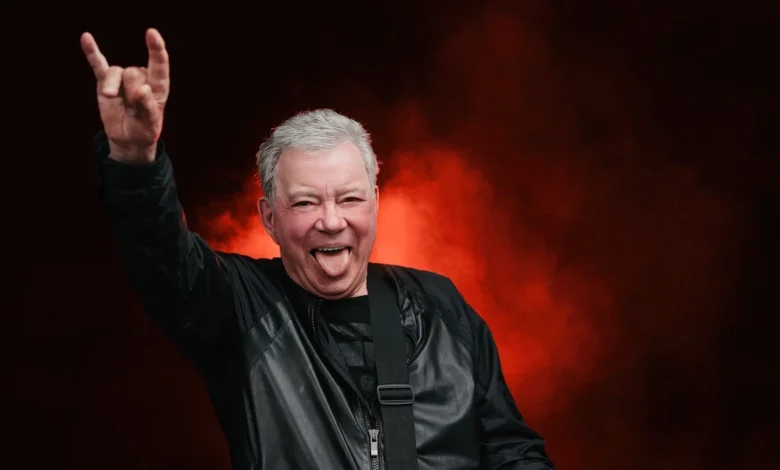
The convergence of science fiction legacy and heavy metal intensity reached an unexpected zenith on Saturday, September 19, 2026, as legendary actor William Shatner took the stage at Park West in Chicago for his inaugural metal concert. At 95 years of age, the iconic Star Trek star defied conventional expectations of retirement by fronting a high-octane ensemble known as The *uckers. This performance, which functioned as a warm-up engagement for his scheduled appearance at the renowned Riot Fest, marked a definitive pivot in Shatner’s storied career, signaling his serious, albeit eccentric, entry into the heavy metal genre.
A Chronology of a Musical Evolution
Shatner’s transition into music is not a recent development, though his venture into heavy metal represents his most aggressive sonic departure to date. Since his 1968 debut album, The Transformed Man, Shatner has utilized a unique, theatrical spoken-word delivery that prioritizes cadence, dramatic pauses, and emotional weight over traditional melodic singing. Over the decades, he has collaborated with various artists to explore genres ranging from pop to country and progressive rock.
The gestation of his latest project began in early 2026, when reports surfaced that the actor was actively recording a studio album titled What the F Is Heavy Metal? under the auspices of Cleopatra Records. The Park West performance served as the public unveiling of this project, offering a live demonstration of the material he has been crafting in the studio alongside a rotating cast of high-profile collaborators. The transition from the recording booth to the concert stage was executed with a focus on high-fidelity instrumentation, provided by his backing band, while Shatner maintained his signature oratorical style.
The Chicago Performance: An Analysis of the Setlist
The setlist at Park West was meticulously curated to bridge the gap between classic metal anthems and Shatner’s original compositions. The performance opened with an interpretation of Ozzy Osbourne’s "Crazy Train," immediately establishing the juxtaposition between the band’s technical proficiency and Shatner’s deliberate, grave delivery. This was followed by his own original work, "do not go gentle into that good night," a title clearly referencing Dylan Thomas’s famous poem, which served to ground the aggressive musical backdrop in literary tradition.
The inclusion of Motörhead’s "Ace of Spades" and Metallica’s "Enter Sandman" demonstrated the band’s commitment to the foundational pillars of the genre. Critics in attendance noted that while the backing band delivered faithful, high-energy renditions of these tracks, Shatner’s approach transformed them into something resembling dramatic monologues. By treating the lyrics as text to be interpreted rather than notes to be sung, Shatner brought a level of gravitas to the songs that altered the audience’s perception of the familiar compositions. The set concluded with two additional original tracks, "will we care when the sky turns black" and "damn old age," both of which suggest that the upcoming studio album will lean into themes of existential reflection, mortality, and the human condition.
Supporting Data: The Production Scale
The scale of this project is underscored by the caliber of contributors involved in the production of What the F Is Heavy Metal?. Cleopatra Records has confirmed a roster of heavy metal royalty, including Brian May of Queen, Rob Halford of Judas Priest, Tony Iommi of Black Sabbath, and legendary drummer Dave Lombardo, formerly of Slayer. The involvement of such figures lends significant credibility to the project, transforming what could have been perceived as a novelty act into a legitimate musical endeavor.
From a production standpoint, the technical requirements for these performances are substantial. The backing band, The *uckers, has been tasked with maintaining a sonic profile that satisfies the rigorous demands of metal audiences while accommodating a vocalist who operates outside the traditional parameters of pitch and tempo. The synchronicity achieved during the Chicago performance suggests that the studio sessions have been exhaustive, ensuring that the live experience maintains a standard consistent with the professional pedigrees of the guest musicians involved.
Industry Implications and Cultural Significance
The entry of a nonagenarian pop-culture icon into the heavy metal sphere raises interesting questions regarding the boundaries of musical genres. Historically, heavy metal has been a genre defined by youth, rebellion, and technical virtuosity. By embracing this aesthetic, Shatner is effectively challenging the ageist gatekeeping that often persists within the music industry.
Furthermore, the collaboration with figures like Iommi and Halford serves to bridge generational gaps within the rock and metal community. For the younger audience at Riot Fest, seeing a generational icon like Shatner engage with the genre provides a unique point of access. For the long-time metal community, the participation of legacy artists serves as a validation of the project. This is not merely a celebrity attempting to capitalize on a subculture; it is a collaborative effort that utilizes the platform of an established actor to spotlight the artistry of heavy metal.
The Road to Riot Fest
The Park West show was an essential precursor to Shatner’s performance at Riot Fest, one of the most prominent alternative music festivals in the United States. Festivals of this nature are known for their eclectic lineups and their propensity for showcasing unconventional acts. By placing himself on the same bill as traditional metal bands, Shatner is testing the limits of audience reception.
Official statements from the Riot Fest organization have been minimal, focusing on the novelty of the booking. However, industry insiders suggest that the reception at Park West has created a "buzz" that has increased anticipation for his festival set. At 5:25 p.m. local time, the performance serves as a litmus test for the viability of What the F Is Heavy Metal? as a touring entity. If the response to the original tracks is as strong as the reception to the covers, the potential for a larger, national tour becomes a distinct possibility.
Looking Toward the Release of "What the F Is Heavy Metal?"
As anticipation builds for the full release of his debut metal album, the focus remains on how the finished product will integrate these disparate elements. The album is expected to be a comprehensive exploration of the genre, utilizing the aforementioned guest artists to add layers of authenticity to the record.
The logistical challenge for Cleopatra Records will be marketing a product that sits at the intersection of "Star Trek" fandom and extreme metal. The data from his recent performances indicates that there is a significant overlap in these demographics, or at the very least, a curiosity factor that drives ticket sales and stream counts. The production team has reportedly focused on a "clean, yet aggressive" sound profile, ensuring that the spoken-word elements are not lost in the wall of sound created by the heavy guitar arrangements.
Conclusion: A Legacy Reimagined
William Shatner’s decision to perform at a metal venue in Chicago at age 95 is a profound statement on artistic longevity. By choosing a genre characterized by intensity and volume, he is demonstrating a refusal to fade into the background, preferring instead to remain at the forefront of cultural discourse. Whether the project is viewed as an experimental curiosity or a genuine contribution to the metal canon, the objective fact remains that Shatner has successfully integrated himself into the heavy metal landscape.
The success of this transition will ultimately be measured by the reception of his upcoming album and the legacy he chooses to carve out within this new medium. As he prepares to take the stage at Riot Fest, the industry is watching not just to see how a screen icon performs under the lights of a festival stage, but to witness a rare moment in music history where the boundaries of celebrity and subculture are irrevocably blurred. The synthesis of his theatrical training, his decades of experience in public performance, and the technical power of modern metal has created an outcome that, while unexpected, remains a testament to his enduring ability to command an audience.