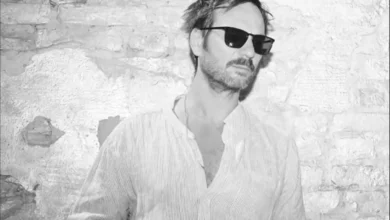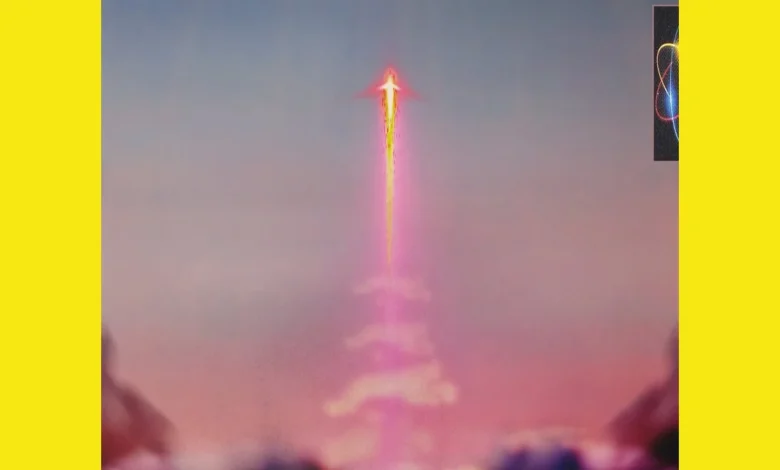
The release of Music for Empty Stadiums under the new moniker OR marks a significant departure for the acclaimed Spanish producer Oriol Riverola, widely known as John Talabot. Released via AD 93, the 17-track, 90-minute project serves as both a stylistic pivot and a meditative reflection on the forced stillness imposed by the global pandemic. By adopting the name OR—which denotes both the French word for gold and the initials of his legal name—Riverola signals a transition from the dancefloor-centric expectations associated with his previous work toward an exploration of fractal geometry in sound.
The Mathematics of Sound: Fractal Aesthetics
Fractals, defined as complex, never-ending patterns that repeat themselves at different scales, have long occupied a space in both natural history and digital culture. From the structural biology of Romanesco broccoli to the spiral arms of distant galaxies, fractals offer a visual and mathematical language of infinite complexity. In the early 1990s, as rave culture sought a visual identity to match the repetitive, hypnotic nature of electronic music, fractal patterns became synonymous with the "Acid" aesthetic. These geometric formulas, popularized by mathematician Benoît Mandelbrot just a decade prior to the rave explosion, were etched into party flyers, screen-savers, and early web design.
On Music for Empty Stadiums, Riverola does not merely use this aesthetic as a nostalgic prop. Instead, he applies the structural logic of fractals to his sound design. Tracks like "Trancient" and "Nokik Messiah" utilize high-energy, jagged synthesizers that appear to fold in on themselves. The auditory clusters are meticulously crafted; they rarely reach a definitive resolution or a "zero point," but rather suggest a perpetual motion of self-similar repetition. This technical approach creates a distinct sonic topography that feels modern, detached from the specific historical baggage of the 90s rave scene, and deeply structural.
Chronology of a Career: From Barcelona to Global Stages
To understand the gravity of this shift, one must consider the trajectory of Oriol Riverola’s career. His ascent began in the late 2000s, punctuated by the 2009 breakout track "Sunshine," which cemented his reputation as a key figure in the burgeoning Barcelona underground scene. As the founder of Hivern Discs, Riverola became a curator of taste, bridging the gap between melodic house and avant-garde techno.
- 2009: Release of "Sunshine," a defining track that catapulted Riverola to international prominence.
- 2012: Release of the critically acclaimed debut studio album Fin, which showcased a penchant for atmospheric, emotive textures.
- 2013–2014: Curation and release of his highly influential DJ-Kicks compilation, solidifying his status as a master of sequencing and eclectic programming.
- 2015–2019: A period of relentless global touring, with Riverola performing at major festivals and clubs from Tokyo to London.
- 2020: The COVID-19 pandemic halts global touring, forcing a retreat from the dancefloor and providing the necessary isolation for the development of the OR project.
The pandemic functioned as a catalyst for this stylistic change. For nearly a decade, Riverola’s life was defined by the cyclical nature of touring: airports, transit, hotels, and the rhythmic intensity of club sound systems. When the world entered lockdown, the "empty stadium" became a reality rather than a metaphor. This forced inactivity allowed the artist to pivot away from the "crowd-pleasing" energy required for club performance, resulting in the introspective, beat-light, and ambient-leaning structures found on his latest collection.
Challenging the Ambient Label
While industry press releases and early promotional materials frequently categorized Music for Empty Stadiums as "ambient," the classification is reductive. The record resists the static, background-focused nature of traditional ambient music. Tracks such as "Strings Of Death" and "Ginger & Miyake" possess a shrill, angular intensity that defies passive listening. Furthermore, the inclusion of "Crowdpleaser" serves as a quasi-parody of the stadium-filling, hands-in-the-air rave tropes of the past, executed through discordant and unexpected instrumental textures.
Even when the record hits high tempos—some tracks exceeding 150 beats per minute—the effect is not one of danceable relaxation but of nervous, mathematical agitation. Riverola has essentially stripped away the traditional "kick-drum" architecture of the dancefloor, leaving behind the melodic skeleton of trance music. By removing the beat, he transforms his compositions into modular soundscapes that serve more as "mix-material" or sound design than as functional DJ tools.
Analytical Implications: The Post-Dancefloor Landscape
The release of this album highlights a broader trend among electronic producers who rose to prominence during the 2010s: a movement away from the "DJ-as-entertainer" model toward the "producer-as-composer" model. As the live music industry faced the existential threat of the pandemic, many artists sought to decouple their creative output from the immediate feedback loop of the dancefloor.
By utilizing the moniker OR, Riverola successfully creates a firewall between his established identity and this new experimental phase. This is a common strategy in electronic music, allowing artists to explore less commercial or more challenging sonic palettes without disrupting their primary brand. The technical execution on Music for Empty Stadiums suggests a high level of intentionality. The tracks, particularly "Barroque" and "Terrace Continuum," demonstrate a level of compositional maturity where the synthesizer lines "chirp" and "recede" with the precision of a controlled ecosystem.
The album’s closer, "Serotonin Bliss Blues," offers the most poignant moment of the collection. It portrays the slow emergence of euphoria from a state of exhaustion—a "post-dancefloor" hangover that gradually blossoms into something organic. The tracks behave like plants, stretching and curling around the listener, suggesting a growth process that is independent of human observation or the presence of a crowd.
Future Perspectives
With the return of global travel, Riverola is once again able to perform in hubs like Tokyo and Palma de Mallorca. However, the legacy of this project remains distinct. The "self-similar" repetition of the fractals he has encoded into his music serves as a record of a specific moment in time—a period where the world stopped spinning, and artists were forced to look inward to find new ways to organize silence.
The implication for Hivern Discs and the broader electronic community is clear: the post-pandemic era is fostering a generation of music that prioritizes conceptual integrity over functional utility. Whether OR will continue as a long-term vehicle for Riverola’s output remains to be seen, but Music for Empty Stadiums stands as a definitive document of an artist who chose to map the geometry of his own creative isolation rather than recreate the echoes of the dancefloors he left behind. As the industry continues to evolve, the shift from "stadium-ready" anthems to complex, fractal-based compositions may well become the defining characteristic of the next decade in electronic music.