U2 Speak Up About Ed Sheeran, Macklemore Free Palestine Controversy, Criticize Rich Stadium Owners

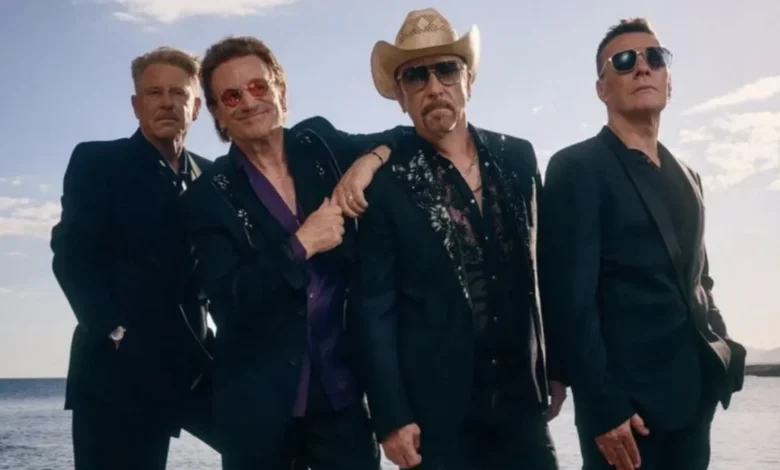
The intersection of global politics, artistic expression, and the commercial realities of the music industry has reached a boiling point following the recent removal of rapper Macklemore from Ed Sheeran’s world tour. The incident, which centered on Macklemore’s vocal support for Palestine during live performances, has prompted a rare and pointed intervention from rock legends U2. In a recent interview with the BBC, members of the Irish band defended the principles of free speech while simultaneously critiquing the influence of wealthy stadium owners and promoters who leverage their financial power to enforce ideological boundaries on stage.
The controversy underscores a growing tension in the post-pandemic live music landscape, where the consolidation of venue ownership and the increasing political polarization of audiences have forced artists to navigate a minefield of corporate interests. As U2 prepares for their upcoming world tour and the release of their 16th studio album, Carnaval De Luz, their public stance provides a significant boost to the ongoing debate regarding the autonomy of performers in commercial spaces.
The Chronology of the Controversy
The situation began in September 2026, when Macklemore, acting as a support act for Ed Sheeran, explicitly stated "Free Palestine" during his set. The reaction from stadium management was swift and punitive. According to reports, several stadium operators, most notably New England Patriots owner Robert Kraft, expressed strong objections to the political rhetoric. These operators threatened to bar the rapper from future performances, effectively forcing a choice upon the tour organizers: remove the artist or risk losing access to high-capacity venues.
Sheeran, who has maintained a close professional relationship with U2—having collaborated with them on the song "Yours Eternally" from their Days of Ash EP—subsequently faced intense scrutiny. He clarified that the decision to remove Macklemore was made by the promoters, not by his own management team. However, the move triggered a domino effect; numerous other opening acts and members of Sheeran’s backing band withdrew from the tour in a display of solidarity with the rapper, citing concerns over the suppression of artistic freedom.
U2’s Stance: A Defense of Artistic Autonomy
The Edge, U2’s guitarist, addressed the fallout with a nuanced perspective that sought to protect both the principles of the protesting artists and the position of his friend, Sheeran. "We totally support Macklemore’s right as an artist to say what he wanted to say," The Edge told the BBC. He was equally quick to shield Sheeran from personal culpability, stating, "I don’t think Ed should be vilified. He was in a difficult situation."
The band’s drummer, Larry Mullen Jr., took a more confrontational approach, aiming his criticism directly at the corporate power structures within the stadium circuit. Mullen Jr.’s comments reflect a long-standing ethos of the band, which has historically balanced commercial success with political advocacy.
"Artists have a right to choose whether they want to be politically active or not. It’s a human right," Mullen Jr. remarked. "But we, as a band, will fight for the right to speak your mind, as long as it doesn’t incite violence. Even if we disagree with it or don’t like it, nobody—no billionaire, no promoter, no owner—has the right to censor anybody. And they will definitely not be censoring us, ever."
This sentiment was echoed by The Edge, who clarified the band’s position on the broader humanitarian crisis. While acknowledging that there may be points of contention regarding the specific rhetoric of the pro-Palestine movement, he affirmed that the band views the ongoing tragedy in Gaza as a moral crisis. "We absolutely agree with the fundamentals. We absolutely agree that what’s going on is unconscionable and that a child’s life is equally valuable, no matter what their background," he stated.
The Economics of Venue Control and Censorship
The conflict highlights the fragility of the live entertainment industry, where a small number of entities hold control over the primary infrastructure required for global tours. In the United States, stadium ownership is frequently tied to professional sports franchises, whose owners often possess interests that extend far beyond music.
When a performer’s political statements clash with the personal, financial, or political affiliations of a stadium owner, the "right to speak" is often subordinate to the "right to terminate a contract." This dynamic has led to increased anxiety among touring artists, particularly those who rely on high-capacity, multi-purpose arenas to maintain financial viability.
Market data suggests that while artists are increasingly vocal on social media, their ability to translate that into physical presence on stage is becoming more restricted by "morality clauses" buried in standard rider agreements. These clauses, once intended to prevent criminal behavior or erratic conduct, are now being reinterpreted by some promoters as a means to suppress political speech that could alienate donors, sponsors, or local governments.
Broader Implications for the Touring Industry
The fallout from the Macklemore incident has prompted industry insiders to question the future of the artist-promoter relationship. There is a palpable fear that if stadium owners continue to exert editorial control over the content of performances, the concert stage will lose its status as a forum for social discourse.
Historically, the concert stage has functioned as a space for defiance, from the anti-war anthems of the 1960s to the charity concerts of the 1980s. By challenging the authority of venue owners, U2 is positioning itself as a vanguard for a generation of artists who feel increasingly constrained by the corporatization of the arts.
However, the reality for smaller artists—those without the leverage and institutional stature of U2—remains stark. The risk of being "blacklisted" from major circuits acts as a powerful deterrent. The solidarity shown by the acts that quit Sheeran’s tour demonstrates a willingness to prioritize ethics over income, but it remains to be seen whether such gestures can force a policy shift among major promoters like Live Nation or Anschutz Entertainment Group (AEG).
The Path Forward: U2’s Upcoming Cycle
U2 is currently positioning its own upcoming tour, The Greatest Show on Earth, as a test case for artistic autonomy. With the release of Carnaval De Luz scheduled for November 16th, the band is expected to engage with these themes on a global stage. Their upcoming performance at SoFi Stadium in Los Angeles will serve as a high-profile statement of intent, particularly given the scrutiny the venue and similar facilities have faced in recent months.
The band’s relationship with Sheeran, despite the friction surrounding his tour, remains intact. Reports suggest that Bono was initially hesitant about Sheeran’s involvement in "Yours Eternally" due to concerns about the song’s perceived political weight. Sheeran’s eventual agreement to participate suggests a mutual respect that transcends the current controversy.
Conclusion: A Critical Juncture
The intervention by U2 is more than a defense of a fellow musician; it is a declaration of the boundaries of the performer-venue contract. As the industry moves toward 2027, the divide between those who view the concert stage as a private commercial asset and those who view it as a public square is widening.
Whether the pressure applied by artists like U2, and the support shown by those who walked away from the Sheeran tour, will result in tangible changes to contractual standards remains an open question. For now, the events of the past few months have served as a wake-up call for the industry: the era of the silent performer is facing significant resistance, and the power dynamic between the owners of the infrastructure and the architects of the culture is undergoing a profound and potentially permanent shift. The coming months, particularly during U2’s global trek, will likely determine whether this movement toward artistic freedom gains enough momentum to alter the landscape of live entertainment permanently.