Political leaders should use UK-EU Summit to “break the deadlock over touring the UK and the EU”, say 300+ cultural industry groups

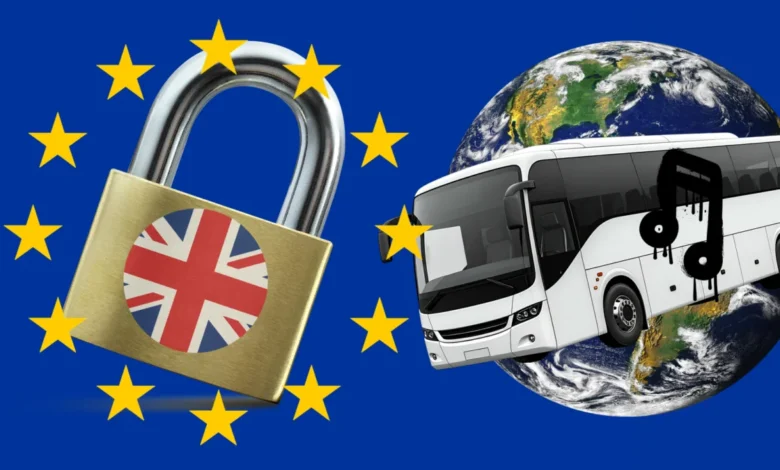
More than 300 leading cultural organisations and industry bodies from across the United Kingdom and the European Union have united to issue a high-level open letter, calling directly upon UK Prime Minister Andy Burnham and European Union leaders to decisively resolve the ongoing crisis surrounding cross-border creative touring. Spearheaded by the newly formed Cultural Exchange Coalition, the intervention comes ahead of the highly anticipated UK-EU Summit, presenting a crucial political opportunity to untangle the complex web of red tape that has severely restricted artistic mobility since the implementation of Brexit.
Prominent signatories to the open letter include heavyweight industry institutions such as UK Music, LIVE, and the Musicians’ Union, alongside vital continental bodies like the European Music Exporters Exchange, the European Music Managers Alliance, and Pearle*, the live performance sector’s European federation. Together, these organisations represent a vast ecosystem of performers, backstage crew members, promoters, and administrative personnel whose livelihoods have been strained by the regulatory barriers erected following the United Kingdom’s departure from the European Union.
The core message of the correspondence is stark and unequivocal: culture functions as Europe’s most effective bridge, yet current administrative frameworks are actively weakening that relationship. The signatories argue that the status quo actively undermines a creative sector that historically delivers immense economic value, projects profound soft power and global influence, and fosters indispensable shared cultural understanding. As the continent approaches a decade since the divisive 2016 referendum, the coalition contends that the upcoming 2026 Summit offers a definitive, unmissable window to address the unintended structural consequences of Brexit and unlock commercial and artistic potential for performers, crews, and audiences on both sides of the Channel.
A Persistent Crisis: The 2025 Summit and Subsequent Inaction
If the demands voiced by the creative sector feel acutely familiar, it is because the music and wider performing arts industries lobbied with identical urgency ahead of the inaugural UK-EU Summit held in May 2025. During those diplomatic talks, political leaders were heavily pressed to dismantle the logistical obstacles throttling European touring itineraries.
In the wake of the 2025 summit, optimism briefly flickered when the UK and the European Commission published a joint nine-page "Common Understanding" document. Point fifteen of that text explicitly acknowledged the intrinsic value of travel, artistic exchanges, and the professional activities of touring acts, explicitly pledging that both governments would continue concerted efforts to facilitate cross-border cultural mobility.
However, disillusionment has rapidly replaced optimism within the sector. According to the open letter, while the 2025 commitment provided a welcome political signal, it has failed to translate into substantive policy changes. In the months following the summit, no dedicated formal dialogue mechanisms have been established, and tangible administrative progress has remained entirely absent. For the hundreds of organizations now petitioning Prime Minister Burnham, the period since the last summit has been characterized by diplomatic stagnation while the operational realities for touring professionals have continued to deteriorate.
The Staggering Economic and Cultural Toll of Post-Brexit Red Tape
The specific administrative hurdles facing British artists operating within the EU have been meticulously documented by trade bodies, academic researchers, and government-commissioned studies alike. Performing artists and their support teams must currently navigate a labyrinth of disparate visa and work permit regulations that vary wildly from one EU member state to another. Compounding these personnel issues are complex customs declarations, stringent international transport and haulage restrictions, and convoluted tax regulations concerning merchandise sales across multiple jurisdictions.
The cumulative effect of these bureaucratic hurdles is a punishing escalation in operational costs, turning what were once standard, profitable European tour dates into financially unviable propositions, particularly for emerging and mid-tier acts operating on razor-thin margins.
Empirical evidence illustrating the scale of this decline was published earlier this year in a comprehensive government-commissioned report. The data revealed that the total volume of musical performances by British artists across European venues in 2024 plummeted by 21 percent when compared against the baseline year of 2019, prior to the finalization of Brexit.
The financial ramifications are equally severe. The report estimated that the combined UK music industry and broader performing arts sectors suffered a staggering loss of £208 million in gross value added (GVA), alongside the displacement or loss of approximately 2,490 creative jobs between 2022 and 2024. Furthermore, the fallout is not isolated to British shores. By crunching economic metrics across twenty EU member states, researchers calculated that the combined post-Brexit touring friction has inflicted a total GVA loss of approximately £1.04 billion across the UK and the participating European economies.
Political Landscapes and Changing Dynamics
Prior to the 2024 General Election, the Labour Party explicitly addressed the plight of touring artists within its national manifesto, pledging to repair the UK’s trade and investment relationship with the European Union by systematically tearing down unnecessary trade barriers.
While individual UK government ministries retain the domestic authority to implement certain supportive measures unilaterally—such as targeted grants or diplomatic advocacy—true resolution of border, visa, and customs issues fundamentally requires bilateral cooperation between London and Brussels. The political landscape surrounding these negotiations has shifted subtly with changes in leadership. Prime Minister Andy Burnham has demonstrated a distinct willingness to openly acknowledge the measurable economic damage inflicted by Brexit and the imperative to negotiate practical solutions, raising cautious optimism within the creative industries that the current administration may display a firmer commitment to its pre-election manifesto promises.
Nevertheless, government stakeholders face an extensive backlog of complex post-Brexit policy challenges during bilateral discussions with EU counterparts, leaving the creative sector anxious that cultural mobility might be sidelined in favor of heavier industrial, security, or trade priorities.
Structured Dialogue and Practical Demands
To ensure that cultural and artistic exchange receives the high-level political attention it demands, the Cultural Exchange Coalition has laid out clear, pragmatic requirements for the upcoming summit. The open letter insists that political leaders utilize the meeting to establish a formal, structured EU-UK dialogue channel equipped with a transparent roadmap to unlock the full potential of bilateral creative partnerships.
Specifically, the coalition is pushing for actionable, harmonized solutions governing the frictionless movement of touring professionals and their essential technical equipment. Additionally, the open letter calls for the United Kingdom to negotiate renewed cooperation and participation in key European funding and networking programmes, such as Creative Europe, which historically served as a vital catalyst for international artistic collaboration and transnational cultural exchange.
The Cultural Exchange Coalition, established in December of the previous year, operates as an umbrella network designed to coordinate advocacy efforts across the fragmented European music and creative economies. Alongside foundational UK signatories, the coalition’s strength lies in its pan-European reach, incorporating influential trade associations that represent venues, festivals, managers, and independent artists throughout the continent. As the date of the UK-EU Summit rapidly approaches, the collective gaze of Europe’s cultural sector remains fixed on London and Brussels, waiting to see whether political leaders will finally heed their calls and dismantle the administrative barriers standing in the way of shared artistic expression.