The High-Stakes Battle for the Catch: California Spearfishermen and the Rising Tide of Sea Lion Conflict

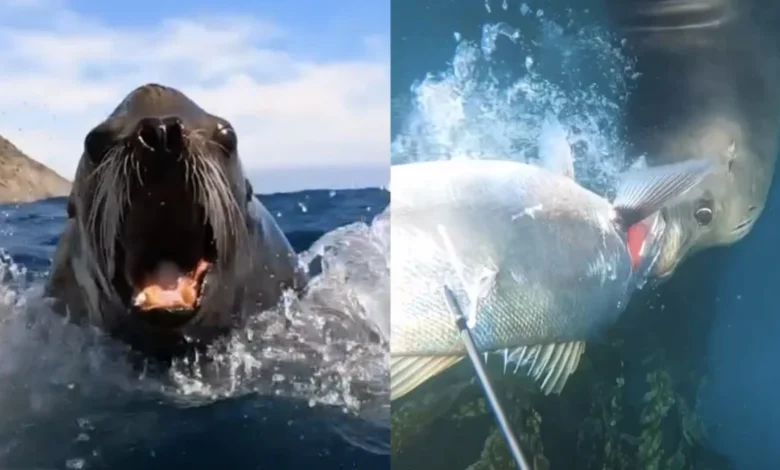
The waters off the California coastline have long been a premier destination for spearfishing enthusiasts, drawn by the allure of trophy-sized white seabass and the Pacific’s diverse marine ecosystem. However, recent encounters between human anglers and the California sea lion (Zalophus californianus) highlight a growing tension in these waters. A harrowing recent incident involving spearfisherman Jose Liccardo and his crew, in which they engaged in a twenty-minute tug-of-war with an aggressive sea lion over a hooked white seabass, serves as a focal point for a broader debate regarding marine wildlife interactions, habitat competition, and the evolving behavior of apex predators in an era of surging populations.
The Biological Reality of the California Sea Lion
To understand the severity of encounters like the one experienced by Liccardo, one must first look at the biological profile of the California sea lion. Protected under the Marine Mammal Protection Act (MMPA) of 1972, the species has seen a dramatic recovery. Once considered at risk, the population has rebounded to an estimated 250,000 to 300,000 individuals. This success story, while lauded by conservationists, has fundamentally shifted the dynamics of the nearshore environment.
Adult females generally weigh between 200 and 250 pounds, but mature bulls are formidable, often weighing between 600 and 850 pounds and reaching lengths of eight feet. These animals are evolutionary masterpieces of agility and power. In the water, they are capable of reaching speeds of 25 miles per hour and exhibit a level of maneuverability that allows them to turn with precision. As opportunistic carnivores, they possess a metabolic requirement to consume 5% to 8% of their body weight daily, leading them to aggressively pursue high-value prey, including anchovies, sardines, mackerel, and the highly prized white seabass.
Chronology of a High-Stakes Encounter
The event involving Jose Liccardo occurred during a standard spearfishing excursion. Upon locating a school of white seabass, Liccardo successfully speared a specimen, intending to secure the fish via a floatline connected to a belt reel. The transition from a successful hunt to a life-threatening entanglement happened in seconds.
As Liccardo began to reel in his catch, a sea lion intercepted the fish. What began as a simple retrieval mission rapidly escalated into a multi-person operation. Recognizing the animal’s intent and its immense physical strength, Liccardo signaled his support crew. Lauren Saraua, a member of the team, joined Liccardo in the water to manage the floatline, but the sea lion’s sheer pulling force dragged both individuals through the water.
The operation then shifted to the support vessel. As the line was passed to the boat, a crew member identified as Fussaki attempted to secure the catch, nearly sustaining injury as the tension in the line tightened. With the assistance of the Fired Up TV crew, who attempted to distract the animal, Saraua utilized a knife to clear kelp that had ensnared the line—a byproduct of the sea lion’s erratic, high-velocity movements. The struggle persisted for over 20 minutes, a period characterized by multiple attempts by the sea lion to rip the fish directly from the hands of the divers. The incident concluded only when the crew managed to haul the fish aboard the boat, narrowly avoiding further conflict with the increasingly emboldened predator.
Behavioral Conditioning and Human-Wildlife Conflict
The behavior exhibited by the sea lion in this incident is not an isolated phenomenon. Marine biologists and wildlife management experts have noted that sea lions are highly intelligent and capable of learning, which often leads to "conditioning." When these animals realize that human activities—such as fishing or spearfishing—are reliable sources of easy, high-protein meals, they begin to associate humans with food.
This loss of natural fear is a significant safety concern. While sea lions are often perceived as playful or "circus-like," they are apex predators equipped with powerful jaws and sharp teeth. The risk is not merely from an intentional bite; even a defensive nip can cause severe damage. Their mouths harbor significant concentrations of marine bacteria, which can lead to rapid, systemic infections if a human is bitten. Furthermore, during breeding season—which spans from May through August—males become hyper-territorial. During this window, they are known to aggressively patrol rookeries and kelp beds, frequently engaging in bluff-charging or physical biting of any entity perceived as an intruder, including surfers and divers.
Regulatory and Economic Implications
The California sea lion’s protected status under the MMPA creates a complex landscape for fishery management. The act prohibits the "take" of marine mammals, which includes harassing, hunting, capturing, or killing. For commercial and recreational fishers, this means they have limited legal recourse when their livelihoods or safety are threatened by these animals.
The implications for the industry are profound. Spearfishermen and rod-and-reel anglers alike report that a significant percentage of their catch is lost to pinniped predation. This "tax," as it is colloquially known among local anglers, represents not only a loss of food but a loss of time, resources, and, in some cases, the safety of the participants. As the sea lion population remains high, the frequency of these interactions is statistically likely to increase.
Analysis of Safety Protocols
The successful outcome of the Liccardo incident is attributed largely to the presence of a support crew and rapid decision-making. However, the event underscores a lack of standardized safety protocols for dealing with aggressive marine mammals. Experts suggest that individuals operating in high-density sea lion areas should prioritize the following:
- Situational Awareness: Divers should be cognizant of sea lion activity in the area before entering the water. If a large bull is spotted patrolling or showing signs of agitation, it is advisable to postpone the dive.
- Rapid Extraction: If a sea lion shows interest in a catch, the consensus among safety experts is to relinquish the fish. The value of a fish, regardless of its size or species, does not outweigh the risk of a bite or the potential for being dragged underwater.
- Support Systems: As seen in the Liccardo case, having a boat nearby is essential. Attempting to manage a large catch while alone in the water significantly increases the probability of injury.
- Avoidance of "Feeding" Behavior: Any action that mimics the release of fish or encourages the animal to follow the vessel—such as discarding bait or offal near the boat—should be avoided, as it reinforces the animal’s tendency to view humans as a food source.
Broader Impact on Marine Recreation
The incident involving Jose Liccardo has ignited discussion within the California diving community regarding the future of the sport. While the allure of the Pacific’s bounty remains, the increasing boldness of the sea lion population necessitates a shift in how these activities are conducted.
Government agencies, including the National Oceanic and Atmospheric Administration (NOAA), continue to monitor the interaction between human activity and protected species. The challenge lies in balancing the ecological success of the sea lion recovery with the safety and economic viability of human coastal activity. As the population of sea lions continues to thrive, the "test of resolve" experienced by Liccardo serves as a sobering reminder of the realities of interacting with apex predators in their natural habitat.
In conclusion, while the crew’s ability to secure their catch was a testament to their teamwork and experience, the event stands as a significant case study in the unpredictability of marine wildlife. It highlights the necessity for ongoing public education, increased awareness of animal behavior, and perhaps, a re-evaluation of management strategies to ensure that both the marine population and the human community can safely coexist along the California coast. The incident was not merely a battle over a fish; it was a demonstration of the complex, often volatile, intersection between human recreation and an evolving, protected ecosystem.