Teskey – Live at the Rhythm Room: A Deep Dive into the Sophomore Power Trio’s Hard-Rock Evolution

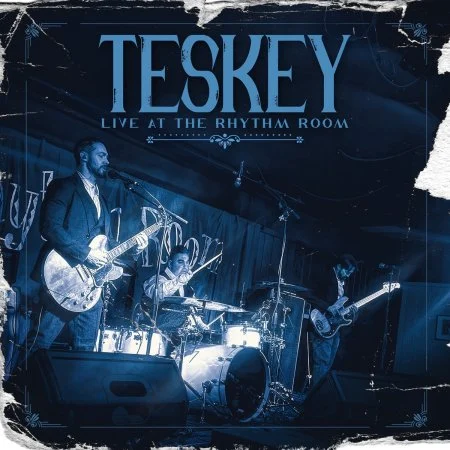
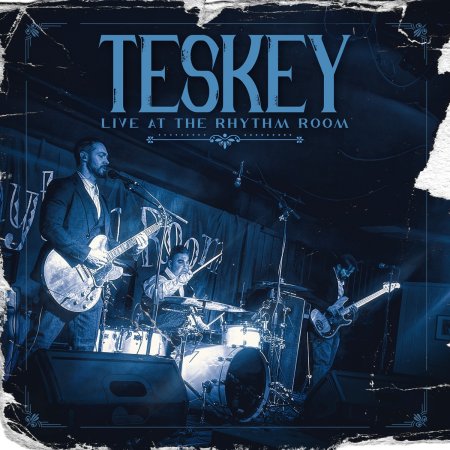
The contemporary landscape of independent guitar-driven music is constantly shifting, yet few ensembles manage to capture the raw, unadulterated energy of vintage heavy rock quite like Teskey. Marking a significant milestone in their rapidly expanding trajectory, the power trio has officially unveiled their sophomore release, Teskey – Live at the Rhythm Room. Self-released through their official digital channels, this 11-track, 49-minute opus documents a band performing at the absolute zenith of their collective powers. Formed just two years prior in 2024, the group has quickly transitioned from a promising studio project into a formidable live entity capable of commanding audiences with a blistering, high-octane sonic assault.
Led by founder Brandon Teskey on guitar and vocals—whose critically acclaimed solo psychedelic rock album previously turned heads across the independent music circuit—the band is rounded out by the thunderous rhythm section of Matt Baldwin on bass and Brandon Gaddy on drums. Together, the trio bridges the gap between classic heavy metal muscle, blistering blues-rock improvisation, and the kaleidoscopic textures of psychedelic experimentation. As this new live offering hits streaming platforms and physical distribution networks, music critics and fans alike are taking note of an outfit that refuses to be confined by genre boundaries.
Anatomy of a Hard-Rock Masterclass: Track Breakdown and Musical Dynamics
Spanning nearly fifty minutes of uncompromising audio, Teskey – Live at the Rhythm Room is a meticulously paced journey through ten original compositions and one carefully chosen cover. The album opens with "Blue Dreams," a track that immediately establishes the evening’s aesthetic intentions. Driven by a heavy metal tone, visceral guitar work, and gutsy, gravel-road vocals from Brandon Teskey, the song serves as a statement of purpose. It declares that this is not a polite, understated blues outing, but rather an arena-sized hard-rock experience captured in an intimate live setting.
This relentless momentum persists on "Lemon Tree," a track that showcases Teskey’s penchant for monumental guitar solo licks. Baldwin and Gaddy lock into a punishing, elastic groove, providing a bedrock over which Teskey stretches the boundaries of standard blues-rock phrasing. Things intensify further on "Under the Sun," a composition that amps up the sonic architecture with gritty textures before executing a brilliant stylistic pivot. Midway through, the song breaks into an almost ballad-like interlude, offering a temporary reprieve for the listener before exploding back into a colossal, cascading guitar solo that demonstrates the band’s dynamic range and improvisational prowess.
The onslaught continues unabated with "Find Me When It’s Over," a driving rocker that highlights the tight interplay between the rhythm section and the fretboard acrobatics of the frontman. However, the setlist is far from a one-note exercise in speed and volume. "Gave My Love Back to Me (The Answer)" deliberately dials down the thermostat, adopting a slower, more deliberate pacing. Here, Teskey growls out the lead vocals with weathered conviction, backed by heavy, sustained guitar licks that linger in the air like smoke. This moodiness carries over into "Don’t Take My Angel," which maintains the restrained tempo while retaining the massive, hard-rock core that defines the band’s signature sound.
The energy surges once more with "In the Garden Again," which catapults the audience back into high-gear rocking territory. One of the album’s most anticipated moments arrives with their rendition of "Can’t Find My Way Home," the lone cover featured in the set. For this classic composition, the band welcomes guest vocalist Tony Noyes to the stage. Noyes delivers a soaring, higher-pitched vocal performance that contrasts brilliantly with Teskey’s earthier tones. As the track progresses, Brandon joins in on vocals, creating a powerful vocal harmony that echoes the legendary lyrics while the band lays down a fresh, heavy sonic carpet beneath them.
As the performance nears its conclusion, "Upside Down World" introduces a distinctly slower, blues-soaked atmosphere. On this cut, Teskey testifies both vocally and instrumentally, bending notes with a reverence for traditional delta and electric blues idioms while filtering them through a modern heavy-rock lens. This leads directly into "White Wolf," the title track from their previous studio release. Brooding and atmospheric, the song builds steadily before the lead guitar work scales stratospheric heights. The evening ultimately culminates with "Cast Aside Child," an angry, impassioned rocker overflowing with scorching licks and an unrelenting rhythmic drive that leaves the listener breathless.
Background Context and Chronological Development
To fully understand the significance of Teskey – Live at the Rhythm Room, one must examine the chronological timeline of the band’s formation and artistic output. Emerging in 2024 against the backdrop of a resurgent independent rock scene, Teskey entered the marketplace with immediate intent. The modern music industry, heavily dominated by algorithmic pop and synthesized production, has increasingly created a vacuum for organic, amplifier-worshipping rock and roll. Sensing this cultural opening, Brandon Teskey leveraged his experiences from his solo psychedelic rock catalog—which earned critical acclaim and specialized magazine reviews—to assemble a unit dedicated to maximum auditory impact.
The transition from studio experimentation to a live performance format was a natural evolution for the trio. While their debut studio effort, White Wolf, established their compositional voice, it was widely acknowledged among industry observers that their material was fundamentally designed for the stage. The decision to record live at the Rhythm Room—a venue historically revered for hosting authentic roots, blues, and heavy music acts—was a calculated move to capture the lightning-in-a-bottle spontaneity that defines their concert appearances.
By bypassing traditional major-label gatekeepers and opting for a self-released model, the band has maintained absolute creative autonomy. This independent approach allows them to curate their setlists without corporate interference, catering directly to an expanding audience of purists and rock aficionados who prioritize authenticity over commercial gloss.
Stylistic Classification: Where Blues Meets Psychedelic Metal
A recurring point of discussion among music critics reviewing Teskey – Live at the Rhythm Room is the nuanced interplay between blues traditions and hard-rock execution. While the album contains undeniable blues underpinnings—manifested in the 12-bar structures, vocal phrasing, and emotional delivery—categorizing the band strictly as a blues act would be a misnomer.
The primary sonic driver of the ensemble is a heavy, hard-rock cadence deeply informed by Brandon Teskey’s psychedelic rock background. This background manifests not merely in high-gain amplification, but in the textural approach to guitar solos, where notes are stretched, distorted, and delayed to create immersive, almost hypnotic soundscapes. Matt Baldwin’s bass playing acts as a heavy anchor, avoiding the over-ornamentation typical of progressive rock while providing a thick, resonant low end that mirrors classic heavy metal foundations. Meanwhile, Brandon Gaddy’s drumming relies on powerful, driving backbeats and dynamic cymbal work that pushes the tempo forward without sacrificing the swing essential to blues-derived rock.
This stylistic hybrid places Teskey in a unique niche within the contemporary independent music ecosystem. They appeal simultaneously to traditionalists who revere the guitar-hero lineages of the 1970s and younger demographics seeking the unvarnished aggression associated with modern stoner rock and heavy blues revivals.
Broader Impact, Industry Implications, and Future Outlook
The release of Teskey – Live at the Rhythm Room carries notable implications for the independent music economy. In an era where live albums are frequently viewed by major labels as contractual obligations or legacy cash-grabs, Teskey’s sophomore release functions as a vital artistic statement. It proves that emerging acts can utilize live recordings not just as retrospective summaries, but as aggressive promotional tools to showcase their stagecraft in the absence of massive touring budgets.
Furthermore, the self-released nature of the album underscores the viability of direct-to-consumer models for niche rock bands. By leveraging digital distribution networks, specialized music publications, and dedicated fan communities, Teskey has bypassed traditional radio gatekeepers to reach an international audience of guitar-music enthusiasts.
As the band looks toward the future, the critical reception of this live release positions them favorably for expanded regional and national touring. With a growing catalog that now encompasses both atmospheric studio work and ferocious live documentation, Teskey has solidified their reputation as a band to watch. For listeners who appreciate high-volume, blues-infused hard rock executed with technical precision and emotional gravity, Teskey – Live at the Rhythm Room stands out as an essential addition to the modern rock canon.
Related posts: