The Unrecorded Legacy: Justin Showah and the Enduring Spirit of North Mississippi Hill Country Blues

In the verdant, rolling landscape of North Mississippi, the music is rarely a static artifact preserved behind glass; it is a living, breathing tradition defined by repetition, community, and the hypnotic pulse of the juke joint. For Justin Showah, a bassist, sound technician, and cultural steward, the most profound moments in this genre’s history have frequently eluded the recording studio, existing instead as fleeting, ephemeral exchanges between performer and audience. Showah, who has spent decades anchoring the rhythm section for regional legends and operating Hill Country Records, views these uncaptured moments not as lost history, but as the essential core of a musical tradition that prioritizes the shared experience over the commercial product.
The Hill Country blues tradition, distinct from the Delta style popularized by the likes of Robert Johnson, is characterized by its heavy, driving rhythm, minimal chord changes, and a trance-like quality that relies on a singular, cyclical riff. It is a music of the timber camps, the rural juke joints, and the Saturday night picking parties—settings where the music served as a social glue and a necessary catharsis after the physical labor of the work week.
A Chronology of Cultural Preservation
Showah’s deep immersion into this scene began during his tenure at the University of Mississippi in the 1990s. At the time, Oxford was a localized epicenter for a diverse array of sounds, ranging from soul and jazz to indie rock and bluegrass. The local venue Proud Larry’s stood as a pillar of this community, providing a stage for titans such as R.L. Burnside and Junior Kimbrough. It was in this vibrant atmosphere that Showah transitioned from a curious fan to an active participant.
By 2000, his trajectory shifted as he began serving as the house band bassist for an Oxford radio program. It was there he encountered Guelel Kumba, a Senegalese guitarist whose project, Afrissippi, sought to bridge the sonic distance between North Mississippi blues and traditional Fulani music. This collaboration served as a foundational lesson for Showah: the realization that the rhythmic structures of the Hill Country were not merely a regional curiosity, but part of a global musical language that shared DNA with the polyrhythms of West Africa.
Throughout the 2000s and 2010s, Showah’s involvement deepened. He formed a profound mentorship with the late L.C. Ulmer, a multi-instrumentalist from Piney Woods, Mississippi, whose life story—spanning service in the military, a career as a truck driver, and decades of performing as a one-man band—mirrored the rugged, itinerant history of the blues itself. Following the 2007 accidental recording of their Italian festival set, which led to the release of Long Ways from Home, Showah transitioned into the role of producer. In 2011, he released Ulmer’s Blues Come Yonder on his own label, Hill Country Records, a project that solidified his commitment to documenting the region’s aging masters before their voices were lost to time.
The Hypnotic Mechanics of Hill Country Music
The sonic signature of the Hill Country is often described as "trance blues." Unlike the structured, twelve-bar patterns common in Chicago or Delta blues, this style favors a lock-in approach. As Showah explains, the lack of traditional chord changes forces both the musician and the listener into a meditative state. When a band locks into a singular, unwavering pattern, the melody becomes a backdrop for an evolving, rhythmic intensity.
This style is deeply intertwined with the geography and labor history of Mississippi. Scholars of Southern studies have long noted that the music born in the region’s timber camps was fundamentally different from the sharecropping-influenced blues of the Delta. The timber camps, which required communal effort to navigate, fostered a musical style that encouraged collective participation rather than the solitary, virtuoso-led narrative common in other blues subgenres.
The lineage of this music is familial and oral, passed down through generations not via formal training, but through "osmosis." Families like the Kimbroughs—including Kinney, David, and Robert—grew up hearing the music as a constant domestic backdrop. Showah notes that this informal education system is exactly why the genre survives; it is treated with the same necessity as agriculture or culinary tradition. It is a fundamental component of the regional culture that does not require institutional validation to persist.
Data and Demographic Trends
While the commercial popularity of blues music has seen fluctuations over the last three decades, the North Mississippi scene has maintained a consistent, if niche, level of international interest. Festivals such as the Hill Country Picnic continue to draw global audiences, though the industry landscape has changed significantly. In the 1990s, the "blues boom" saw acts like Burnside and Kimbrough reach wider audiences via labels like Fat Possum. Today, the focus has shifted toward grassroots preservation.
Showah’s label, Hill Country Records, operates on a model that prioritizes archival value over mass-market scalability. This reflects a broader trend in independent music production: the "small-batch" release, which serves to document local legends rather than generate high-volume revenue. The economic reality for many Hill Country musicians remains challenging; most continue to rely on a mix of weekend performance fees, community support, and personal labor, much as they did in the mid-20th century.
The Broader Impact: Global Connections
The parallels between West African music and North Mississippi blues are not merely coincidental; they are structural. The work of musicians like Ali Farka Touré, which has been cited as a primary influence on the Hill Country sound, provides a clear roadmap of how these traditions inform one another. Showah notes that the Fulani people, whose nomadic lifestyle has historically spanned the region between Senegal and Mauritania, utilize scales and polyrhythmic structures that resonate with the Mississippi aesthetic.
The implication of these connections is significant: it suggests that the "blues" is not an American invention in isolation, but a cultural hybrid that successfully retained its ancestral roots despite the forced displacement of the transatlantic slave trade. By facilitating collaborations like Afrissippi, Showah is not just preserving a regional style; he is participating in a dialogue that spans centuries and continents.
Community Values and Contemporary Spaces
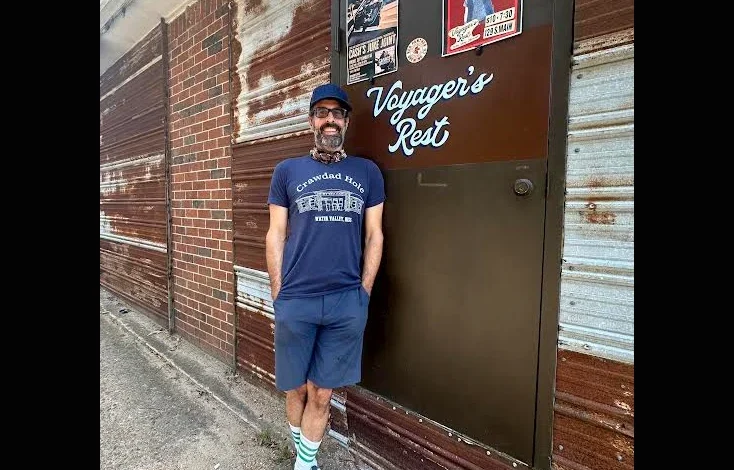
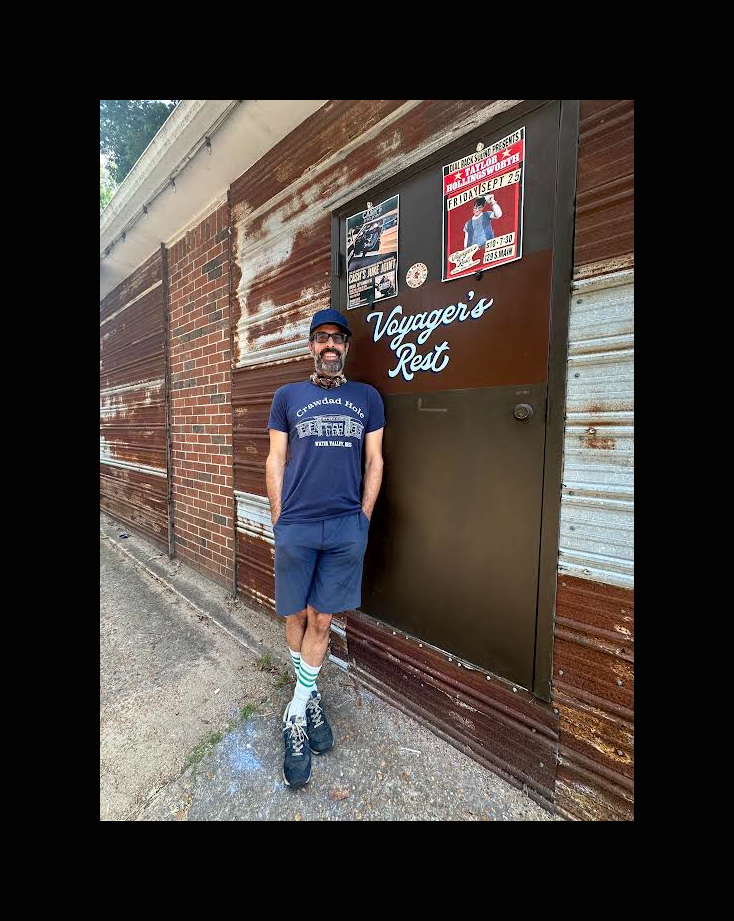
In 2023, Showah opened Voyager’s Rest in Water Valley, Mississippi, a venue that serves as a physical manifestation of his philosophy on music. With a capacity of fewer than 60, the space is designed to replicate the intimacy of a house party rather than the impersonal nature of a traditional concert hall. This model draws direct inspiration from the Hoka Theater in Oxford, a legendary local haunt that famously welcomed all social classes and musical genres.
The venue functions as a multi-sensory environment. By pairing live performances with culinary experiences—often featuring traditional dishes from the musicians’ cultural backgrounds—Showah aims to foster a space where the barriers between performer and audience are dismantled. Recent events, such as benefit concerts for community members like Kenny Kimbrough, underscore the reality that in North Mississippi, the music industry is inseparable from the social safety net. When a community member faces hardship, the local music scene responds not with charity, but with a mobilization of talent and resources.
Future Outlook: The 2027 Horizon
As Showah looks toward 2027, with plans for a new festival at Voyager’s Rest, the focus remains on the sustainability of the tradition. While he acknowledges the loss of the "mythic" figures of the past, he is optimistic about the current generation of performers. Artists such as Cedric Burnside, Trenton Ayers, and the younger Kimbroughs are actively evolving the genre, ensuring that the "world boogie" continues to resonate.
The central challenge, however, remains the archival of the "unrecorded." Showah continues to argue that no microphone or digital file can capture the atmosphere of a room where the music is an organic, social necessity. The history of Hill Country blues, therefore, is not a history of albums, but a history of events. It is a story of shared experience that will continue to exist as long as there are spaces—like the basements, barns, and small venues of North Mississippi—where the music is allowed to simply exist for the sake of the people in the room. In this light, the work of Justin Showah is less about preserving the past and more about ensuring that the conditions necessary for the music to be created remain available to the next generation of performers.