UK Parliament Warns Government Must Cut Red Tape to Protect Multi-Billion Pound Major Events Sector

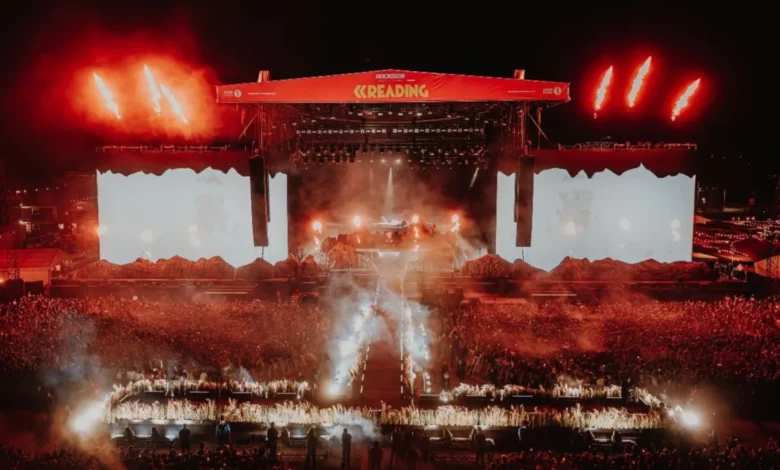
The United Kingdom risks losing its preeminent global standing as a premier destination for world-class cultural festivals, large-scale music concerts, and major sporting events unless Westminster fundamentally reforms its approach to the creative and live entertainment industries. That is the stark warning issued today by the House of Commons Digital, Culture, Media and Sport (DCMS) Select Committee, following a rigorous and comprehensive eighteen-month parliamentary inquiry.
According to the committee’s newly published report, event promoters, festival organizers, and venue operators are operating in an increasingly hostile commercial climate. They face an unprecedented convergence of intensifying international competition, escalating operational overheads, and a labyrinthine regulatory environment that spans multiple government departments. Rather than asking for a handout or a blanket injection of public subsidies, industry leaders and cross-party parliamentarians alike are demanding a complete overhaul of how the state interacts with the live events sector—advocating for structural administrative efficiency, streamlined cross-departmental coordination, and a cohesive, long-term national strategy for growth.
The Chronology of an Inquiry: 18 Months of Industry Consultation
The parliamentary inquiry into the health and viability of the UK’s major events sector commenced in late 2021, driven by mounting anxiety over the post-pandemic recovery of the creative industries. At the very outset of its fact-finding mission, the DCMS Select Committee established a working definition for a "major event," classifying it as any cultural, artistic, or sporting gathering that successfully captures national or international audiences, typically drawing a daily attendance threshold of more than 10,000 people.
Over the subsequent year and a half, the committee gathered written and oral evidence from dozens of key stakeholders across the United Kingdom’s live entertainment ecosystem. Prominent industry bodies, major corporate promoters, and grassroots festival organizations queued up to brief parliamentarians on the existential threats facing the sector. Among the key contributors were the Association of Independent Festivals (AIF), entertainment behemoth Live Nation, and live music industry umbrella organization LIVE.
Throughout the inquiry, these organizations painted a sobering picture of an industry squeezed from all sides. While pent-up consumer demand initially fueled a post-lockdown bounce-back in 2022 and 2023, that surge has been heavily counterbalanced by soaring inflation, spiking energy bills, skyrocketing costs for temporary infrastructure such as staging, lighting, and security, and severe labor shortages.
Navigating the Labyrinth: The Multi-Departmental Regulatory Maze
One of the central structural bottlenecks identified in the report is the fractured nature of government oversight. While the Department for Culture, Media and Sport holds nominal responsibility for the cultural and sporting portfolios, the day-to-day realities of running a major event require navigation across an array of disparate government departments and executive agencies.
For instance, licensing laws fall under the purview of local authorities and the Home Office; health, safety, and crowd management intersect with emergency services; tax policies are dictated by HM Treasury; and immigration frameworks—particularly regarding touring artists, international crews, and specialist personnel—are tightly controlled by the Home Office. Furthermore, environmental regulations, temporary land use permits, and public infrastructure provision involve the Department for Environment, Food and Rural Affairs (Defra) and the Department for Levelling Up, Housing and Communities.
This sprawling division of labor frequently leaves event organizers feeling abandoned to bureaucratic inefficiency. As Caroline Dinenage MP, Chair of the DCMS Select Committee, starkly noted upon the report’s release, organizers are routinely "pushed from pillar to post and forced to navigate their way through a sea of red tape."
Dinenage emphasized the profound cultural and economic disconnect at the heart of government. Given the undeniable contribution of major events to the national GDP, tourism, and civic pride, she described it as an absolute "travesty" that major events do not receive sufficient, coordinated recognition or strategic support from across Whitehall.
Industry Testimony: Specific Demands from the Frontline
The written submissions submitted to the select committee’s inquiry highlighted specific, acute pain points that require immediate legislative and regulatory intervention.
The Association of Independent Festivals used its platform to sound the alarm over the collapse of dozens of independent UK music festivals. The AIF formally called upon HM Treasury to introduce a targeted, temporary value-added tax (VAT) relief scheme for smaller-scale festivals—pointing out that European competitors often benefit from state-backed cultural incentives that shield them from economic volatility.
Meanwhile, Live Nation, one of the world’s leading live entertainment promoters, issued a stark warning regarding the post-Brexit immigration landscape. The multinational promoter stated unequivocally that the current UK immigration and visa framework poses a substantial, ongoing risk to the nation’s status as a top-tier destination for major international tours. Complex visa rules, exorbitant fees, and administrative backlogs for non-visa national touring crew members and artists have incentivized major global acts to bypass the UK in favor of more streamlined mainland European markets.
In a similar vein, LIVE—the umbrella body representing the UK’s live music sector—tabled a targeted infrastructure proposal. They urged the government to establish a ring-fenced capital funding scheme designed to help local authorities and landowners install permanent mains grid power connections in public green spaces that are frequently utilized for outdoor concerts and festivals. Relying on diesel generators is not only significantly more expensive amid high fossil fuel prices, but it also directly contradicts municipal and national net-zero carbon targets.
Proposals for Reform: The "Single Front Door" and Strategic Oversight
In response to these multifaceted challenges, the select committee has put forward a series of robust, actionable recommendations designed to fundamentally alter how Whitehall engages with the live events industry.
First and foremost, the MPs have demanded that DCMS step up to assume a proactive, authoritative leadership role. The department, the report asserts, must take institutional responsibility for raising awareness of the economic and cultural importance of major events across the entire apparatus of government.
To bridge the gap between fragmented departments, the committee has proposed the establishment of an innovative administrative mechanism: a "single front door" unit dedicated exclusively to major event organizers. Under this proposed system, major events would be assigned a named account manager within government. This official would act as a primary point of contact, taking direct responsibility for ensuring that other relevant departments—such as the Home Office, HMRC, and the Department for Transport—engage constructively and proactively with organizers to resolve logistical roadblocks.
Additionally, the report calls for the introduction of a systematic horizon-scanning framework. This mechanism would be tasked with identifying upcoming major events well in advance, flagging potential policy or operational bottlenecks, and legally obliging relevant government ministers to give those issues timely, high-level consideration.
Refining Definitions for Strategic Clarity
The committee also addressed a foundational administrative issue: how the government defines what actually constitutes a "major event."
While the inquiry initially adopted a threshold of 10,000 daily attendees, the MPs concluded that this quantitative metric is far too narrow and simplistic. A rigid attendance figure fails to capture events of immense cultural prestige, international broadcast value, or sporting significance that might draw smaller on-site crowds but command millions of viewers globally.
Consequently, the report recommends that the government consult widely to establish a robust, dual-purpose definition spanning both culture and sport. This definition must account not merely for footfall, but for national and international strategic significance.
MPs noted that the government has already traversed similar territory during the drafting and passage of the recent Sporting Events Bill through Parliament. That legislation, the committee suggests, provides a highly useful operational starting point that can and should be expanded to encompass arts festivals, music gatherings, and major cultural showcases. Clear definitions are deemed vital to ensure that upcoming policy frameworks accurately target the entities they are designed to protect.
The Road Ahead: Awaiting the Spring 2025 Strategy
The publication of the select committee’s report arrives at a critical juncture. The UK government has already formally committed to publishing a comprehensive "Major Events Strategy" in the spring of 2025.
Members of Parliament have issued a direct challenge to ministers, urging them to utilize this upcoming strategic blueprint to dismantle the regulatory barriers throttling the sector and to future-proof the UK’s competitive edge in an increasingly crowded international events market.
Industry analysts, festival directors, sports promoters, and music trade bodies will now watch closely to see whether the Treasury and DCMS adopt the committee’s bold structural recommendations—particularly the concept of the "single front door" and cross-departmental coordination.
As Caroline Dinenage concluded in her address to government, the sector is not looking for a handout of public cash. Rather, it requires a serious administration that looks past hollow political rhetoric, recognizes the true economic and social value of live entertainment, and actively removes the bureaucratic friction holding back one of Britain’s most vibrant and globally respected industries. The clock is now ticking down to April 2025, when the government’s major events strategy is scheduled to face its ultimate test of legislative and administrative ambition.