Olivia Rodrigo Festive Release Sparks Unfounded Plagiarism Claims as Veteran Artists Defend Pop Star Against Copyright Litigiousness

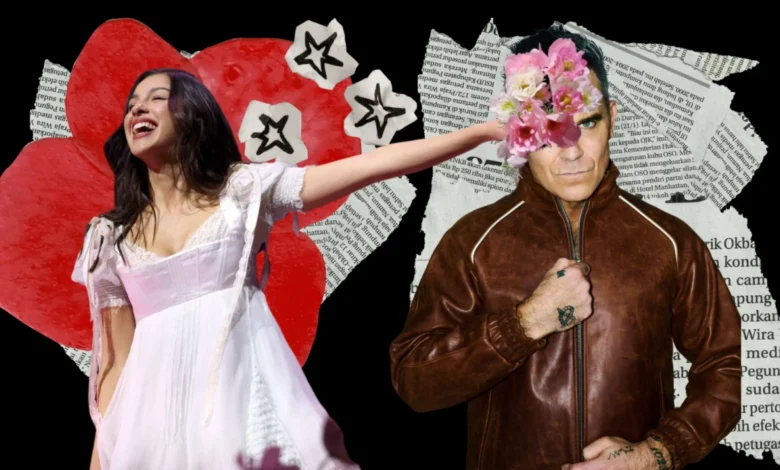
The release of pop artist Olivia Rodrigo’s holiday single Take Me Home (4 Christmas) has once again thrust the contemporary music industry’s complex relationship with copyright law into the spotlight. Dropped late last year, the track was immediately subjected to intense online scrutiny by commentators and social media users who pointed out perceived melodic and structural similarities to two established catalog tracks: The Waitresses’ 1981 new wave classic Christmas Wrapping and Robbie Williams’s 2012 pop hit Candy.
Despite the enthusiasm of legal commentators and online forums anticipating a high-profile copyright dispute, the original songwriters behind both targeted tracks swiftly dismissed any notion of infringement. Instead of initiating legal action or demanding retroactive publishing credits, Christopher Butler of The Waitresses and British pop icon Robbie Williams both publicly praised Rodrigo’s artistry, utilizing the moment to critique what they describe as an increasingly litigious and commercially aggressive contemporary music landscape.
The incident highlights a broader, ongoing debate within the global music community regarding the boundaries of inspiration, interpolation, and intellectual property theft in an era heavily influenced by algorithmic detection, precautionary settlements, and the legacy of landmark copyright verdicts.
Background Context and the Anatomy of Modern Music Copyright
The modern framework governing musical composition copyright protects original expressions of melody, harmony, and lyrics. However, because Western popular music relies on a finite set of notes, diatonic scales, and standard chord progressions, the risk of accidental overlap has intensified as the volume of recorded music expands exponentially.
In recent years, the music industry has experienced a distinct chilling effect following several high-profile legal battles. The most notable catalyst remains the 2015 "Blurred Lines" verdict, in which a federal jury determined that Robin Thicke and Pharrell Williams infringed upon Marvin Gaye’s 1977 soul standard Got to Give It Up. The decision awarded millions of dollars to Gaye’s estate and fundamentally altered how publishers and songwriters assess risk. Where creators once relied on clear-cut proof of direct copying, the legal threshold expanded to encompass intangible elements such as "feel," "vibe," and stylistic groove.
Consequently, modern pop production has grown hyper-cautious. Publishers, legal teams, and artists routinely employ proactive copyright audits before commercial distribution. In many instances, writers of older songs are granted preemptive co-writing credits and publishing splits simply to neutralize potential litigation—a practice that blurs the line between legitimate interpolation and defensive licensing.
Chronology of the Take Me Home (4 Christmas) Release and Reactions
The trajectory of Rodrigo’s holiday single reveals a proactive approach to creative nods and peer communication that starkly contrasts with the adversarial nature of modern music disputes.
Co-written by Olivia Rodrigo alongside frequent collaborators Amy Allen and Dan Nigro, Take Me Home (4 Christmas) serves as the artist’s official entry into the lucrative holiday music market. Recognizing the stylistic proximity between her new composition and The Waitresses’ enduring 1981 holiday staple, Rodrigo took the unusual step of reaching out directly to the older song’s primary writer prior to commercial release.
Christopher Butler, founder and principal songwriter of The Waitresses, documented the exchange on social media. Butler initially received an unexpected email from the multi-Grammy-winning pop star, expressing deep admiration for his work and providing an advance link to listen to the unreleased track. Skeptical at first about the authenticity of the communication, Butler reviewed Rodrigo’s catalog and background before recognizing the genuineness of the gesture.
Upon reviewing the track, Butler praised the composition, predicting strong commercial performance, particularly in the competitive UK Christmas chart landscape. When public discussions online began accusing Rodrigo of plagiarism, Butler stepped in to defend her work explicitly, characterizing the similarities as a respectful stylistic homage rather than copyright infringement.
Simultaneously, Robbie Williams addressed online comparisons between Rodrigo’s single and his 2012 track Candy. Rather than pursuing legal remedies or issuing formal complaints through his publishing representatives, Williams dismissed the likelihood of a legitimate copyright claim, emphasizing that popular music is built upon a shared historical vocabulary.
Industry Implications: The Cost of Over-Litigation
Legal analysts note that while copyright law is designed to safeguard intellectual property against unauthorized commercial exploitation, the proliferation of speculative litigation places an undue burden on working songwriters.
When disputes reach formal litigation, plaintiffs face significant evidentiary hurdles. Proving access—that the creators of the newer work actually heard the older composition prior to writing—can be difficult, especially when dealing with obscure or older recordings. Furthermore, standard musical components such as chord progressions, rhythmic syncopation, and common phrasing are generally ineligible for copyright protection in isolation.
Nevertheless, the financial stakes involved in modern streaming revenues encourage aggressive legal postures. Lawsuits frequently target commercially successful artists under the assumption that deep-pocketed labels will prefer costly settlements to protracted courtroom battles. This dynamic has drawn sharp criticism from veteran creators who argue that the system increasingly punishes coincidence and artistic evolution.
Echoes of Prior Precedents: The Elvis Costello and Taylor Swift Dynamics
This is not the first instance in which Olivia Rodrigo’s songwriting has intersected with pre-existing catalog works. Early in her career, the young artist faced intense online scrutiny regarding structural similarities between her breakthrough tracks and established hits.
In 2021, following fan-driven comparisons between Rodrigo’s single Brutal and Elvis Costello’s 1978 new wave track Pump It Up, Costello similarly rebuffed suggestions of legal action. Publicly defending the younger artist, Costello remarked that borrowing from historical styles is a fundamental mechanism of rock and roll evolution, famously describing the creative process as taking the foundational pieces of past work to construct something new.
Conversely, earlier high-profile resolutions involving Rodrigo saw retroactive credits awarded to Taylor Swift and Jack Antonoff for Deja Vu (noted for similarities to Cruel Summer), and to Paramore members Hayley Williams and Josh Farro for Good 4 U (drawing comparisons to Misery Business). While those cases were managed through private catalog negotiations rather than public trials, they cemented Rodrigo’s early career reputation as an artist whose work deliberately bridges classic alternative aesthetics with modern teen pop-rock.
Conclusion and Outlook for Songwriters
The calm resolution surrounding Take Me Home (4 Christmas) offers a rare moment of consensus within an industry frequently defined by legal friction. By rejecting opportunistic litigation, veteran writers such as Christopher Butler, Robbie Williams, and Elvis Costello have reinforced a collaborative ethos that values generational inspiration over punitive enforcement.
As the music industry continues to navigate the legal gray areas surrounding musical influence, the responses to Rodrigo’s latest release may serve as a reminder that artistic lineage and shared cultural memory remain vital components of popular music composition—provided cooler heads within the legal and creative communities continue to prevail.
Related posts: