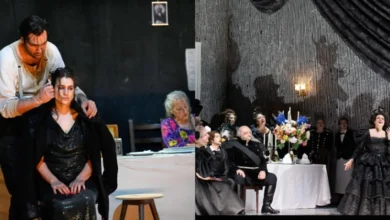
American Baritone Trevor Haumschilt-Rocha Claims First Prize at the 2026 Sumi Jo International Singing Competition in France


The landscape of international opera has been redefined following the conclusion of the 2026 Sumi Jo International Singing Competition, where American baritone Trevor Haumschilt-Rocha emerged as the first-prize winner. The competition, which has rapidly ascended to become one of the most prestigious vocal tournaments in the world, concluded its final round this week, showcasing a new generation of operatic talent. Haumschilt-Rocha, a 27-year-old native of San Diego, California, secured the top honors after a series of performances that the international jury described as technically flawless and emotionally resonant.
The 2026 edition of the biennial event saw a diverse podium, reflecting the global reach of the competition’s recruitment efforts. Following Haumschilt-Rocha, the second prize was awarded to South Korean bass Seungho Yoo, whose deep, resonant timbre and commanding stage presence made him a standout throughout the semi-final rounds. The third prize was claimed by Romanian mezzo-soprano Paula Iancic, an artist noted for her agility and rich tonal color. Additionally, the Hyundai Special Jury Prize, an accolade designed to recognize exceptional promise and artistry, was shared between Ukrainian soprano Evelina Liubonko and Sun Fei, highlighting the high caliber of the finalist pool.
A Rigorous Selection Process: From 500 to 24
The journey to the final stage of the Sumi Jo International Singing Competition is notoriously grueling, designed to test not only the vocal range of the participants but also their psychological stamina and linguistic versatility. For the 2026 cycle, the competition committee received over 500 applications from vocalists representing more than 40 countries. This initial pool was meticulously vetted through a preliminary video screening process conducted by a panel of vocal coaches and casting directors.
From the initial 500 candidates, only 24 artists were invited to participate in the live rounds held in France. These 24 singers represented the elite tier of emerging operatic talent, many of whom had already completed prestigious Young Artist Programs (YAPs) at institutions such as the Metropolitan Opera, the Royal Opera House, and the Paris Opera. The selection of the final 24 was based on a comprehensive set of criteria, including vocal technique, interpretive depth, and the ability to perform across a variety of operatic styles, from the Baroque era to contemporary compositions.
The 2026 Jury: A Confluence of Industry Titans
The prestige of the Sumi Jo International Singing Competition is bolstered by its jury, which consistently features some of the most influential figures in the classical music industry. The 2026 panel was no exception, providing the contestants with the opportunity to perform directly for the individuals who control the casting and recording contracts of the world’s leading opera houses.
The 2026 jury was led by Alain Lanceron, the former chief of Warner Classics and Erato, a man credited with discovering and promoting some of the most significant recording artists of the last three decades. Joining him was Jonathan Friend, a veteran casting adviser for the Houston Grand Opera and long-time artistic administrator at the Metropolitan Opera. The panel also included Mélanie Allmendinger, the administrative director for the Royal Opera House, Covent Garden, and Paolo Gavazzeni, the artistic director of the Macerata Opera Festival and a key figure at La Scala. Rounding out the panel was the world-renowned tenor Marcelo Álvarez, whose presence provided a performer’s perspective on the technical and dramatic challenges faced by the contestants.
The presence of such high-level administrators ensures that the competition serves as more than just a contest; it acts as a global audition. Winners and finalists often find themselves receiving invitations for house debuts or recording opportunities shortly after the winners are announced.
Background and Context: The Legacy of Sumi Jo
The competition was founded by the legendary South Korean soprano Sumi Jo, the first Asian singer to achieve superstardom in the Western operatic world. Known for her "voice from heaven," as described by the late Herbert von Karajan, Jo established this competition to provide a platform for young singers to bridge the gap between their training and professional careers.
The competition is traditionally held in the picturesque setting of the Château de la Ferté-Imbault in the Sologne region of France. This location is significant as it reflects Sumi Jo’s long-standing connection to French culture and her desire to host an event that combines the rigors of a professional competition with the serene atmosphere of a musical retreat. The 2026 edition continued this tradition, utilizing the historical venue to host masterclasses and rehearsals alongside the competitive rounds.
Sumi Jo’s vision for the competition extends beyond vocal perfection. She has frequently emphasized "humanity" and "stage charisma" as essential components of a modern opera singer’s toolkit. By involving a jury that includes both administrators and active performers, the competition seeks to identify artists who can thrive in the demanding, multi-media environment of 21st-century opera.
Profile of the Winner: Trevor Haumschilt-Rocha
Trevor Haumschilt-Rocha’s victory marks a significant milestone for American baritones. At 27, Haumschilt-Rocha is at a pivotal age for his voice type, which typically matures later than that of tenors or sopranos. His performance in the final round included a diverse repertoire that showcased both his lyrical capabilities and his dramatic heft.
A graduate of prominent American conservatories, Haumschilt-Rocha had already begun to make a name for himself in regional houses across the United States. However, the first prize at the Sumi Jo International Singing Competition provides him with international visibility and a substantial cash prize intended to support his continued professional development. Industry analysts suggest that Haumschilt-Rocha’s win is indicative of a broader trend where American-trained singers are increasingly excelling in European-based competitions due to their rigorous training in diction and stagecraft.
Analysis of Results and Global Representation
The 2026 results highlight the shifting demographics of the operatic world. The success of Seungho Yoo (South Korea) and Sun Fei (China) underscores the continued dominance of East Asian singers in the global circuit. For decades, South Korea has been a powerhouse of vocal talent, and the Sumi Jo competition serves as a vital link between the Asian training pipeline and the European and American markets.
The inclusion of Paula Iancic from Romania and Evelina Liubonko from Ukraine among the top prize winners also points to the enduring strength of the Eastern European vocal tradition. Despite the geopolitical challenges facing the region, the vocal schools of Romania and Ukraine continue to produce world-class artists characterized by robust techniques and a deep affinity for the Romantic repertoire.
The Hyundai Special Jury Prize, shared by Liubonko and Sun Fei, is particularly noteworthy. Sponsored by the South Korean automotive giant, the prize reflects the increasing role of corporate philanthropy in sustaining the classical arts. Hyundai’s involvement is part of a broader strategy to support cultural diplomacy and provide a platform for young artists who demonstrate "exceptional artistic individuality," even if they do not secure the top three spots.
Chronology of the 2026 Event
The 2026 competition followed a strict timeline that spanned nearly a year from the initial call for applications:
- September 2025: Official launch of the 2026 competition cycle and opening of the online application portal.
- January 2026: Deadline for video submissions. A total of 512 applications were recorded.
- March 2026: Announcement of the 24 semi-finalists following a two-month review process by the preliminary jury.
- June 15, 2026: Arrival of the contestants at the Château de la Ferté-Imbault for the commencement of the live rounds.
- June 17–19, 2026: Semi-final rounds involving piano-accompanied recitals of three arias in at least two different languages.
- June 21, 2026: The Grand Finale, featuring the top six finalists performing with a full symphony orchestra before a live audience and the international jury.
- June 22, 2026: Official awards ceremony and gala concert featuring the winners.
Official Responses and Industry Impact
Following the announcement of the winners, the jury members expressed high praise for the level of talent displayed. Alain Lanceron remarked that the decision for the first prize was "unanimous," citing Haumschilt-Rocha’s ability to "tell a story through the music, rather than just producing beautiful sounds." Lanceron noted that in an era of high-definition broadcasts and streaming, the "completeness" of an artist is more important than ever.
Sumi Jo, in her capacity as the competition’s founder and artistic director, issued a statement emphasizing the resilience of the young artists. "The 2026 cohort has shown us that the future of opera is in safe hands," Jo stated. "To see such diversity of background and such unity in artistic excellence is exactly why I founded this competition. These singers are not just voices; they are the ambassadors of a global culture."
The implications for the winners are immediate. First-prize winners of the Sumi Jo competition typically receive not only a monetary award—often exceeding €30,000—but also professional management consultations and guaranteed performances. For Haumschilt-Rocha, this likely means a debut on a major European stage within the next two seasons.
The Broader Impact on the Operatic World
The success of the 2026 Sumi Jo International Singing Competition reinforces the importance of specialized vocal competitions in a post-pandemic cultural economy. As opera houses face tighter budgets, they increasingly rely on competition results to identify "low-risk" talent—singers who have already proven they can perform under pressure and meet the standards of a high-level jury.
Furthermore, the competition’s focus on France as its home base, while being led by a South Korean icon, exemplifies the "globalized" nature of classical music. It serves as a reminder that the art form, while rooted in European history, belongs to a global community of performers and audiences.
As Trevor Haumschilt-Rocha, Seungho Yoo, and Paula Iancic begin their post-competition journeys, the opera world will be watching closely. The Sumi Jo International Singing Competition has once again proven to be a vital barometer for the health and direction of the vocal arts, ensuring that the legacy of its founder continues through the voices of the next generation. With the 2026 edition now concluded, preparations will soon begin for the 2028 cycle, continuing the search for the next "voice from heaven."
Related posts: