The Evolution of Wang Lu Bridging Cultural Frontiers in Contemporary Classical Music

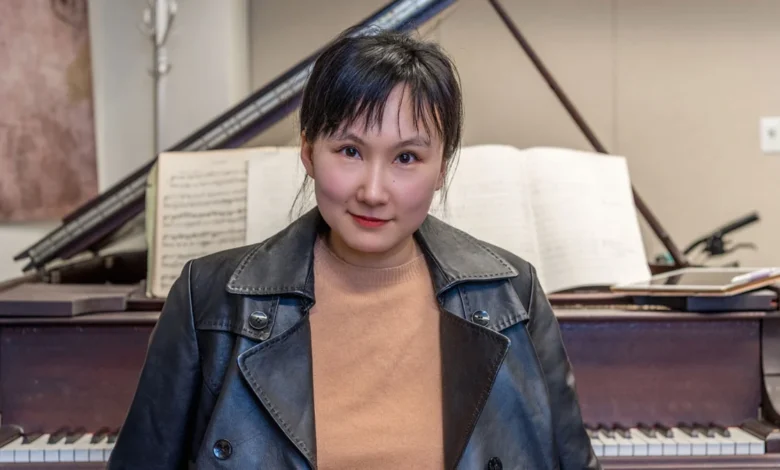
The professional landscape of contemporary classical music is frequently defined by moments of radical departure, where the boundaries of sound and tradition are tested by innovative voices. One of the most significant figures to emerge in this arena over the last two decades is the Chinese-born composer Wang Lu. Her work, which often defies traditional categorization, first garnered significant attention in the New York avant-garde scene during the late 2000s. A pivotal moment in this trajectory occurred on a warm weekend in south Brooklyn in the spring of 2008, when the International Contemporary Ensemble (ICE) prepared for the premiere of her composition, "Siren Song." Jacob Greenberg, a longtime pianist for the ensemble and a witness to the work’s inception, described the piece as being "beyond the beyond," a sentiment that captured the complexity and experimental audacity that would become the hallmark of Wang Lu’s career.
Since that premiere, Wang Lu has transitioned from a promising doctoral student to an internationally recognized composer and educator. Her music is characterized by a unique synthesis of traditional Chinese elements, urban field recordings, and rigorous Western avant-garde techniques. This fusion does not merely serve as a bridge between East and West but acts as a sophisticated exploration of memory, modernization, and the visceral experience of sound. As a professor at Brown University and a recipient of some of the most prestigious awards in the arts, Wang Lu’s influence on the 21st-century musical canon is both profound and expanding.
The 2008 Milestone: A Catalyst for Recognition
The 2008 premiere of "Siren Song" in Brooklyn served as a critical inflection point for Wang Lu’s career and for the International Contemporary Ensemble. At the time, ICE was establishing itself as a premier force in the promotion of new music, known for tackling scores that demanded extreme technical proficiency and intellectual engagement. "Siren Song" stood out even within this high-caliber environment. The piece utilized a dense harmonic language and unconventional textures that challenged the performers to rethink their approach to their instruments.
Greenberg’s observation that the work was "the craziest-sounding piece on the program" highlights the disruptive nature of Wang Lu’s early output. Her ability to push the ensemble into new sonic territories demonstrated a mastery of orchestration and a willingness to embrace chaos as a structured element of composition. This period in New York’s musical history was marked by a shift toward "indie-classical" and experimentalism, and Wang Lu’s presence provided a rigorous, academically grounded yet emotionally raw counterpoint to the prevailing trends.
Formative Years and Educational Background
Wang Lu was born in 1982 in Xi’an, China, a city with a rich historical legacy that stood in stark contrast to the rapid industrialization she witnessed during her youth. This duality—ancient tradition versus modern acceleration—is a recurring theme in her work. She began her formal musical training at the Central Conservatory of Music in Beijing, an institution known for its rigorous standards and for producing some of the world’s most successful contemporary composers, including Tan Dun and Chen Yi.

In 2005, Wang Lu moved to the United States to pursue her doctoral studies at Columbia University. At Columbia, she studied under a faculty of luminaries including Tristan Murail, George Lewis, and Fred Lerdahl. This period was instrumental in refining her aesthetic. Under Murail, a pioneer of spectral music, she learned to analyze the mathematical properties of sound and resonance. From George Lewis, she gained insights into the intersections of improvisation, technology, and social history. These diverse influences allowed her to develop a compositional voice that was as much about the physics of sound as it was about the cultural narratives those sounds carry.
Chronology of Major Works and Professional Milestones
The timeline of Wang Lu’s career reflects a steady ascent through the ranks of the global music establishment. Following the success of "Siren Song," she produced a series of works that expanded her reach into larger orchestral and multimedia formats.
- 2013: An Atlas of Time. This 20-minute work for 14 instruments and electronics is perhaps her most celebrated composition. It incorporates field recordings from her childhood in China—sounds of street vendors, construction, and folk music—blending them with live instrumental performance. The piece serves as a sonic map of her personal and cultural history.
- 2014: Rome Prize in Composition. Winning the Rome Prize allowed Wang Lu to spend a year at the American Academy in Rome, where she engaged with the history of Western art and architecture, further diversifying her creative palette.
- 2016: Cloud Intimacy. This work explored the impact of digital technology on human relationships, utilizing elements of social media and dating app interfaces as thematic anchors.
- 2019: Berlin Prize. As a Fellow at the American Academy in Berlin, she focused on the intersections of traditional Chinese opera and contemporary German expressionism.
- 2020: Guggenheim Fellowship. Awarded for her "exceptional creative ability in the arts," this fellowship solidified her status as a leader in the field.
Aesthetic Philosophy: The Integration of the "Found" and the "Made"
Wang Lu’s music is often described as "sonic journalism" or "documentary music." Her use of field recordings is not merely decorative; it is foundational. By integrating the unvarnished sounds of the real world—bicycles in Beijing, the hum of an air conditioner, or the chatter of a crowded market—she creates a dialogue between the abstract world of music and the concrete world of human experience.
Technically, her work often employs heterophony—a texture characterized by the simultaneous variation of a single melodic line. This is a common feature in traditional Chinese music, but Wang Lu applies it to a Western chamber orchestra context, creating a shimmering, multi-layered effect. Her scores are notoriously difficult, requiring performers to execute complex microtonal shifts and rapid-fire rhythmic changes. Yet, the result is often a sound that feels organic and breathing, rather than clinical or overly intellectualized.
Academic Influence and the Next Generation
As a Professor of Music at Brown University, Wang Lu plays a vital role in shaping the next generation of composers. Her teaching philosophy emphasizes the importance of cultural identity and the ethical implications of using "found" sounds. She encourages her students to look beyond the Western canon and to find inspiration in their own unique backgrounds and environments.
Her presence in academia is part of a broader movement to diversify the voices represented in music theory and composition departments. By bringing her experiences as a Chinese immigrant and a female composer in a historically male-dominated field to the forefront, she provides a new model for what a contemporary composer can be.
Critical Reception and Global Impact
The critical response to Wang Lu’s work has been overwhelmingly positive, with major publications noting her ability to navigate complex cultural waters without falling into the trap of "orientalism" or cliché. The New York Times has praised her "vividly colored" scores and her "unflinching" approach to sound. Unlike many of her predecessors who used Chinese folk melodies as a simple exotic flavor, Wang Lu treats these elements as raw material to be deconstructed and rebuilt within a modern framework.
Her collaborations with major institutions—including the New York Philharmonic, the Boston Modern Orchestra Project, and the Ensemble Intercontemporain—demonstrate the universal appeal of her music. These organizations, which represent the pinnacle of the classical music world, have recognized that Wang Lu’s voice is essential for the continued relevance of the genre.
Broader Implications for Contemporary Music
The career of Wang Lu reflects several key trends in 21st-century classical music. First, it highlights the increasing globalization of the art form. The traditional centers of music in Europe and the United States are now deeply interconnected with the burgeoning creative hubs of Asia. Second, her work underscores the importance of interdisciplinary approaches, where music, technology, and sociology intersect.
Furthermore, Wang Lu’s success signals a shift in how "identity" is expressed in music. Her compositions do not attempt to represent a singular "Chinese experience" but rather the fragmented, multifaceted experience of a global citizen. This nuance is critical in an era where the concept of the "melting pot" is being replaced by a more complex understanding of cultural hybridity.
Conclusion and Future Outlook
As Wang Lu continues to produce new work and mentor young artists, her legacy is already being felt across the international stage. The "beyond the beyond" quality that Jacob Greenberg first identified in 2008 has matured into a sophisticated and influential musical language. Her upcoming projects, which include large-scale commissions and continued explorations into multimedia, promise to further push the boundaries of what is possible in contemporary sound.
In a world that is increasingly polarized, the music of Wang Lu serves as a reminder of the power of synthesis. By bringing together disparate sounds, cultures, and histories, she creates a space where the listener is forced to confront the complexity of the modern world. Her journey from the streets of Xi’an to the concert halls of Berlin and New York is not just a personal success story; it is a testament to the enduring power of innovation and the vital role of the composer in documenting and interpreting the human condition.