Mathieu David Gagnon Concludes Acclaimed Trilogy with Volume III and Announces U.S. Tour Dates for Flore Laurentienne

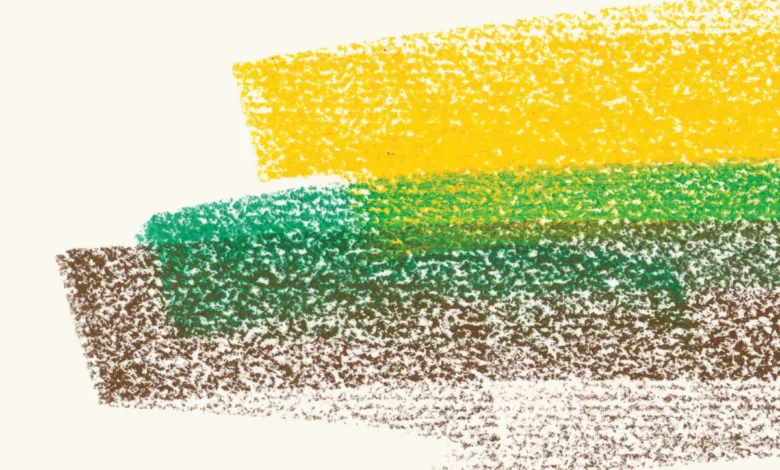
Mathieu David Gagnon, the visionary Canadian composer and multi-instrumentalist behind the orchestral project Flore Laurentienne, has officially released Volume III, the final installment in a critically lauded trilogy of recordings. This concluding chapter marks the culmination of a multi-year artistic exploration inspired by the vast, rugged geography of the St. Lawrence River and the wider Quebecois landscape. By blending the precision of a string quartet with the atmospheric textures of 1970s synthesizers and avant-garde percussion, Gagnon has carved out a unique space in the contemporary neoclassical and ambient music scenes. The release of Volume III not only completes a significant body of work but also signals a new phase for the ensemble as they prepare to bring their evocative soundscapes to major metropolitan centers across the United States, including New York City, San Francisco, and Chicago, throughout August and September.
The aesthetic foundation of Flore Laurentienne is deeply rooted in the concept of "place." Gagnon, who was born and raised in the Bas-Saint-Laurent region of Quebec, has long sought to translate the visual grandeur of the Canadian wilderness into a sonic language. On Volume III, this translation is more refined than ever. The album’s opening track, "Fleurs," serves as a definitive example of Gagnon’s methodology. The piece utilizes intricate pizzicato plucking from the string quartet to mimic the staccato, rhythmic beauty of a field of wildflowers. These delicate movements are soon enveloped by sweeping orchestral arrangements that suggest the movement of wind across a valley, creating a listening experience that critics have described as "cinematic" and "deeply impressionistic."
The Sonic Architecture of the St. Lawrence
The ensemble behind Flore Laurentienne is a carefully calibrated unit designed to bridge the gap between the organic and the electronic. The group features a traditional string quartet (two violins, viola, and cello) augmented by a double bass, two keyboardists, a percussionist, and Gagnon himself on the synthesizer. This instrumentation allows for a vast dynamic range, capable of shifting from the intimacy of a solo harp to the wall-of-sound intensity of a full progressive rock movement.
Gagnon’s use of the synthesizer is particularly noteworthy for its restraint. Rather than using electronic elements to dominate the acoustic instruments, he employs them to add a "spiritual dimension" to the compositions. The synthesizers often act as a drone or a subtle harmonic bed, providing a modern counterpoint to the Baroque-influenced structures of the strings. This balance ensures that the music remains grounded in the organic beauty of the landscape it seeks to represent.
The composer has often cited the St. Lawrence River as his primary muse. The river, which is one of the world’s major hydrographic systems, is known for its shifting tides, deep waters, and the rugged beauty of its banks. In Gagnon’s music, the river is represented by the ebb and flow of the orchestration—the way a melody will emerge from silence, swell to a crescendo, and then recede. This cyclical nature is a central theme of Volume III, reflecting the natural rhythms of growth, decay, and rebirth.
Philosophical Underpinnings and the Cycle of Life
In discussing the thematic core of the new album, Mathieu David Gagnon emphasizes the concept of light and the inevitability of natural cycles. He describes the music as a "shareable essence" that focuses on the journey of a seed in the ground becoming a plant, then a flower, and eventually wilting. This focus on the "peak and the wilt" is intended to offer a sense of harmony born out of chaos.
"The message here is light," Gagnon stated during the album’s launch. "It is the quest for beauty in chaos from which harmony is born to transcend it." This philosophical approach aligns Flore Laurentienne with the broader traditions of Romanticism, where nature is seen as both a source of aesthetic pleasure and a mirror for the human condition. By focusing on the "inevitable wilting," Gagnon acknowledges the melancholy inherent in the natural world, yet he ultimately finds a sense of peace in the fact that the cycle will begin again.
This perspective is reflected in the album’s structure. Volume III moves through various emotional states, from the bright, optimistic textures of "Fleurs" to more somber, contemplative passages that utilize the lower registers of the cello and double bass. The result is a work that feels lived-in and authentic, avoiding the sterile perfection often associated with modern digital composition.
Cross-Genre Synthesis: From Bach to King Crimson
One of the reasons Flore Laurentienne has garnered such a diverse following is Gagnon’s ability to synthesize a wide array of musical influences. His background is deeply rooted in formal classical training; he studied composition and orchestration in both Montreal and France, gaining a deep appreciation for the counterpoint of Johann Sebastian Bach. This influence is evident in the way Gagnon layers his melodies, ensuring that each instrument in the ensemble has a distinct, purposeful voice.
However, Gagnon’s interests extend far beyond the conservatory. He is a vocal admirer of the progressive rock movement of the 1970s, specifically the complex, mellotron-heavy sounds of King Crimson. This influence can be heard in the rhythmic complexity of his percussion and the "symphonic rock" scale of his larger compositions. Additionally, the influence of electronic minimalist Hans-Joachim Roedelius—a pioneer of the German "Krautrock" and ambient scenes—is palpable in Gagnon’s use of repetitive, hypnotic synth patterns.
By merging the structural integrity of the Baroque era with the experimental textures of the 20th-century avant-garde, Gagnon has created a sound that is difficult to categorize. It sits at the intersection of neoclassical, ambient, and post-rock, appealing to fans of Max Richter and Jóhann Jóhannsson as much as it does to devotees of Brian Eno or Tangerine Dream.
Expanding the Reach: The 2024 U.S. Tour
Following the success of the trilogy’s conclusion in Canada, Flore Laurentienne is set to expand its international footprint with a series of high-profile concerts in the United States. Scheduled for August and September, the tour will bring the full ensemble to three of the country’s major cultural hubs: New York City, San Francisco, and Chicago.
The tour represents a significant milestone for Gagnon, as it marks his most ambitious effort to date to reach American audiences. The logistics of touring an eight-piece ensemble that includes a string quartet and multiple keyboards are considerable, yet Gagnon insists that the full live experience is essential for conveying the scale of the music.
- New York City: The ensemble is expected to perform at a venue that caters to the city’s thriving "new classical" scene, where the boundaries between genres are frequently blurred.
- San Francisco: Given the city’s historical connection to experimental electronic music and the natural beauty of the Bay Area, San Francisco is a natural fit for Gagnon’s landscape-inspired compositions.
- Chicago: Known for its deep appreciation of both avant-garde jazz and post-rock (being the home of bands like Tortoise), Chicago offers an audience that is well-primed for the hybrid sound of Flore Laurentienne.
Industry analysts suggest that this tour is a strategic move to capitalize on the growing global demand for "deep listening" experiences. In an era of short-form digital content, there is a burgeoning market for long-form, instrumental music that allows for immersion and reflection.
The Growing Influence of the Quebecois Neoclassical Movement
The rise of Flore Laurentienne is part of a broader cultural phenomenon originating from Quebec. Over the past decade, the province has become a global powerhouse for neoclassical and ambient music. Artists such as Alexandra Stréliski, Jean-Michel Blais, and the late Jóhann Jóhannsson (who had strong ties to the Montreal scene) have found immense success by blending classical sensibilities with modern production techniques.
This "Quebecois Sound" is often characterized by a sense of space and a deep connection to the environment, likely a result of the province’s unique geography and its blend of North American and European cultural influences. Mathieu David Gagnon’s work with Flore Laurentienne is perhaps the most orchestrally ambitious iteration of this movement. While other artists focus on the solo piano, Gagnon’s commitment to a full ensemble allows for a greater degree of textural complexity.
The success of the Volume trilogy has also brought renewed attention to Secret City Records, the Montreal-based label that has been instrumental in supporting Gagnon’s vision. Known for its eclectic roster, which includes artists like Patrick Watson and The Barr Brothers, Secret City has positioned itself as a champion of sophisticated, artistically-driven music that defies easy commercial categorization.
Analysis of Implications and Future Prospects
With the conclusion of the Volume trilogy, Mathieu David Gagnon stands at a creative crossroads. The completion of a three-album arc is a rare feat in the modern music industry, particularly for a project as specialized as Flore Laurentienne. The trilogy serves as a comprehensive document of a specific period in Gagnon’s life—a period defined by an obsession with the St. Lawrence River and the translation of nature into sound.
The upcoming U.S. tour will likely serve as a litmus test for the project’s long-term sustainability on the international stage. If the American dates are successful, it could pave the way for wider European tours and potential collaborations with major film directors, a path previously taken by many of Gagnon’s contemporaries in the neoclassical field.
Furthermore, the "spiritual dimension" Gagnon mentions suggests that his future work may move even further into the realm of abstract or meditative music. As listeners increasingly seek out music that provides a respite from the noise of the modern world, the "light" and "harmony" offered by Flore Laurentienne are likely to find a permanent home in the global cultural landscape. For now, Volume III stands as a masterful finale to an ambitious project, a sonic monument to the enduring power of the natural world.