Cecilia Bartoli Delivers a Masterful Tragic Finale in Glucks Orfeo ed Euridice at the Salzburg Festival

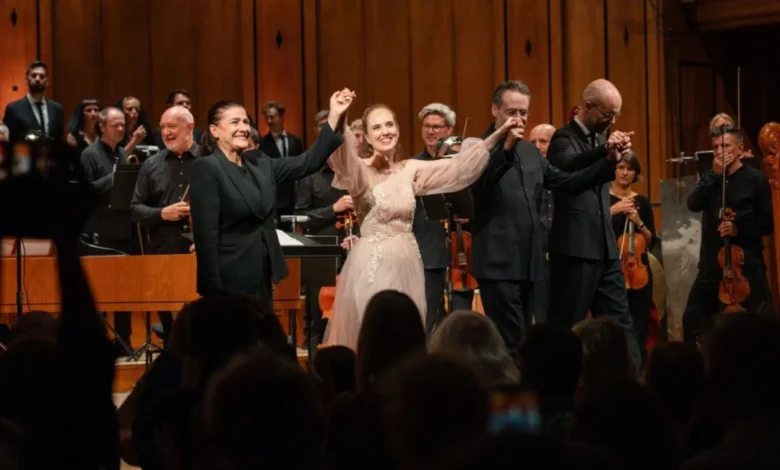
The final evening of the Salzburg Festival reached a definitive creative zenith with a revival of Christoph Willibald Gluck’s Orfeo ed Euridice, a performance that effectively erased any lingering reservations from the preceding nights of the program. Centered on Cecilia Bartoli’s profound interpretation of the title role, this production—a revival of her 2023 Salzburg staging—offered a masterclass in dramatic tension and vocal precision. By utilizing the 1769 Parma version of the score, the production stripped away the ornamental excesses of 18th-century courtly tradition to reveal a lean, 90-minute psychological drama that resonated with modern sensibilities. The evening concluded not just a festival schedule, but a narrative arc that reaffirmed Bartoli’s status as one of the most compelling dramatic forces in contemporary opera.
The Evolution of the Parma Version and Gluck’s Reform
To understand the impact of this performance, it is essential to contextualize the specific version of the opera chosen for this revival. Gluck’s Orfeo ed Euridice is famously known in three primary iterations: the original 1762 Vienna version (Italian), the 1774 Paris version (French, featuring an expanded ballet and a tenor Orpheus), and the rarely performed 1769 Parma version. The Parma version was originally commissioned for the wedding celebrations of the Infante Ferdinand of Parma and Archduchess Maria Amalia of Austria.
Because it was intended as part of a triple bill titled Le feste d’Apollo, Gluck was forced to compress the narrative into a single act. This required the removal of the extensive pastoral choruses that typically open the work and a significant streamlining of the underworld ballet sequences. The result is a work of relentless momentum. Furthermore, Gluck transposed the role of Orfeo for a soprano castrato (Vincenzo Millico) rather than the alto castrato used in Vienna. For a modern mezzo-soprano like Bartoli, this shift provides a higher vocal placement and more opportunities for florid, expressive passages, allowing the singer to explore a brighter, more urgent tonal palette.
While the historical 1769 performance included a "lieto fine" (happy ending) to suit the royal wedding, this Salzburg production made the pivotal artistic choice to conclude with the tragic death of Euridice and Orfeo’s subsequent despair. This deviation from the 1769 manuscript aligns with the darker, more realistic aesthetic of the production, focusing on the permanence of loss rather than divine intervention.
Visual Minimalism and the Logic of Light
The production’s visual identity, designed by Julia Milberger, relied on a philosophy of "noble simplicity," a term often associated with Gluck’s operatic reforms. Rather than utilizing elaborate sets or period-accurate scenery, the staging employed a psychological landscape defined almost entirely by lighting and color-coded costuming. This efficiency allowed the audience to focus entirely on the internal states of the characters.
The performance commenced in a state of total darkness, a silence eventually broken by a somber funeral procession. The chorus and Bartoli, unified in black attire, moved across the stage carrying flickering candles. This imagery established a visceral sense of grief that set the stakes for the rest of the evening. As the narrative progressed and Amore (Love) appeared with the promise of Euridice’s return, the visual palette shifted. The transition from mourning to action was signaled by a change into pure white garments, symbolizing a transition from the world of the dead to a state of fragile hope.
The most technically impressive visual sequence occurred during Orfeo’s descent into Hades. The stage was flooded with blinding, strobe-like lighting that, when paired with the aggressive, wind-whipped textures of the period-instrument orchestra, created a sense of genuine terror. This was not the stylized, decorative underworld of Baroque tradition, but a chaotic, hostile void.
Cecilia Bartoli’s Definitive Orfeo
Cecilia Bartoli’s performance served as a reminder that her artistry is best served by the sustained narrative arc of a full operatic production. While her concert appearances are often celebrated for their technical virtuosity, her Orfeo was a masterclass in character development. From her initial, guttural cries of "Euridice!"—which cut through the silence of the auditorium—to the final moments of quiet devastation, Bartoli portrayed a love that was raw, human, and deeply flawed.
Her interactions with Amore were particularly noteworthy for their realism. Rather than treating the deity with blind reverence, Bartoli’s Orfeo displayed a mix of skepticism and desperate hunger, grounding the mythological story in relatable human emotion. When Orfeo finally reached the underworld, Bartoli chose a path of "patient vulnerability." Instead of attempting to overpower the Furies with vocal force, she used a heartbreaking sincerity, her pleas repeatedly interrupted by the brutal "No!" of the chorus.
The dramatic core of the evening was the Act III confrontation between the two lovers. The divine decree—that Orfeo must not look back at Euridice as he leads her from the underworld—was staged with excruciating tension. Bartoli’s body language communicated a soul-crushing internal struggle. She moved with a rigid self-restraint, her eyes fixed forward while her voice betrayed the agony of hearing her wife’s growing resentment and insecurity. This psychological progression was portrayed with such clarity that the inevitable moment when she finally turned her head felt less like a plot point and more like a total collapse of the human will.
Supporting Performances and Choral Impact
Soprano Mélissa Petit demonstrated remarkable versatility by tackling the dual roles of Amore and Euridice. As Amore, Petit brought a contemporary, almost mischievous energy to the stage, delivering her lines with a crispness that suggested a deity who finds human drama both fascinating and slightly amusing. When she transitioned to Euridice in the final act, her performance shifted toward a poignant vulnerability. Petit captured the essence of a woman who has been snatched from death only to be met with the apparent coldness of her husband. Her vocal lines were smooth and flexible, providing a perfect foil to Bartoli’s more textured mezzo-soprano.
The vocal ensemble, Il Canto di Orfeo, provided more than just a musical backdrop; they were active participants in the drama. In the Hades scene, under the direction of Gianluca Capuano, they pushed the tempo to an almost frantic pace, embodying the hostility of the spirits. Their transformation in the Elysian Fields was equally striking, as their tone shifted to one of ethereal tenderness. The ensemble’s most significant contribution, however, came at the work’s conclusion. Following Euridice’s second, permanent death, the chorus delivered a pianissimo of such delicacy that it seemed to hang in the air, bringing the tragedy to a close with a sense of profound stillness.
Orchestral Precision and the Role of Period Instruments
Gianluca Capuano led Les Musiciens du Prince-Monaco with a keen ear for the specific colors of Gluck’s orchestration. The ensemble, founded by Bartoli herself in 2016, specializes in period-informed performance, which was vital for capturing the "bite" of the score. The strings utilized a shivering, vibrato-less quality during the opening laments, creating an atmosphere of cold grief, while the brass and percussion provided a violent, percussive energy during the underworld sequences.
A highlight of the orchestral performance was the transition into the Elysian Fields. The serene pastoral landscape was conjured through the exquisite playing of the traverso flute and oboe. These instruments, played with a sense of timeless beauty, offered a brief moment of respite before the final tragic descent. Additionally, the use of the fortepiano for recitative accompaniment added a layer of theatrical momentum, weaving the scenes together with an improvisatory elegance that kept the 90-minute performance feeling taut and focused.
Implications and the Festival’s Conclusion
The decision to end the festival with a tragic interpretation of Orfeo ed Euridice reflects a broader trend in modern operatic staging that prioritizes psychological truth over historical convention. By rejecting the "happy ending," Bartoli and her creative team forced the audience to confront the finality of death, a theme that resonated deeply in the historic setting of the Salzburg Festival.
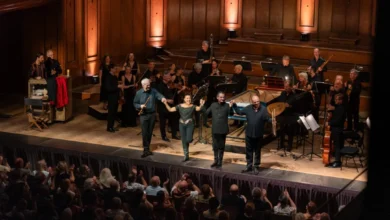
As the final notes of the tragedy faded, the atmosphere in the house underwent a sudden and heartwarming shift. In a planned surprise, the festival staff brought a massive, multi-tiered cake onto the stage to celebrate Bartoli’s leadership and the successful conclusion of the event. The sight of the "diva" dipping her finger into the frosting and sharing a laugh with the cast provided a sharp, human contrast to the heavy drama that had preceded it.
This production of Orfeo ed Euridice stands as a testament to the power of artistic curation. By selecting a rare version of a well-known work and stripping it of its decorative layers, Cecilia Bartoli and Gianluca Capuano managed to make a 250-year-old opera feel immediate and essential. The success of the evening reaffirmed the Salzburg Festival’s role as a premiere venue for operatic innovation, proving that even the most familiar stories can find new life when approached with genuine dramatic conviction and musical excellence. For the audience in attendance, it was a reminder that the greatest theatrical experiences are those that balance technical perfection with raw, unfiltered humanity.