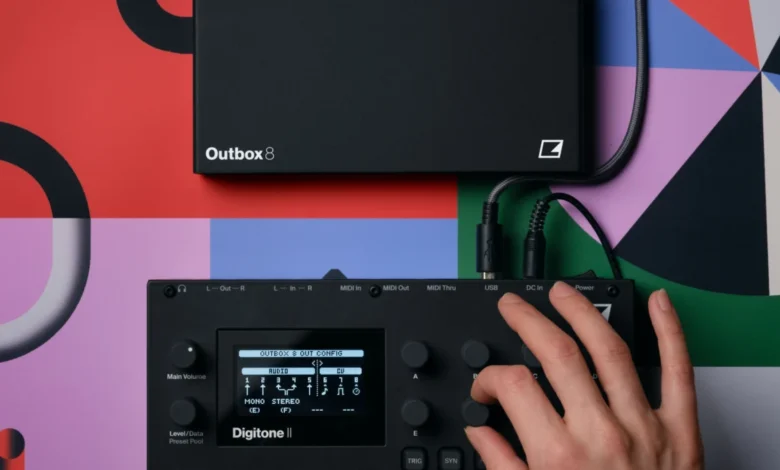
Outbox 8 can add multiple audio and CV outputs to your favourite Elektron groovebox – or any other class-compliant…

The Evolution of the Elektron Workflow
For years, the Swedish manufacturer Elektron has been synonymous with high-end, performance-focused electronic musical instruments. Devices such as the Digitakt II and Digitone II have become industry standards for live performance and studio production, praised for their deep, intricate sequencers and powerful sound engines. However, a recurring limitation for many users has been the physical output count. While these devices can handle 16 synth or sample voices, they traditionally provide only a single stereo pair of analog outputs.
Historically, users seeking to process individual drum tracks or synth parts through external outboard gear—such as analog compressors, distortion pedals, or mixing consoles—were forced to rely on USB connectivity and the Elektron Overbridge plugin. While Overbridge is a sophisticated solution that integrates the hardware with a computer, it requires a host device to function. The introduction of Outbox 8 effectively removes the computer from the equation, offering a "DAWless" alternative that maintains high-fidelity audio output without the latency or complexity inherent in software-based routing.
Chronology of the Outbox 8 Release
The development of Outbox 8 signals a strategic shift toward hardware-centric modularity. The timeline for this product began to materialize in early 2024, as Elektron sought to address feedback from their user base regarding the limitations of the current generation of boxes.
- May 2024: Elektron unveils the prototype of the Outbox 8 at Superbooth, the premier international exhibition for electronic musical instruments. The unit garnered significant attention from the modular synth community, who recognized the potential for using the device as a MIDI-to-CV bridge.
- Summer 2024: Following the positive reception at Superbooth, Elektron finalized the hardware architecture, ensuring compatibility not only with their own range of instruments but also with broader external MIDI controllers and digital audio workstations.
- Late 2024: The official launch date is confirmed, with the product becoming immediately available for purchase globally. The rollout coincides with an update to the supporting software ecosystem, allowing users to configure the device via a browser-based application.
Technical Capabilities and Connectivity
The Outbox 8 functions as a multi-faceted interface. At its core, it is an eight-channel breakout unit. When connected to a compatible Elektron groovebox, the device enables the routing of individual tracks, stems, or submixes directly to external hardware. This is particularly advantageous for live performers who wish to apply specific spatial effects or analog saturation to individual elements of their mix without sacrificing the integrity of their master output.
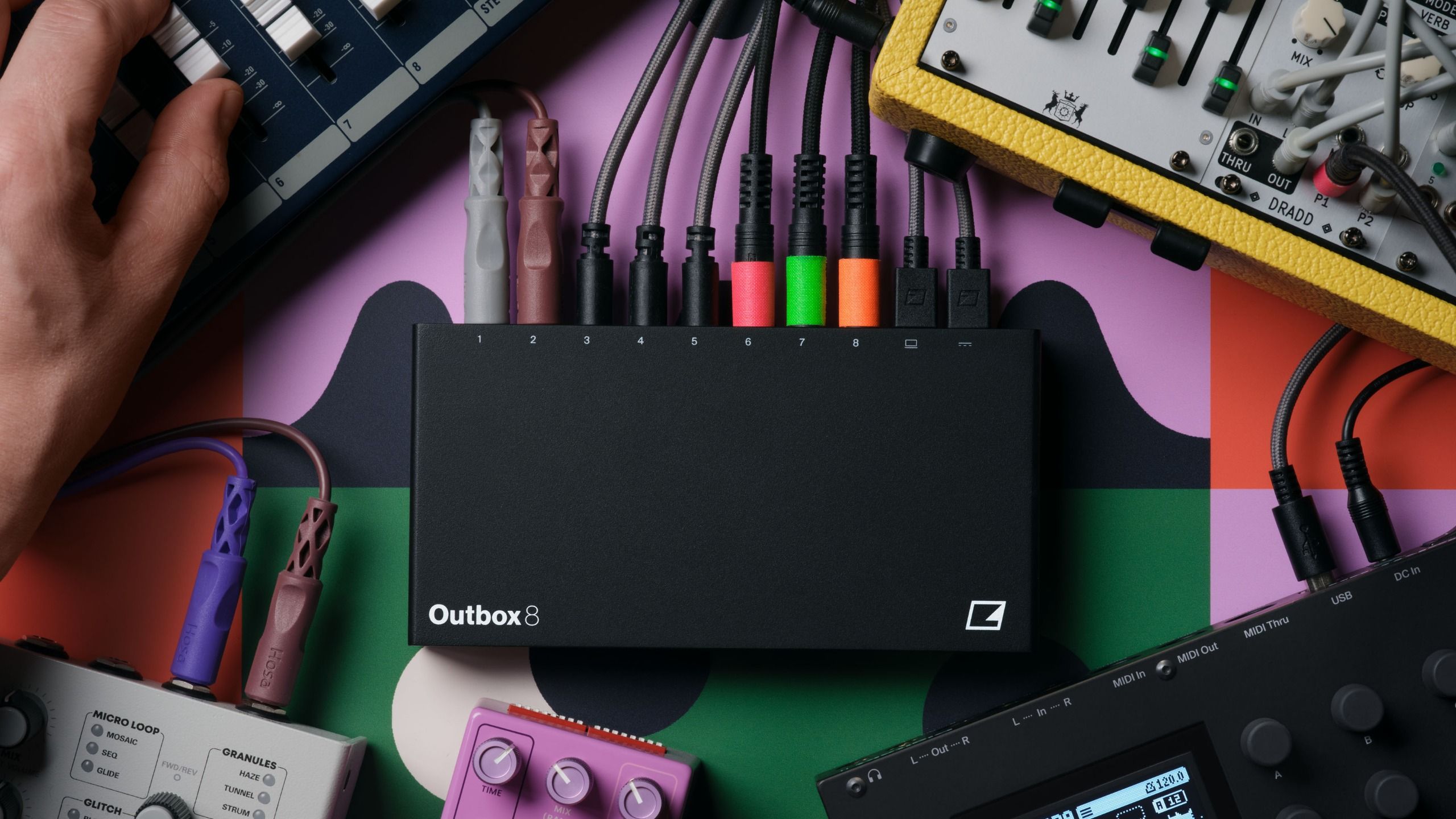
Beyond audio routing, the device serves as a sophisticated MIDI-to-CV converter. This feature is critical for users working with Eurorack modular systems. By taking digital control outputs from a sequencer and converting them into analog voltage, the Outbox 8 allows the user to modulate parameters on external synthesizers with extreme precision. This integration transforms a standard groovebox into the master brain of a much larger, more complex modular setup.
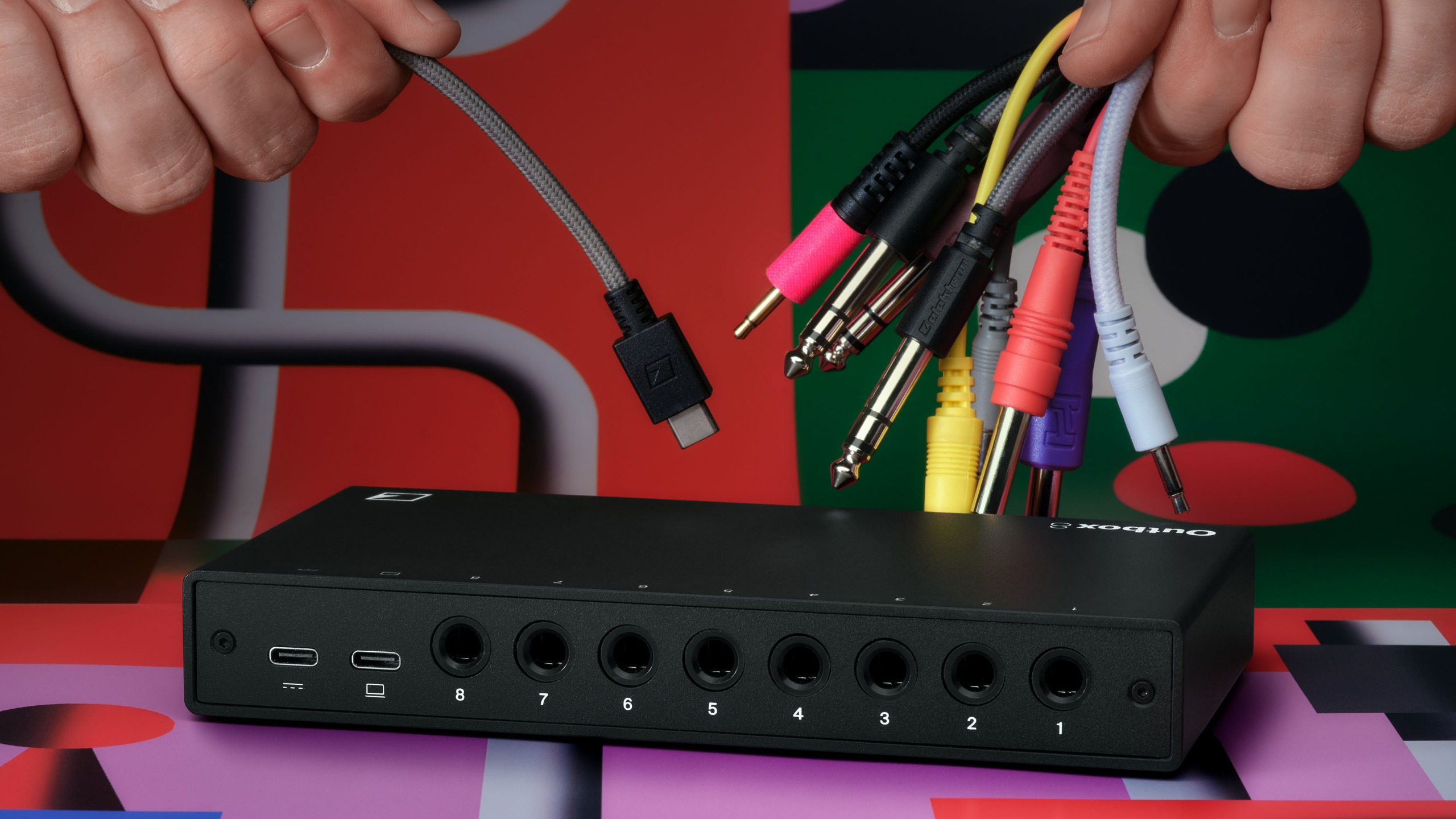
For those who do not use standalone hardware, the Outbox 8 can also function as a portable, high-quality audio interface. By pairing the unit with a laptop, tablet, or smartphone, producers can create a compact, multi-output system suitable for travel or small-scale studio environments where space is at a premium.
Market Context and Industry Implications
The release of Outbox 8 arrives at a time when the "DAWless" movement—a music production philosophy that eschews computer software in favor of dedicated hardware—is at an all-time high. Manufacturers like Elektron, Arturia, and Polyend have seen massive success by providing users with tools that mimic the complexity of a computer-based DAW while providing the tactile feedback of physical knobs and buttons.
However, a recurring point of contention within this community is the "bottleneck" effect, where powerful sequencers are limited by physical connectivity. By launching an accessory that specifically addresses this bottleneck, Elektron is effectively cementing the longevity of their current product line. Instead of requiring users to upgrade to more expensive, larger consoles, the company has provided a modular solution that scales with the user’s needs.
Industry analysts suggest that this strategy is a form of ecosystem lock-in that benefits the consumer. By keeping the price point accessible—currently set at approximately €299 / £259 / $349 USD—Elektron makes it easier for existing owners of the Digitakt, Syntakt, or Analog Rytm to expand their setups rather than switching to competing brands.
Official Positioning and User Accessibility
Elektron has positioned the Outbox 8 as a "flexible bridge" between their internal workflow and the "wider world of sound." This language reflects the company’s commitment to interoperability. Unlike some manufacturers that create proprietary, closed-loop ecosystems, Elektron has ensured that the Outbox 8 remains highly configurable.
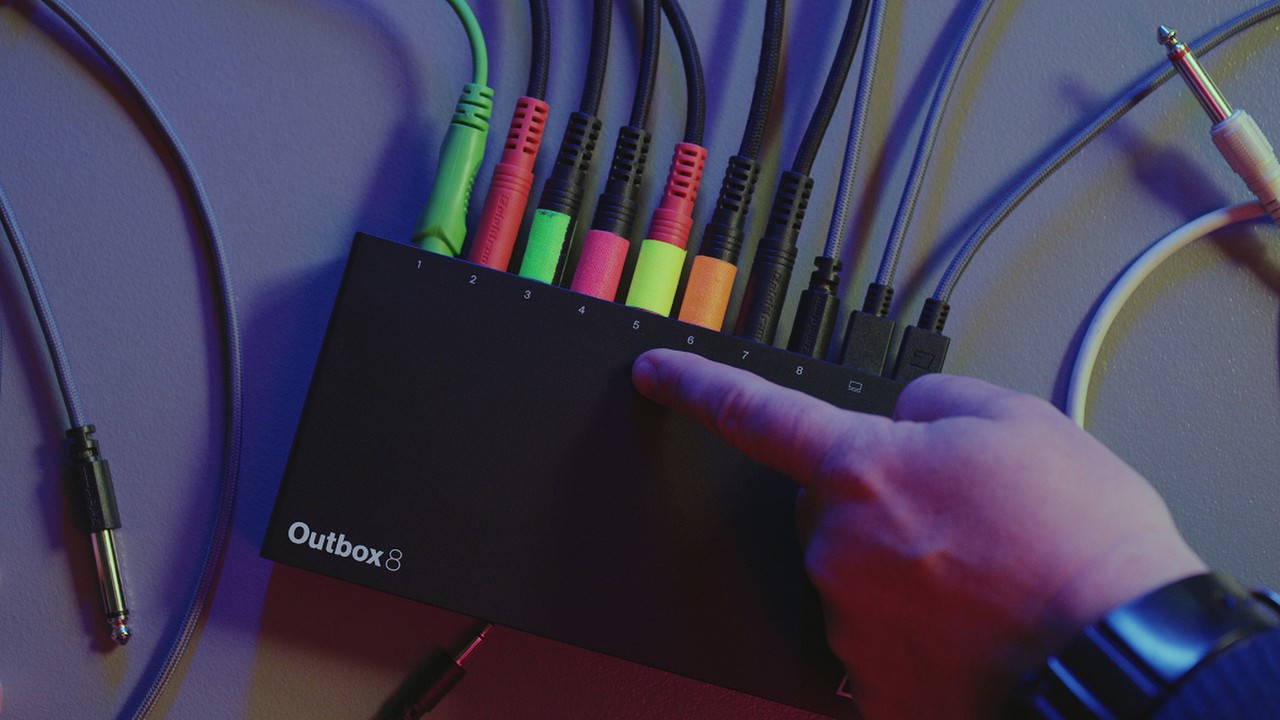
For Elektron users, the configuration of the device is seamless, as the routing and output types can be managed directly through the menus of the connected instrument. For users utilizing third-party gear, the device offers a browser-based configuration tool. This dual-approach ensures that the device is not perceived as an "Elektron-only" peripheral, but rather a utility tool for the broader music production market.
Analytical Outlook: The Future of Hardware Connectivity
The significance of the Outbox 8 lies in what it suggests about the future of hardware music production. As digital sound engines become more powerful and complex, the physical limitations of hardware units—specifically the number of audio outputs—become more apparent. We are likely to see a trend in the coming years where manufacturers focus less on the "all-in-one" box and more on modular, interconnected hardware ecosystems.
If the Outbox 8 proves successful, it may set a new standard for how hardware manufacturers approach connectivity. The ability to offload the burden of I/O management to a dedicated, compact, and affordable external device allows for more streamlined design in the main grooveboxes, which can then focus their internal processing power on synthesis, sampling, and sequencing.
Furthermore, the integration of MIDI-to-CV technology in a consumer-friendly package serves to democratize modular synthesis. Historically, modular gear was viewed as the domain of the elite hobbyist or the professional studio, primarily due to the high learning curve and the cost of complex interfaces. By simplifying the connection between a standard sequencer and a modular rig, Elektron is lowering the barrier to entry for a new generation of sound designers.
Conclusion
The Outbox 8 is more than just an accessory; it is a strategic expansion of the Elektron philosophy. By focusing on the practical needs of the modern performer—specifically the need for more outputs and better integration with external modular gear—Elektron has identified a genuine pain point in the market.
As the lines between digital production and analog sound design continue to blur, the demand for flexible, reliable, and portable I/O solutions will only grow. With its robust build quality, versatile functionality, and clear pricing structure, the Outbox 8 is poised to become a staple of live performance rigs and home studios alike. Whether for the dedicated Elektron user looking to expand their sonic palette or the modular enthusiast seeking a reliable bridge to their digital sequencer, the Outbox 8 offers a pragmatic and powerful solution that reinforces the company’s position at the forefront of electronic music technology. Those interested in further technical specifications or compatibility requirements are encouraged to visit the official Elektron digital portal for detailed documentation and support.