Trump Administration Advances $2.8 Billion Arms Package to Supply Israel With Over 40,000 Heavy Munitions Using U.S. Taxpayer Funds

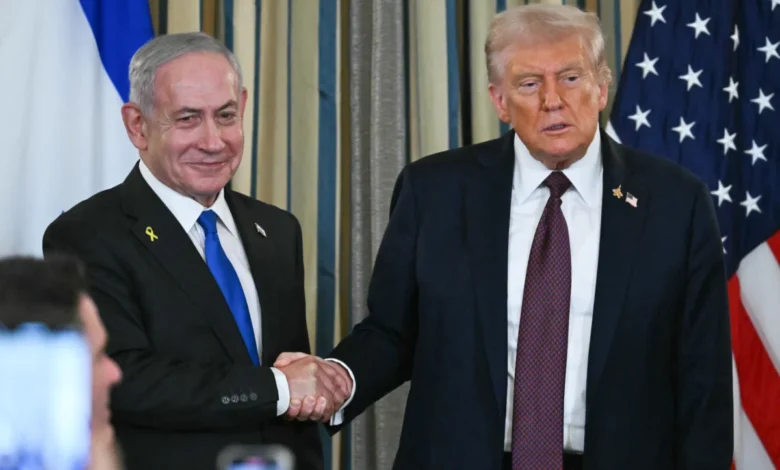
The United States government is advancing a massive $2.8 billion military assistance package designed to supply Israel with more than 40,000 heavy bombs and munitions. While officially classified as a foreign military sale, the transaction is structured in a manner that utilizes American taxpayer dollars to finance the entire procurement process. According to reports from The Washington Post, the Trump administration has formally notified congressional committees of the impending transfer, which will draw directly from the Foreign Military Financing (FMF) program rather than operating as a traditional commercial arms transaction where a foreign buyer utilizes its own capital to purchase American defense goods.
This high-value munitions transfer comes at a volatile geopolitical juncture, occurring while the broader regional conflict involving Iran remains active and regional flashpoints persist across the Middle East. The planned shipment includes tens of thousands of high-explosive munitions, most notably 2,000-pound class weapons that possess immense destructive capabilities. As the administration prepares to release these armaments, the move has reignited intense domestic debate regarding U.S. foreign policy, the ethics of taxpayer-funded military aid, and the oversight mechanisms governing executive branch arms transfers.
Background and Mechanics of the Foreign Military Financing Program
To understand the nature of this $2.8 billion package, it is necessary to examine the distinct operational mechanics of Foreign Military Financing. Standard international arms deals often function as commercial agreements or foreign military sales wherein a partner nation purchases defense articles using its own national budget, sovereign debt, or a hybrid of national funds and U.S. grants. These traditional channels frequently generate revenue streams that feed back into the domestic American defense manufacturing economy, creating jobs and sustaining the industrial base.
However, under the FMF program utilized for this transaction, the financial dynamic changes fundamentally. Instead of Israel spending its own capital reserves to acquire U.S.-manufactured weaponry, the United States government allocates appropriated funds directly to Israel, which then utilizes those exact U.S. taxpayer dollars to purchase the munitions from American defense contractors. In practice, the transaction operates as a direct military grant wrapped in the administrative terminology of a sale.
This financial arrangement places the entire economic burden on the American public. Policy analysts note that while defense contractors and domestic manufacturing facilities will see short-term production and financial gains, the cost is absorbed entirely by federal outlays. This structure bypasses the traditional economic exchange of foreign trade, turning a commercial-style acquisition into a fully subsidized military transfer.
Anatomy of the Arsenal: The 2,000-Pound MK-84 and BLU-117 Bombs
The centerpiece of the proposed $2.8 billion military package consists of over 40,000 bombs weighing 2,000 pounds or more. Among these are MK-84 general-purpose bombs and BLU-117 variants, which constitute some of the largest unguided, gravity-dropped weapons in the modern American military inventory. While these munitions are fundamentally designed as unguided "dumb" bombs, they can be outfitted with precision-guidance kits—such as Joint Direct Attack Munitions (JDAMs)—to transform them into highly accurate targeted weapons.
Military experts emphasize the immense destructive potential of 2,000-pound munitions. The MK-84 warhead contains roughly 945 pounds of Tritonal high explosive, capable of creating craters more than 40 feet wide and 15 feet deep. When detonated, these weapons generate lethal fragmentation zones that extend hundreds of yards in all directions, producing shockwaves and structural collapses capable of destroying reinforced buildings and underground infrastructure.
Variants of these munitions include "bunker buster" designs equipped with heavy-case penetrator warheads. These specialized variants are engineered to pierce dense soil, concrete fortifications, and subterranean facilities before detonating. While militaries utilize such heavy ordnance to target hardened command centers, underground tunnels, and heavily fortified military installations, their deployment in densely populated urban environments carries severe humanitarian consequences.
The use of 2,000-pound bombs has been a subject of intense international scrutiny and domestic political debate throughout recent conflicts in Gaza and Lebanon. Human rights organizations, munitions experts, and international observers have frequently criticized the deployment of such heavy ordnance in crowded civilian areas, pointing to widespread structural devastation and high casualty rates.
Public opinion and political division regarding these heavy weapons have been stark. During the height of the conflict in Gaza, former President Joe Biden temporarily withheld a shipment of 2,000-pound bombs over concerns regarding their use in densely populated urban zones. However, that restriction was promptly reversed following the return of the Trump administration to the White House. High-profile military events, such as the 2024 strike that resulted in the death of Hezbollah Secretary-General Hassan Nasrallah, have frequently involved the use of American-made heavy bombs, according to statements from U.S. lawmakers and international military analysts.
Chronology of U.S. Military Aid and Regional Escalations
The progression of U.S. military support to Israel has evolved across multiple presidential administrations, marked by significant strategic shifts, legislative battles, and escalating regional hostilities.
- October 2023 – Early 2024: Following the outbreak of the war in Gaza, the United States initiated an immediate and continuous airlift of military equipment, artillery shells, and precision-guided munitions to support Israel’s military campaign.
- Mid-2024: Mounting domestic and international concern over civilian casualties in Gaza prompted the Biden administration to place a temporary hold on a specific shipment of 2,000-pound MK-84 bombs, reflecting internal debates within the White House regarding the humanitarian impact of heavy ordnance.
- Late 2024: Regional conflicts expanded significantly, involving direct military engagements with Iran and its regional proxies. The U.S. military expended substantial stockpiles of advanced interceptor missiles, air defense systems, and long-range precision munitions to defend regional partners and neutralize incoming aerial attacks.
- Early 2025: With a change in administration, longstanding policy restrictions on heavy bomb shipments were lifted. The incoming administration signaled a rapid return to unrestricted military resupply pipelines.
- September 2026: The Trump administration formally notifies congressional oversight committees of the $2.8 billion Foreign Military Financing package, securing funding for the procurement of over 40,000 heavy bombs for Israel’s military reserves.
Public Sentiment and Domestic Political Opposition
The announcement of the $2.8 billion munitions package arrives against a backdrop of deep division among the American public regarding the scope and nature of U.S. military assistance to Israel. Multiple independent and academic polls conducted over recent years highlight a growing disconnect between official foreign policy and voter sentiment.
A comprehensive public opinion poll conducted in 2024 by the Center for Economic and Policy Research (CEPR) revealed that 52 percent of surveyed Americans believed the U.S. government should halt or condition weapons shipments to Israel. Subsequent polling data released by The New York Times and Siena College late last year indicated that a majority of voters opposed providing additional economic or military aid, reflecting fatigue over prolonged foreign conflicts and domestic economic pressures. Furthermore, a Quinnipiac University poll demonstrated that nearly half of all participating U.S. voters felt American foreign policy had become overly supportive of Israel’s military strategy as a whole.
This divergence between voter opinion and executive branch policy has intensified debates on Capitol Hill. While traditional bipartisan majorities have historically supported robust military aid to Israel, progressive lawmakers and a growing number of moderate Democrats have voiced sharp opposition to financing massive shipments of offensive heavy weaponry without stringent human rights conditions or robust legislative oversight.
Congressional Oversight and Executive Branch Authority
The formal notification sent to congressional committees regarding the $2.8 billion arms package has triggered immediate debate concerning the boundaries of executive authority in foreign military sales. Under standard statutory frameworks, the Arms Export Control Act requires the executive branch to notify Congress of major foreign military sales, providing lawmakers with a designated review window to raise objections or pass joint resolutions of disapproval.
However, historical precedent under various administrations demonstrates that the executive branch frequently utilizes administrative mechanisms, emergency declarations, or expedited FMF channels to accelerate weapons transfers. This practice often limits the practical window available for elected officials to challenge or modify proposed arms deals.
When questioned regarding the procedural status of the $2.8 billion package, a senior administration official defended the process, stating to The Post that "all foreign arms sales are moving through the appropriate process. We do not comment on pending sales."
Despite these assurances, critics within legislative oversight committees argue that utilizing Foreign Military Financing to fund massive stockpiles of unguided and heavy munitions bypasses traditional legislative debate, effectively presenting Congress with a fait accompli. Legal scholars note that while the executive branch possesses broad constitutional and statutory authority in matters of foreign policy and national defense, the complete subsidization of offensive ordnance using direct taxpayer funds raises fundamental questions about legislative checks and balances.
Strategic Implications and Stockpile Depletion
Beyond the immediate political and humanitarian debates, military analysts emphasize the strategic implications of continuous high-volume weapons transfers on U.S. military readiness. Years of sustained conflict in the Middle East—encompassing operations in Gaza, Lebanon, and direct confrontations involving Iran—have placed unprecedented demands on American military stockpiles.
While the MK-84 and BLU-117 general-purpose bombs included in the new $2.8 billion package differ from the highly specialized, low-density interceptor missiles and long-range precision guided munitions that have been heavily depleted by U.S. forces in regional air defense operations, the sheer volume of material moving out of U.S. inventory highlights ongoing concerns regarding military readiness.
Defense planners have frequently warned that supplying tens of thousands of heavy munitions to foreign partners strains national defense manufacturing capacity and diminishes the strategic reserve maintained by the United States to address global contingencies. The combination of active regional warfare, extensive stockpiling, and heavy financial subsidization ensures that the debate over the limits of American military generosity will remain a central fixture of U.S. foreign policy discussions for the foreseeable future.
Related posts: