Album Review: Gustavo Dudamel and the Los Angeles Philharmonic Present Schumann Symphonies via Platoon

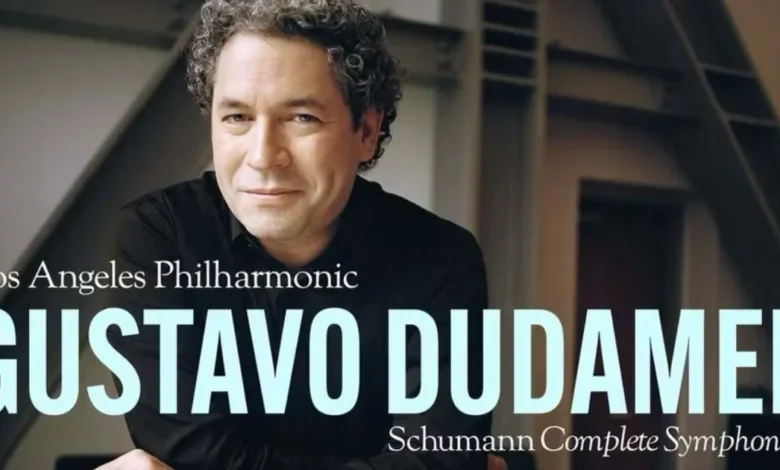
The intersection of classical music recording and modern digital distribution has faced a distinct paradigm shift over the past decade, frequently leaving physical media collectors at a disadvantage. For enthusiasts of physical compact discs, following the extensive and critically lauded partnership between conductor Gustavo Dudamel and the Los Angeles Philharmonic (LA Phil) has proven an exercise in digital exclusivity. With the vast majority of their recent collaborative albums released strictly through digital download and streaming formats, physical media devotees have had to adapt to changing industry standards. This trend continues with the release of a live-recorded cycle of Robert Schumann’s four symphonies, captured during 2018 performances and distributed via the Platoon label under the catalogue number PLAT31895.
This latest release follows a string of notable digital-first collaborations between Dudamel and the LA Phil on Deutsche Grammophon (DG), including a celebrated 2021 Charles Ives symphony cycle, a robust survey of Dvořák’s Symphonies Nos. 7 through 9 in 2022, and a thrilling, theatrical account of Prokofiev’s complete ballet Romeo and Juliet earlier this year. Among this recent lineage of major symphonic recordings, only the Ives cycle received a physical compact disc release, underscoring a broader commercial strategy favoring streaming platforms such as Apple Music Classical. As Dudamel’s tenure as the Music and Artistic Director of the Los Angeles Philharmonic concludes, this newly unveiled Schumann collection serves as both a retrospective look at the orchestra’s developmental milestones under his baton and a significant addition to their recorded catalog.
Chronology and Background of the Live Recordings
The genesis of this Schumann cycle dates back to live concert performances given by the Los Angeles Philharmonic at Walt Disney Concert Hall in 2018. The decision to shelve these master tapes for roughly eight years before commercial publication has raised questions among classical music critics and dedicated followers alike. Industry analysts suggest that the delayed rollout may be strategically timed to coincide with the conclusion of Dudamel’s landmark 17-year music directorship in Los Angeles—a tenure that transformed the LA Phil into one of the most progressive and technically accomplished ensembles in the world—before his official transition to the New York Philharmonic.
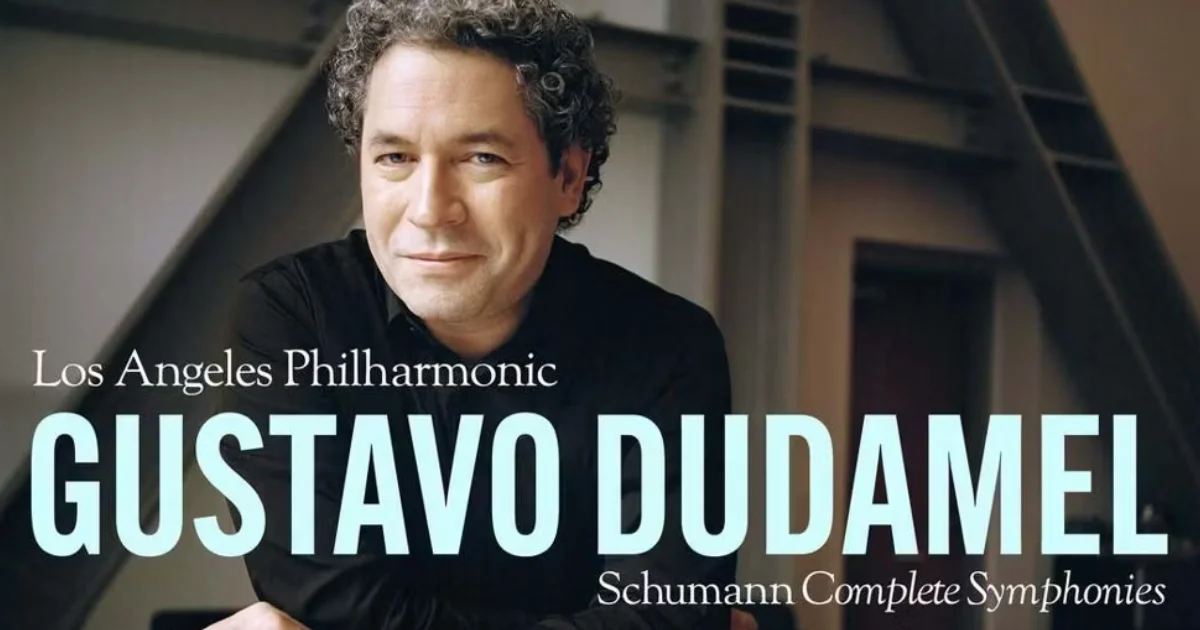
The physical album package and its accompanying digital liner notes feature an erudite, comprehensive essay by musicologist Andrew Mellor. In his analytical notes, Mellor zeroes in on the emotional volatility of Schumann’s orchestral writing, specifically observing that the composer’s First Symphony, often subtitled the Spring, "reaches heights of joyousness that he would never quite attain again." This assessment sets the conceptual framework for Dudamel’s approach to the opening work of the cycle.
Musical Analysis of the Schumann Cycle
Symphony No. 1 in B-flat Major, Op. 38 (Spring)
Dudamel’s interpretation of the First Symphony is defined principally by the joyous characteristic highlighted by Mellor. The performance crackles with an infectious, youthful energy, utilizing tempos that lean toward the faster end of the traditional spectrum. The LA Phil responds with absolute unanimity of attack and articulation, showcasing a level of technical precision that delights the ear.
The orchestral palette glows under Dudamel’s direction: the string section deploys a luscious, radiant sheen, supported by distinct, characterful woodwinds and bright, resonant brass instruments. While legendary historical recordings—such as George Szell’s cycle with the Cleveland Orchestra on Sony or Christoph von Dohnányi’s Decca recordings—may achieve an even higher degree of clinical, Germanic technical finesse, neither quite matches the unbridled, ecstatic heights of joyousness generated in Los Angeles.
Symphony No. 2 in C Major, Op. 61
In approaching the emotionally complex Second Symphony, however, Dudamel’s interpretive choices present a more contentious terrain. Schumann famously composed the work during a period of profound personal and physical crisis, writing that he penned the score while unwell and only began to feel restored toward the completion of the final movement. The work’s first-movement development traditionally mirrors this psychological struggle through harmonic instability and the disintegration of melodic material, driven toward the close by an obsessively repeating rhythmic figure.
Under Dudamel, these moments of existential tension are smoothed over, lacking the harrowing intensity and psychological gravity brought out by conductors such as Leonard Bernstein with the Vienna Philharmonic (DG) or Fabio Luisi with the Vienna Symphony (Orfeo). Following a brilliantly articulated Scherzo boasting a thrilling coda, the deeply felt, sweetly sung slow movement tends to minimize the profound agony captured in rival Viennese accounts. While the triumphant final movement is executed with formidable technical polish, its emotional payoff is somewhat diminished because the musical victory feels preemptively and too easily reached.
Symphony No. 3 in E-flat Major, Op. 97 (Rhenish)
The traversal of the Rhenish Symphony marks a return to interpretive success. The opening movement benefits from thrilling, robust horn calls, while the subsequent Scherzo is delivered with lithe, playful agility. The lyrical third movement proves slightly less convincing, occasionally lacking the delicate, balletic transparency found in benchmark performances. This slight deficit may stem from the live acoustic environment of Walt Disney Concert Hall, where the engineered sound introduces an ambient warmth that acts as a gentle gauze over the orchestra’s softer dynamics. Nevertheless, the fourth movement restores a potent sense of brooding introspection and atmospheric wonder, paving the way for a high-spirited finale where the brass section once again excels, culminating in an exultant, driving coda.
Symphony No. 4 in D Minor, Op. 121
The performance of the Fourth Symphony stands out as the most intellectually stimulating component of the release, largely due to Dudamel’s unconventional and original interpretive decisions. The opening movement adopts a noticeably broader tempo than those chosen by Szell, Dohnányi, Herbert von Karajan (Vienna Philharmonic/DG), or Luisi. Rather than driving forward with relentless momentum, Dudamel relaxes into the slower tempo, cultivating a gentle, settled mood unlike any standard recorded precedent.
The Romanze is rendered forlorn and achingly tender, leading into an elegant Scherzo, though the middle Trios occasionally flirt with sentimentality. In the final movement, Dudamel once again downplays the turbulent, stormy eruptions favored by conductors like Karajan in his commanding 1987 Vienna account. While purists may debate whether this unorthodox, gentler reading aligns with Schumann’s original performance intentions, it consistently challenges listener expectations, offering a fresh, thought-provoking perspective on a heavily recorded repertoire staple.
Production Values and Contextual Materials
Beyond the audio files, the digital release includes extensive documentation on select streaming platforms, featuring biographical sketches of the ensemble and conductor, a complete orchestral roster, and Andrew Mellor’s essay. The inclusion of these comprehensive materials attempts to bridge the gap between traditional physical gatefold packaging and the sterile interface of modern music apps.
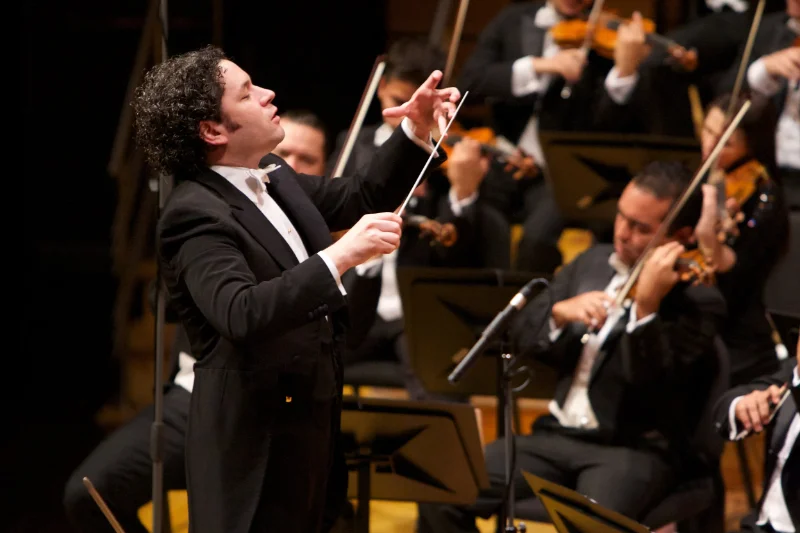
As classical music consumers increasingly migrate toward services like Apple Music Classical, the physical absence of these recordings remains a notable point of discussion among critics who value tactile engagement with music. Yet, the release of this 2018 Schumann cycle functions on a deeper symbolic level. It captures an American orchestra at the height of its technical prowess, guided by a charismatic maestro whose tenure has fundamentally shaped the cultural landscape of Southern California.
Broader Implications for the Classical Recording Industry
The release of Schumann: The Complete Symphonies via Platoon highlights a broader, permanent transformation in how major cultural institutions preserve and distribute their artistic output. By prioritizing digital-first distribution models, orchestras can bypass the declining retail infrastructure of physical compact discs while maintaining global reach through streaming platforms.
For the Los Angeles Philharmonic, this album reinforces a legacy defined by stylistic versatility, ranging from modern American minimalism to the core Austro-German romantic repertoire. While debates will persist among purists regarding Dudamel’s lightweight approach to the psychological demons of the Second Symphony or his idiosyncratic tempos in the Fourth, the sheer sonic quality of the LA Phil cannot be disputed. As Gustavo Dudamel prepares to assume his upcoming leadership role with the New York Philharmonic, this retrospective Schumann cycle stands as a testament to the technical brilliance and vibrant energy that defined his seventeen-year epoch in Los Angeles, ensuring that his symphonic legacy remains immediately accessible to a worldwide digital audience.