The Best Guitar Amp for Beginners 2027: Tubes, Solid-States, and More!

Purchasing a first electric guitar marks a significant milestone for any aspiring musician, but the accompanying search for an appropriate amplifier frequently presents an unexpected hurdle. Historically, novice guitarists faced a frustrating dichotomy: affordable practice amplifiers often delivered substandard audio quality and lacked the physical power required for ensemble rehearsal, while professional-grade equipment demanded a prohibitive financial investment. Modern manufacturing advancements, however, have fundamentally reshaped the entry-level audio market. Today, beginner guitarists can access professional-grade sonic fidelity, versatile feature sets, and robust build quality across various amplifier categories without exceeding modest budgets. Selecting the optimal device requires an understanding of the fundamental technologies driving the market: traditional vacuum tubes, analog solid-state circuits, and digital modeling systems.
The evolution of guitar amplification over the past several decades reflects a continuous pursuit of tonal authenticity, reliability, and cost-efficiency. Vacuum tube amplifiers, which dominated the mid-20th century music scene, utilize glass bulbs in both their preamp and power stages to produce natural, dynamic harmonic distortion prized by purists. Despite their warm, organic tone and responsiveness to playing dynamics, traditional tube units are often heavy, delicate due to fragile glass components, and notoriously loud, requiring significant volume to achieve optimal saturation.
In contrast, solid-state amplifiers utilize transistors to shape and amplify audio signals. Initially burdened by a reputation for sterile or harsh distortion, modern solid-state technology has matured significantly. High-end analog circuits have powered countless legendary studio recordings and live performances, offering reliable, maintenance-free operation and crisp clean tones at lower production costs.
The most recent technological paradigm shift involves modeling amplifiers, which leverage Digital Signal Processing (DSP) to digitally emulate the sonic characteristics of classic tube circuits, speaker cabinets, and external effects pedals. Modern modeling platforms allow musicians to access hundreds of distinct amplifier tones within a single, lightweight enclosure, solving the logistical challenges of weight and maintenance that plague touring professionals and bedroom players alike. Furthermore, the format of the amplifier dictates its practicality; combo units house both the speaker and amplifier circuitry within a single cabinet for maximum convenience, whereas separate head-and-cabinet configurations offer modular flexibility at a generally higher price point and footprint.
To assist novice musicians in navigating this diverse market, industry analysts have evaluated the leading beginner-friendly amplifiers available in 2027, categorizing them by technological design and real-world performance metrics.
Tube Amplification Options for Novices
For players seeking the unmistakable warmth and dynamic response of vacuum tubes on a restricted budget, specific models stand out for their exceptional value and feature sets. The Harley Benton Tube15 Celestion exemplifies this accessibility, delivering a 15-watt all-tube configuration equipped with a 12-inch Celestion Seventy speaker. Despite its modest wattage, the unit includes a full equalization section, independent gain control, built-in reverb, and an integrated power attenuator. This attenuator allows users to reduce the amplifier’s output from 15 watts down to 1 watt, enabling authentic tube saturation and breakup at bedroom-friendly volumes. While limited to a single channel—requiring external overdrive or boost pedals for varied tonal shifts—the Tube15 offers a level of component quality rarely found at its price point.
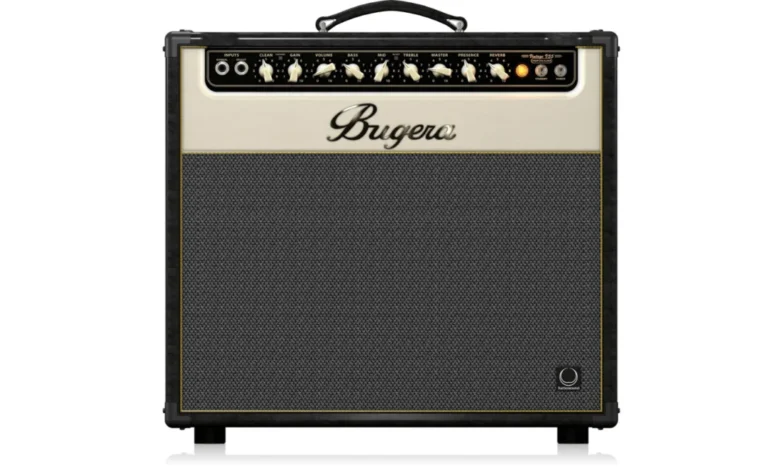
Expanding upon feature density, the Bugera V55 Infinium provides a 55-watt, two-channel tube architecture designed for players seeking greater headroom and versatility. Featuring a 12-inch speaker, a three-band equalizer, independent channel controls, and a dedicated footswitch for switching channels and activating the onboard reverb, the V55 bridges the gap between practice utility and band rehearsal readiness. For those requiring even lower operational volumes, the companion Bugera V5 Infinium variant incorporates a variable power switch capable of scaling output down from 5 watts to 1 watt and 0.1 watts, ensuring compatibility with sensitive residential environments.

Analog Solid-State Contenders
Solid-state amplifiers remain a staple for beginners prioritizing durability, immediate response, and straightforward operation. The Orange Crush 35 RT encapsulates the iconic aesthetic and aggressive tonal characteristics of the British manufacturer in a compact, 35-watt package featuring a 10-inch speaker. Equipped with dual channels—clean and dirty—alongside an integrated chromatic tuner and reverb, the Crush 35 RT provides a reliable foundation for rock and heavy genres without the maintenance requirements associated with vacuum tubes.
Similarly, the Fender Champion II 50 offers a traditional aesthetic paired with modern solid-state reliability. Delivering 50 watts of power through an intuitive control layout, the Champion II 50 features two distinct operating channels, an auxiliary input for backing tracks, and a headphone output for silent monitoring. Additionally, the unit incorporates a comprehensive suite of digital vintage effects—including reverb, delay, chorus, and tremolo—alongside tap-tempo functionality, providing an expansive sonic palette for developing players.

Digital Modeling Innovations
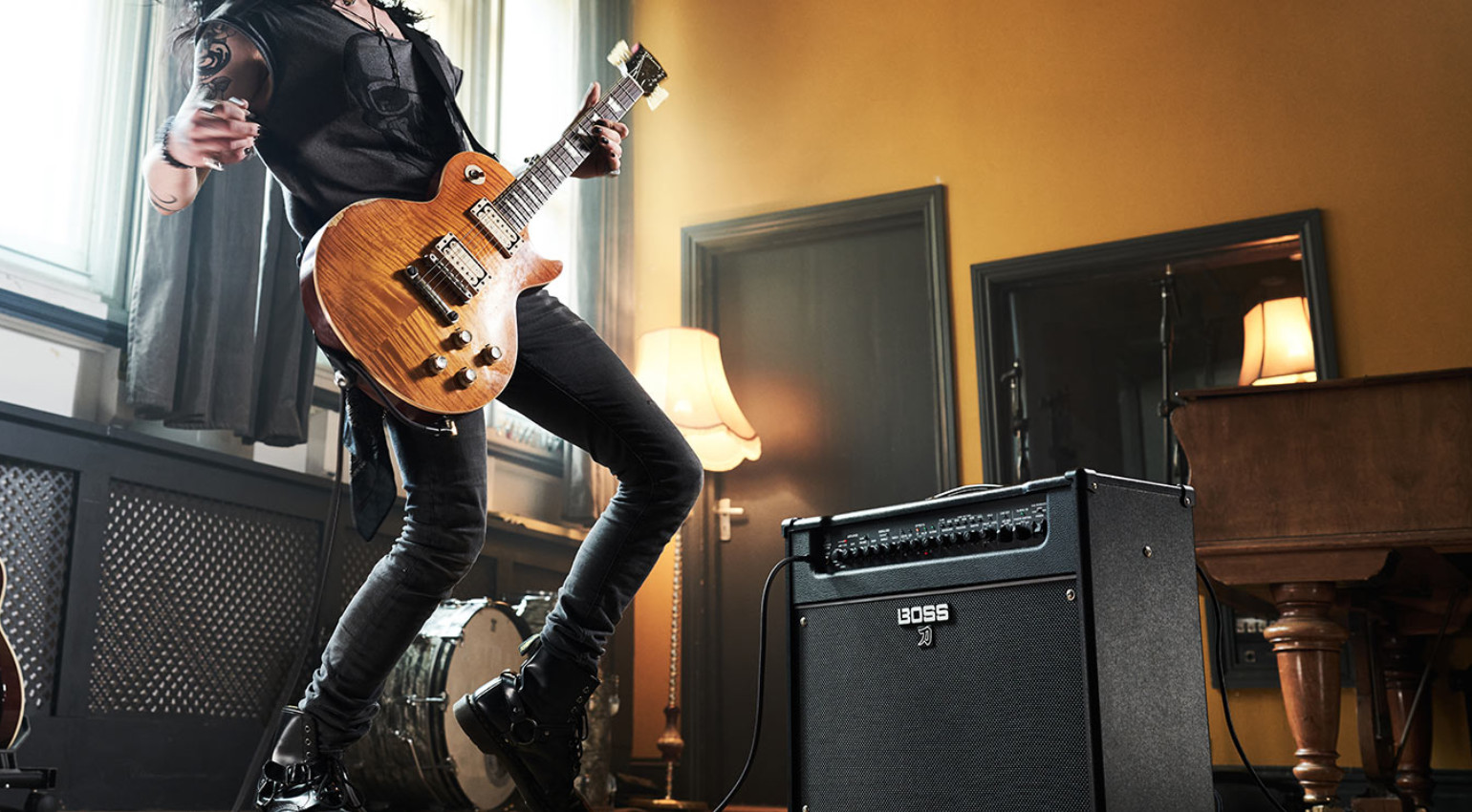
Digital modeling amplifiers have fundamentally transformed the learning curve for contemporary guitarists by offering vast sonic libraries and advanced connectivity within compact enclosures. The Boss Katana 50 Gen 3 leverages the manufacturer’s proprietary modeling engine to deliver 50 watts of power through a 12-inch speaker. Designed to grow alongside a musician’s skill level, the Katana 50 Gen 3 offers access to 12 distinct amplifier profiles and multiple simultaneous effects, complemented by a three-way power control switch that scales output down to 25 watts and 0.5 watts for low-volume practice.
Advancing further into technological integration, the Positive Grid Spark 2 incorporates advanced digital signal processing and companion application connectivity to streamline the learning process. Delivering 50 watts of power, a built-in looper, and multiple preset slots, the Spark 2 functions dually as a standalone practice amplifier and a direct USB audio interface for digital recording. Its defining feature lies in its software integration, which utilizes algorithmic analysis to interpret user requests or match tone profiles from popular recorded music, automatically generating corresponding virtual amplifier and pedal signal chains to approximate professional guitar tones instantly.

Market Implications and Expert Guidance
Industry analysts note that the democratization of high-quality amplification has fundamentally altered consumer expectations within the musical instrument sector. Beginners are no longer required to compromise on fidelity or functional versatility due to financial constraints. According to audio engineering consultants, the convergence of digital modeling and cost-effective analog production has reduced the historical attrition rate among novice musicians, who previously abandoned the instrument due to poor equipment performance or inadequate practice tools.
When selecting an amplifier, music educators recommend that beginners evaluate their primary playing environment. For isolated home practice, solid-state or modeling units ranging from 10 to 20 watts—or units equipped with effective power attenuation and headphone outputs—provide sufficient volume without causing domestic friction. Conversely, musicians preparing to rehearse with an acoustic drummer in a band setting are advised to target higher-wattage platforms, such as 50-watt modeling or solid-state combos, to ensure adequate acoustic projection against percussion.

Frequently Asked Questions
How many watts are required for a beginner guitar amplifier?
For home practice environments, solid-state or modeling amplifiers ranging from 10 to 20 watts provide ample volume. Musicians rehearsing with an acoustic drum kit or performing in small ensemble settings should consider 50-watt configurations to maintain clean headroom and stage presence.
Can headphones be used safely with modern practice amplifiers?
Most contemporary amplifiers feature dedicated headphone outputs designed for silent monitoring. Users should avoid routing audio through high-latency wireless protocols, such as standard Bluetooth connections, during active performance to prevent noticeable delay between string articulation and audio reproduction.

Should a beginner purchase a combo amplifier or a separate head and cabinet?
Combo amplifiers—which house the amplifier circuitry and speaker within a single enclosure—represent the most practical, cost-effective, and spatially efficient choice for novice players. Separate head and cabinet systems are generally unnecessary for entry-level applications and are typically reserved for advanced or professional performance setups.